Cheesy scalloped potatoes bake up with tender layers, a silky cream sauce, and a browned, bubbling top that begs for a spoon to break through it. The best version isn’t heavy or gluey; it’s rich enough to feel special, but still lets the potatoes stay distinct instead of collapsing into mash. When the slices are cut thin and packed neatly, each scoop holds its shape and still turns velvety at the edges.
The trick is in the balance. Yukon golds bring enough starch to thicken the sauce naturally, while the mix of Gruyere and sharp cheddar gives you both melt and bite. A little Dijon wakes up the cream, and nutmeg adds the kind of background warmth that makes the whole pan taste deeper without calling attention to itself. The potatoes need to be fully submerged under the cream mixture before they go into the oven, because any exposed slices will dry out before the center softens.
Below, I’ve included the one resting step you shouldn’t skip and a few swaps that still keep the texture right if you need to adjust the recipe.
The potatoes were tender all the way through and the sauce thickened up beautifully without curdling. I loved the Gruyere on top with the cheddar underneath — it tasted rich but not greasy, and the leftovers reheated perfectly.
Save these cheesy scalloped potatoes for the dinner that needs a bubbling Gruyere crust and creamy potato layers that slice cleanly.
The Reason Scalloped Potatoes Turn Watery Before They Turn Tender
The most common problem with scalloped potatoes is that the top browns before the center has enough time to soften. That happens when the slices are cut unevenly or the dish isn’t covered tightly for the first part of baking. The foil traps steam, which helps the potatoes cook through without the cream reducing too fast or the edges drying out.
Thin, even slices matter more than almost anything else here. If some potatoes are thick and others are paper-thin, you’ll get a mix of firm layers and broken, mushy ones. A mandoline makes this easier, but a sharp knife works fine if you keep the slices consistent and don’t rush the layering.
What Each Ingredient Is Actually Doing in the Pan
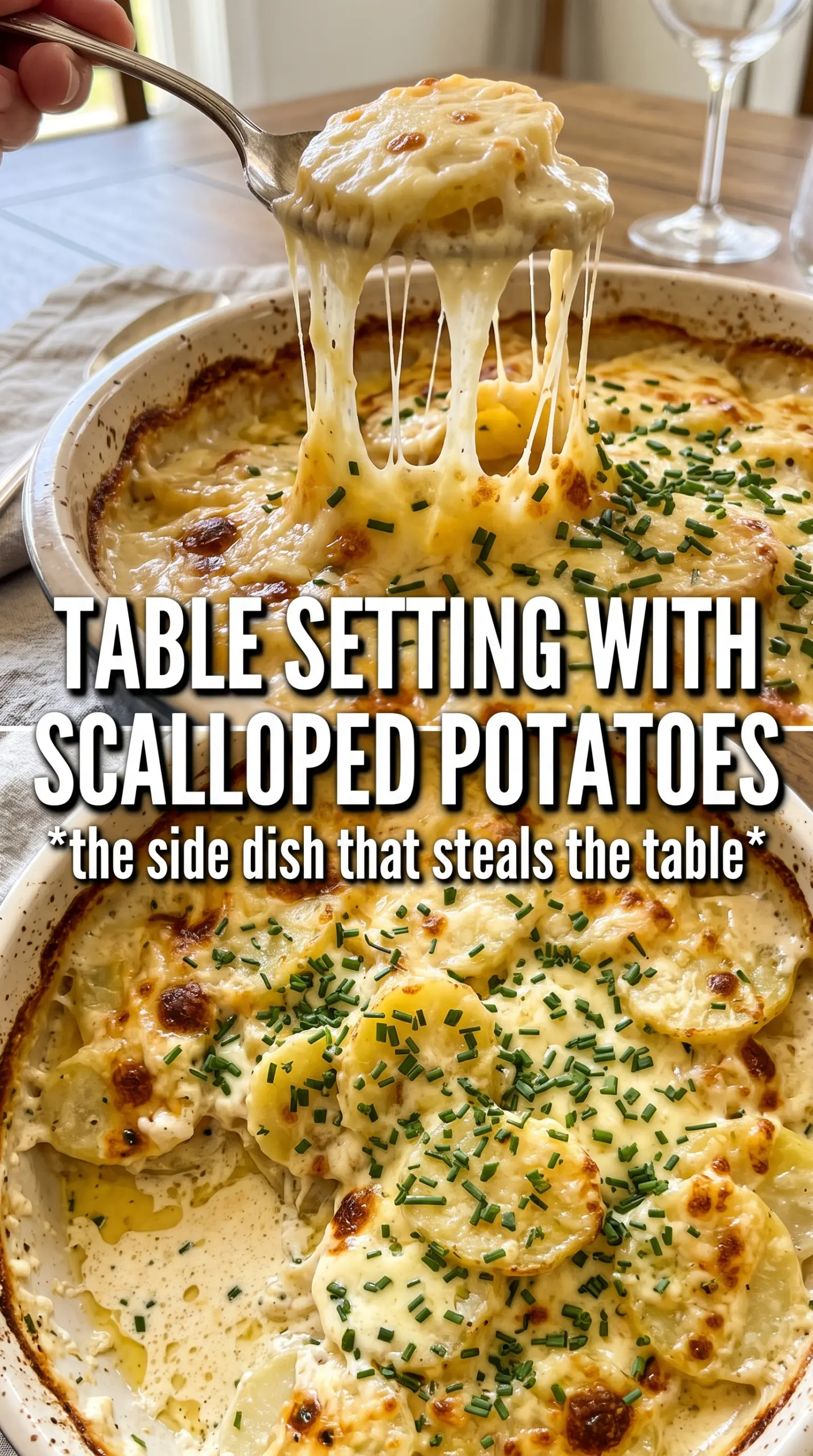
- Yukon gold potatoes — These hold their shape better than russets and have enough starch to help the sauce thicken as they bake. Russets work in a pinch, but they break down more and can turn softer and more rustic.
- Heavy cream and whole milk — This combination gives you richness without making the dish feel too thick or clotted. Using all cream makes the sauce heavier; using all milk makes it thinner and less luxurious.
- Gruyere — Gruyere melts smoothly and gives the top a nutty, savory edge. It’s worth buying the real thing if you can, because the flavor stays clear even after baking.
- Sharp cheddar — Cheddar brings the familiar tang and that deep orange-gold finish on top. A mild cheddar won’t give the same contrast, so choose a sharp one for the best result.
- Dijon mustard, thyme, and nutmeg — These don’t make the dish taste mustardy or spiced; they just sharpen the cream and keep the sauce from tasting flat. Fresh thyme is worth using here because it stays bright through the long bake.
How to Layer the Potatoes So the Center Cooks Evenly
Build the Cream Base First
Whisk the cream, milk, garlic, Dijon, thyme, nutmeg, salt, and pepper before you touch the potatoes. You want the garlic evenly dispersed so it perfumes the whole pan instead of landing in one harsh pocket. If your garlic is too coarse, it can stay raw-tasting, so mince it finely.
Pack the Slices in Tight Rows
Overlap the potato slices in neat rows rather than dumping them in randomly. Tight layering helps the sauce move through the dish and keeps the finished casserole from collapsing when you scoop it. Press down gently after pouring in the cream so the liquid reaches into the lower layers.
Cover, Bake, Then Brown
Bake covered first so the potatoes steam and soften all the way through. Uncovering too soon is how you end up with browned edges and an undercooked center. Add the cheese only after the potatoes are tender, then bake until the top is bubbling and the crust looks deeply golden at the edges.
Let It Rest Before Serving
That 10-minute rest matters. The sauce thickens as it sits, which means clean slices instead of a pan that runs across the plate. If you cut it too early, the cream will look loose even if the potatoes are fully cooked.
How to Adapt This for a Smaller Pan, More Cheese, or a Lighter Finish
Make it gluten-free without changing the texture
This recipe is naturally gluten-free as written, so there’s nothing to swap. Just check that your Dijon and cheeses are labeled gluten-free if you’re cooking for someone with celiac disease, since packaged products can occasionally include additives.
Use all cheddar for a sharper, more familiar flavor
If Gruyere isn’t in the budget, use 3 cups of sharp cheddar instead. You’ll lose a little of that nutty, elegant melt, but the dish will still be rich and satisfying. Keep the cheese layer modest so the top doesn’t turn greasy.
Make it lighter with half-and-half
You can replace the cream with half-and-half for a less rich version, but the sauce will be a little thinner and the potatoes may need a few extra minutes in the oven. Don’t use skim milk here; it won’t give enough body to carry the sauce through the bake.
Scale it into two smaller dishes
This splits well into two 8×8-inch pans if you’re feeding a smaller group or want one for later. Keep the liquid and cheese divided evenly, and start checking for tenderness a little earlier because smaller dishes can cook faster around the edges.
Storage and Reheating
- Refrigerator: Store covered for up to 4 days. The sauce will set up more firmly in the fridge, which is normal.
- Freezer: It freezes, but the cream sauce can separate a little on thawing. If you freeze it, cool it completely, wrap it well, and thaw overnight in the fridge before reheating.
- Reheating: Cover and rewarm in a 325F oven until hot in the center. The biggest mistake is blasting it at high heat, which dries out the edges before the middle heats through.
Questions I Get Asked About This Recipe
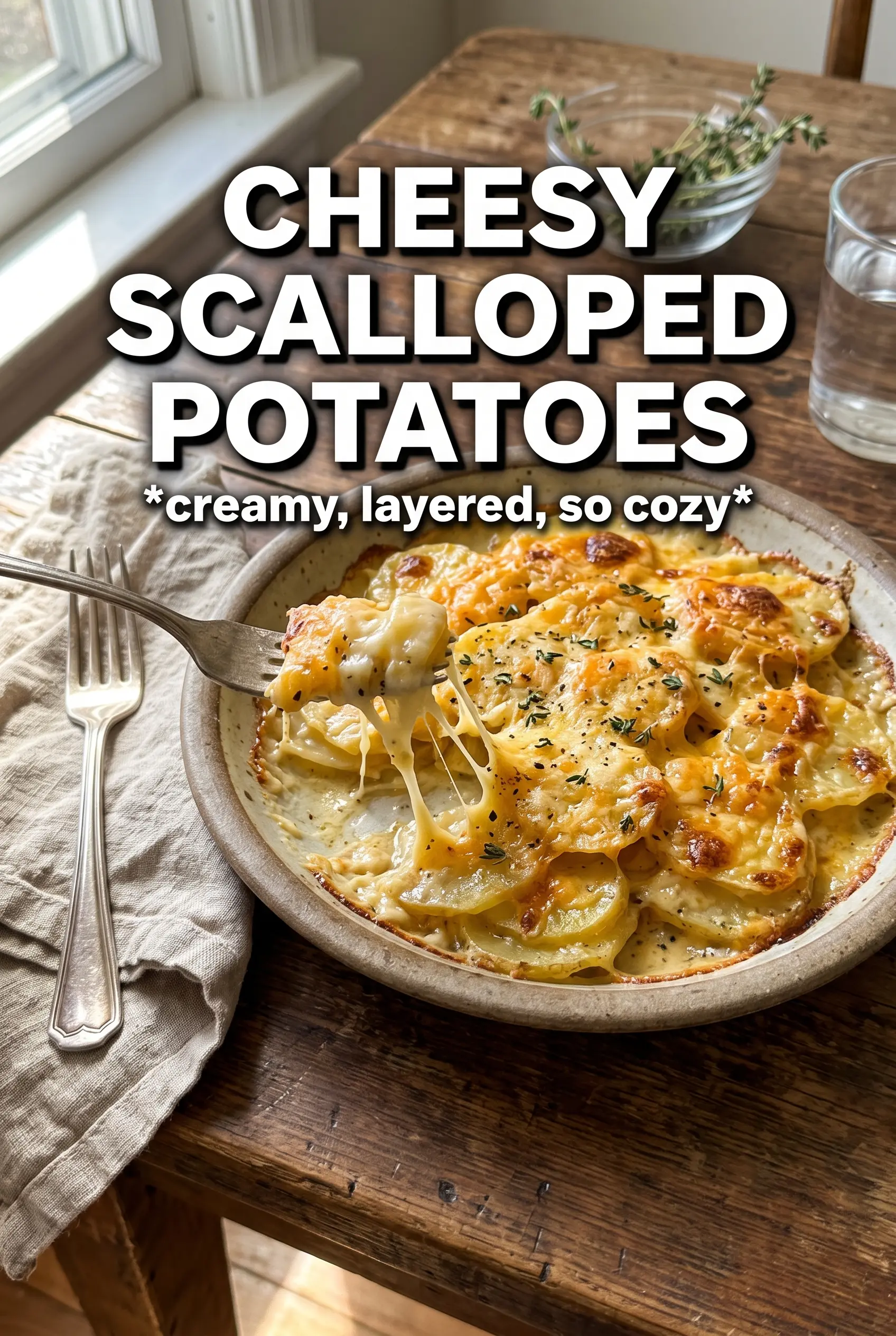
Cheesy Scalloped Potatoes
Ingredients
Equipment
Method
- Preheat the oven to 375F, then butter a 9x13 baking dish. This prevents sticking and helps the edges brown.
- Whisk the heavy cream, whole milk, garlic, Dijon mustard, fresh thyme, nutmeg, 1-1/2 teaspoons salt, and pepper until smooth and evenly combined. You should see the garlic and seasonings distributed through the liquid.
- Layer the Yukon gold potatoes in overlapping rows in the dish, then pour the cream mixture over top. Make sure the layers are arranged evenly so the potatoes cook at the same pace.
- Press the potatoes down to submerge them in the cream mixture, then cover tightly with foil. The potatoes should look partially submerged under the creamy liquid.
- Bake for 50 minutes at 375F with the foil on. Stop when the potatoes look softened around the edges.
- Uncover and scatter the Gruyere and sharp cheddar over the top. The cheeses should form an even layer across the surface for browning.
- Bake for 18 to 22 more minutes at 375F until the top is golden, bubbling, and the potatoes are completely tender. Look for active bubbling at the edges and a browned, set cheese layer.
- Rest the scalloped potatoes for 10 minutes before serving. The sauce will thicken slightly so each scoop holds its layers.