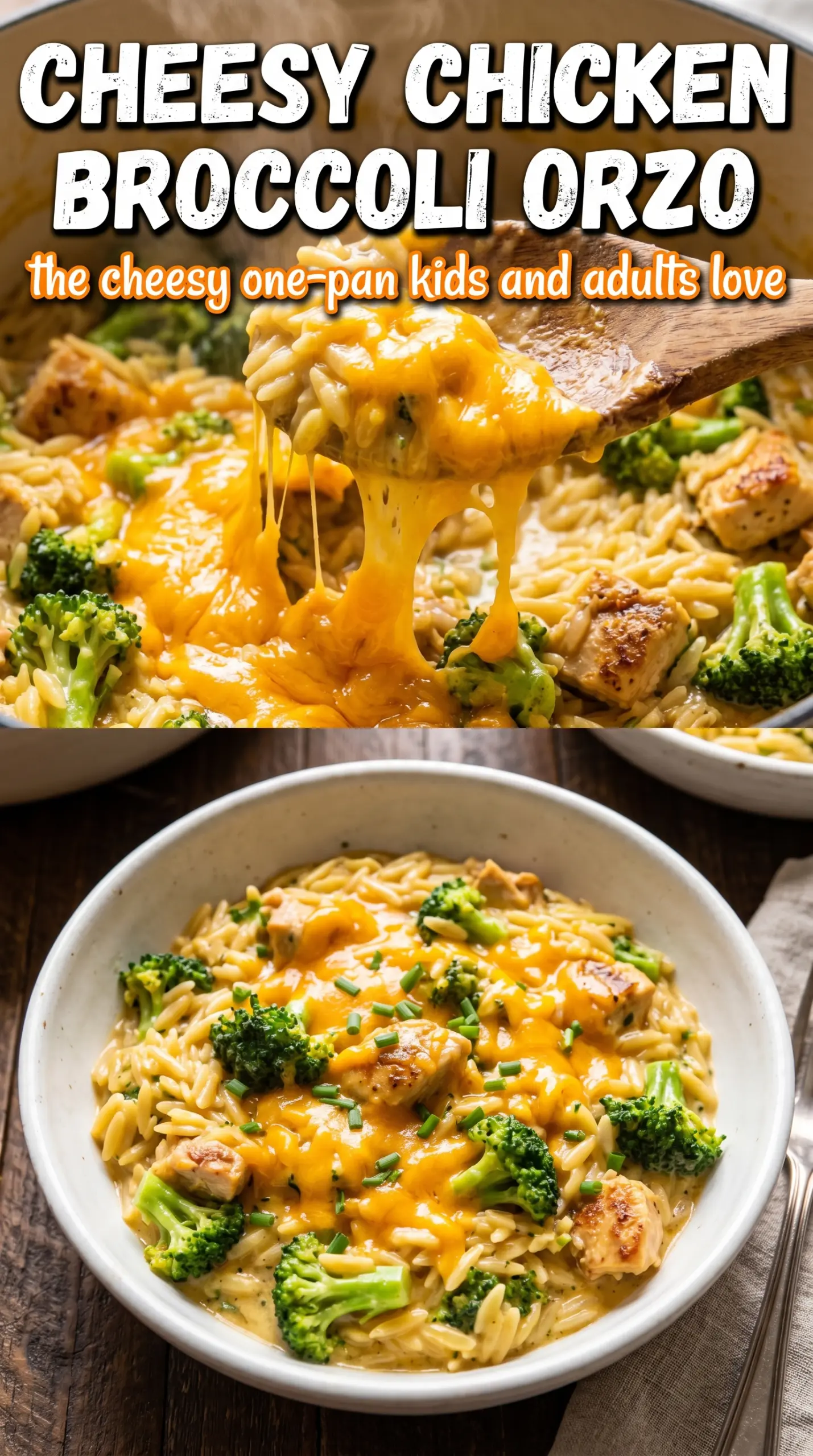
Cheesy chicken broccoli orzo lands in that sweet spot between creamy comfort and a proper dinner. The orzo turns silky without turning heavy, the broccoli stays bright instead of collapsing, and the chicken brings enough substance that nobody treats it like a side dish. What you get is a skillet full of spoonable, cheesy pasta with little pockets of sharp cheddar in every bite.
The trick is building the sauce in stages. Browning the chicken first leaves behind fond in the pan, which gives the broth and cream a deeper base than a straight dump-and-stir approach. The orzo also needs attention while it cooks, because it releases starch fast and can go from glossy to sticky if you walk away. Adding the broccoli near the end keeps it green and crisp-tender instead of drab and soft.
Below, I’ve laid out the part that matters most: how to keep the sauce creamy, which cheese melts best, and what to do if you want to make this a little lighter or stretch it farther.
The orzo got creamy without sticking, and the broccoli still had a little bite. I added a touch more broth at the end and it came out perfect for scooping.
Save this cheesy chicken broccoli orzo for the nights when you want one skillet, real comfort, and a cheddar sauce that clings to every bite.
The Secret to Keeping the Orzo Creamy Instead of Gluey
Orzo behaves differently from larger pasta shapes. It’s small, quick to absorb liquid, and it keeps releasing starch as it cooks, which is great when you want a creamy skillet dinner and not great when you want a bowl of paste. The fix is to keep the pan at a steady simmer and stir often enough to keep the grains moving without beating them up.
The other mistake is adding the cheese too early or over too much heat. If the pan is raging hot when the cheddar goes in, the sauce can turn oily or grainy instead of smooth. Pulling the skillet off the burner for a moment before stirring in the cheese gives the dairy enough gentleness to melt into the broth and cream.
- Orzo — This is the backbone of the dish, and there isn’t a great one-to-one swap if you want the same creamy, spoonable result. Small pasta shapes like ditalini can work in a pinch, but they won’t thicken quite as quickly or drink up the sauce in the same way.
- Sharp cheddar — Sharp cheddar gives the sauce its backbone. Mild cheddar melts fine, but it tastes flatter, so if you use it, add a little more Parmesan or a pinch of mustard powder to bring the edge back.
- Heavy cream — This keeps the sauce stable and lush. Half-and-half works, but the sauce will be a little looser and more likely to need extra simmering before the cheese goes in.
- Broccoli florets — Cut them small enough that they cook in the last few minutes without forcing the orzo to overcook. Bigger florets stay raw in the stems while the pasta moves past done.
What Each Ingredient Is Actually Doing in This Chicken Recipe
- Chicken (the foundation) — Quality chicken starts with good sourcing. Even simple seasoning tastes better on good meat.
- Olive oil or butter (the cooking medium) — Fat carries flavors and keeps chicken from drying. It’s also what makes food taste delicious.
- Salt and pepper (proper seasoning) — Season generously; underseasoned chicken tastes bland. Apply inside and outside so the seasoning penetrates.
- Garlic and onion (the aromatic base) — These add depth and complexity. They sweeten slightly when cooked, becoming mellow and round.
- Acid (lemon, vinegar, wine, or tomato) — This brightens the dish and prevents it from tasting heavy. It also helps balance rich sauces.
- Fresh herbs or spices (the character) — These define the personality of the dish. Choose ones that complement your other flavors.
- Cream or sauce base (optional richness) — A sauce keeps the chicken moist and flavorful. Make sure it’s balanced with acid and herbs.
- Proper cooking technique (the final step) — Whether baking, pan-searing, or simmering, the right method ensures juicy, tender results without drying out the meat.
Building the Skillet So Every Bite Stays Balanced
Getting Color on the Chicken
Season the chicken before it hits the pan, then let it sit in the oil long enough to pick up actual color. Pale chicken gives you less flavor in the finished dish, and if you crowd the pan, it steams instead of browns. Work in one layer if you can, and don’t move the pieces around constantly; let the edges turn golden before flipping.
Toasting the Orzo in the Pan
After the garlic goes fragrant, add the dry orzo and stir for about a minute. It should smell a little nutty, not dark brown. That tiny step gives the pasta a better backbone and keeps it from tasting flat once the broth and cream go in.
Simmering the Sauce and Cooking the Pasta Together
Pour in the broth and cream, then bring everything to a gentle simmer. Not a hard boil. A hard boil beats up the dairy and cooks the liquid off too fast, which leaves the orzo tight before it’s tender. Stir often, scrape the bottom, and watch for the mixture to turn glossy as the starch starts doing its job.
Finishing With Cheese and Broccoli
Add the broccoli during the last few minutes so it stays vivid green and just tender. Once the orzo is cooked and there’s still a little sauce left in the pan, turn the heat down and stir in the cheddar and Parmesan until the whole skillet looks creamy and cohesive. Return the chicken at the end so it stays juicy instead of drying out while the sauce finishes.
How to Adapt This Without Losing What Makes It Work
Make It Gluten-Free With a Different Pasta
Use a gluten-free small pasta shape with a similar cooking time, then watch the liquid closely. Some gluten-free pastas absorb broth differently, so you may need a splash more stock near the end to keep the sauce creamy instead of dry.
Swap In Thighs for Richer Chicken
Boneless skinless thighs bring more flavor and stay juicier if you like a darker, richer skillet. They do release a little more fat, which helps the pan develop a deeper base, but trim any excess so the sauce doesn’t turn greasy.
Lighten It With Milk, With One Catch
You can use whole milk instead of cream, but the sauce won’t coat the orzo as thickly and it needs gentler heat. Keep the simmer low and add the cheese off the burner so the sauce doesn’t split before it thickens.
Storage and Reheating
- Refrigerator: Store in an airtight container for up to 4 days. The orzo will keep absorbing sauce, so expect it to thicken a bit as it sits.
- Freezer: It freezes, but the cream sauce can turn a little grainy after thawing. If you do freeze it, cool it completely first and thaw overnight in the fridge before reheating.
- Reheating: Reheat gently on the stove or in the microwave with a splash of broth or milk. The common mistake is blasting it on high heat, which dries out the chicken and tightens the pasta before the sauce loosens again.
Questions I Get Asked About This Recipe

Cheesy Chicken Broccoli Orzo
Ingredients
Equipment
Method
- Season the chicken with salt, pepper, garlic powder, and smoked paprika to taste. Heat olive oil in a large skillet over medium-high heat, then cook the chicken for 5-6 minutes until golden and cooked through, and remove.
- In the same pan, cook the minced garlic for 30 seconds until fragrant, then add the orzo and toast for 1 minute. Pour in the chicken broth and heavy cream, bring to a simmer, and keep the heat steady.
- Cook the orzo uncovered for 8-10 minutes, stirring often, until it’s tender and the liquid looks slightly thickened. Add the broccoli florets during the last 4 minutes so they turn bright green and become just tender.
- Stir in the shredded sharp cheddar cheese and grated Parmesan until fully melted and the orzo is creamy. Return the chicken to the pan and stir to combine, then taste and adjust seasoning.
- Garnish with fresh parsley and serve.