Brussels sprouts casserole lands in that sweet spot between comfort food and a vegetable side you actually want to eat. The sprouts stay tender but still have some bite, the sauce turns creamy without feeling heavy, and the bacon-panko topping gives every spoonful a salty crunch that keeps the whole dish from going soft. It’s the kind of side that disappears fast at the table, even with people who usually push Brussels sprouts around their plate.
The trick is in the prep. Blanching the sprouts for just a few minutes takes the raw edge off and starts their cooking before they go into the oven, which means they finish evenly instead of staying tough in the center. The sauce is built on a quick roux, then thickened with milk and cream before the cheese goes in. That order matters. If you dump the cheese into a thin or too-hot base, it can turn grainy instead of smooth.
Below, you’ll find the small details that make this casserole work — from keeping the topping crisp to handling the sprouts so they bake up tender instead of watery.
The sauce thickened up beautifully and the panko stayed crisp on top instead of getting soggy. I used the full amount of Gruyere and the whole pan disappeared before dinner was over.
Save these creamy Brussels sprouts casserole layers for the next time you want a bubbling side with a crisp bacon-panko top.
The Step That Keeps Brussels Sprouts Tender Instead of Tough
Brussels sprouts can go from pleasantly firm to stubbornly chewy if they head into the oven raw. The quick blanch solves that problem before it starts. Four minutes in boiling salted water softens the outer leaves and gives the thick centers a head start, but it doesn’t cook them all the way through, so they still hold their shape in the casserole. Drain them well, because extra water is the fastest way to thin out the sauce and muddy the topping.
The other thing that matters here is the bake time. Once everything is assembled, the casserole only needs long enough to bubble at the edges and brown the top. If you leave it in until it looks deeply done in the center of the dish, the sprouts can slip from tender to overcooked. You want the sauce thick and active, the cheese melted, and the panko toasted. That’s the finish line.
What the Cheese, Cream, and Bacon Are Each Doing Here

- Brussels sprouts — The sprouts are the backbone of the dish, so use fresh ones that feel tight and heavy. Trim off the stem ends and halve them so they cook through at the same pace. If yours are on the larger side, quarter them instead of leaving thick halves behind.
- Bacon — Bacon adds smoke, salt, and crunch, and the drippings carry that flavor straight into the sauce base. Turkey bacon won’t give the same depth, but it can work if you compensate with a little extra butter and a pinch more salt.
- Gruyere — Gruyere melts smoothly and brings a nutty flavor that keeps the casserole from tasting flat. Pre-shredded cheese works in a pinch, but freshly shredded Gruyere melts better and gives you a silkier sauce.
- Parmesan — Parmesan sharpens the whole dish and helps the top brown. Use the grated kind from a wedge if you can; it melts more cleanly than the shelf-stable stuff.
- Panko — Panko is what keeps the top crisp instead of cakey. Regular breadcrumbs will work, but they make a denser crust. If you want the crunch to stay obvious even after baking, don’t skip it.
Building the Sauce Before the Cheese Goes In
Cooking the Bacon and Saving the Drippings
Cook the chopped bacon until it’s crisp and the fat has rendered, then pull out just enough drippings to flavor the sauce. If the bacon is pale and chewy, it won’t give you the right texture on top later, and if you leave too much grease in the pan the sauce can taste heavy instead of balanced. A single tablespoon of drippings is enough to carry the flavor without drowning the dairy.
Making the Roux
Melt the butter with the reserved drippings, then cook the garlic and flour for about a minute. That minute cooks out the raw flour taste and keeps the sauce from tasting pasty. The mixture should look sandy and smell nutty, not dark. If it starts browning fast, the heat is too high and the sauce will thicken unevenly.
Thickening the Dairy and Melting the Cheese
Whisk in the milk and cream gradually, then let the sauce simmer until it coats a spoon. Don’t rush this part with high heat, or the dairy can separate before the flour has a chance to do its job. Pull the pan slightly off the heat before adding the Gruyere and Parmesan. That keeps the cheese smooth and glossy instead of grainy.
Folding, Topping, and Baking
Stir the sprouts and half the bacon into the sauce, then spread everything into your baking dish. Add the remaining cheese, bacon, and panko over the top so the casserole gets layers of texture instead of one flat topping. Bake until the edges are bubbling and the crust is deep golden. If the top is browning too fast before the center is hot, lay a loose piece of foil over it for the last few minutes.
How to Adapt This Casserole Without Losing the Good Parts
Make it gluten-free
Swap the all-purpose flour for a gluten-free flour blend that’s meant for thickening, and use gluten-free panko. The sauce still turns creamy, but you’ll want to whisk a little longer after adding the dairy so the starch hydrates fully and doesn’t taste chalky.
Make it vegetarian
Leave out the bacon and use 2 extra tablespoons of butter in the sauce base. You’ll lose the smoky note, so add a pinch of smoked paprika if you want that savory edge back. The casserole will still be rich and satisfying, just a little cleaner in flavor.
Use a different cheese blend
Fontina, white cheddar, or even a little mozzarella can stand in for some of the Gruyere. The tradeoff is flavor: Gruyere has more depth, while cheddar leans sharper and mozzarella gives you stretch with less complexity. Keep at least some Parmesan in the mix so the top still browns well.
Make it ahead for a busy day
Assemble the casserole without the panko topping, cover it, and refrigerate it for up to 24 hours. Add the breadcrumbs right before baking so they stay crisp instead of turning damp. You may need an extra 5 to 10 minutes in the oven if the dish goes in cold.
Storage and Reheating
- Refrigerator: Store leftovers covered for up to 4 days. The topping softens a little, but the flavor holds up well.
- Freezer: It freezes, but the sauce can turn a little grainy after thawing because of the dairy. If you do freeze it, cool completely, wrap tightly, and thaw overnight in the fridge before reheating.
- Reheating: Warm individual portions in a 350F oven until hot, or reheat the full dish covered for most of the time and uncovered at the end to bring back some crispness. The mistake people make is microwaving it until the cheese splits and the sprouts go limp.
Questions I Get Asked About This Recipe
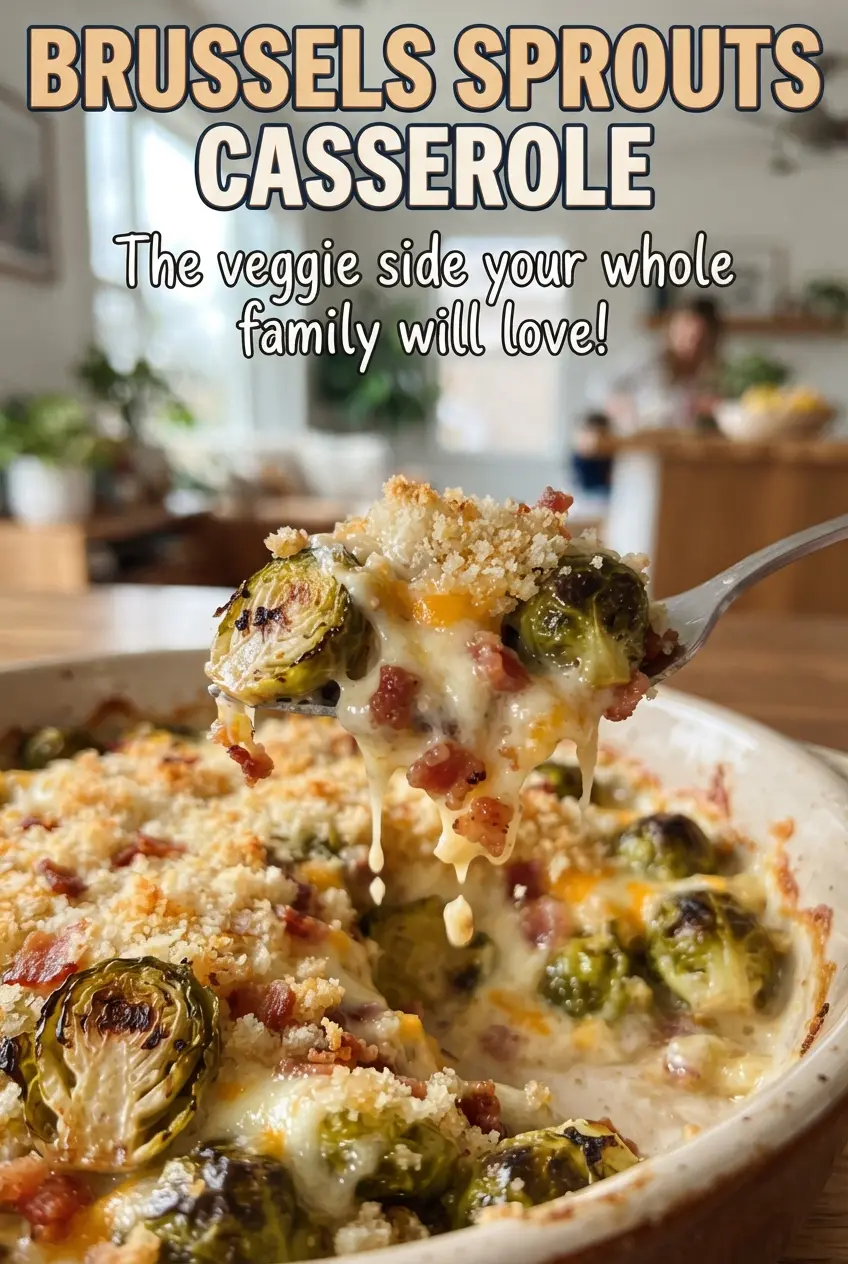
Brussels Sprouts Casserole
Ingredients
Equipment
Method
- Preheat the oven to 400°F. Blanch the Brussels sprouts for 4 minutes in boiling salted water, then drain and set aside.
- Cook the chopped bacon until crisp. Remove the bacon and reserve 1 tablespoon of drippings.
- Melt the butter with the reserved bacon drippings in a skillet over medium heat. Add the minced garlic and all-purpose flour and cook for 1 minute, then whisk in the whole milk and heavy cream.
- Simmer the sauce until thickened. Stir in 1 cup shredded Gruyère, grated Parmesan, salt, and black pepper until smooth.
- Fold the Brussels sprouts and half the reserved bacon into the sauce, then pour into a baking dish. Top with the remaining Gruyère, the remaining bacon, and the panko breadcrumbs.
- Bake for 20–25 minutes at 400°F until bubbly and golden. Let it stand briefly before serving for cleaner scoops.