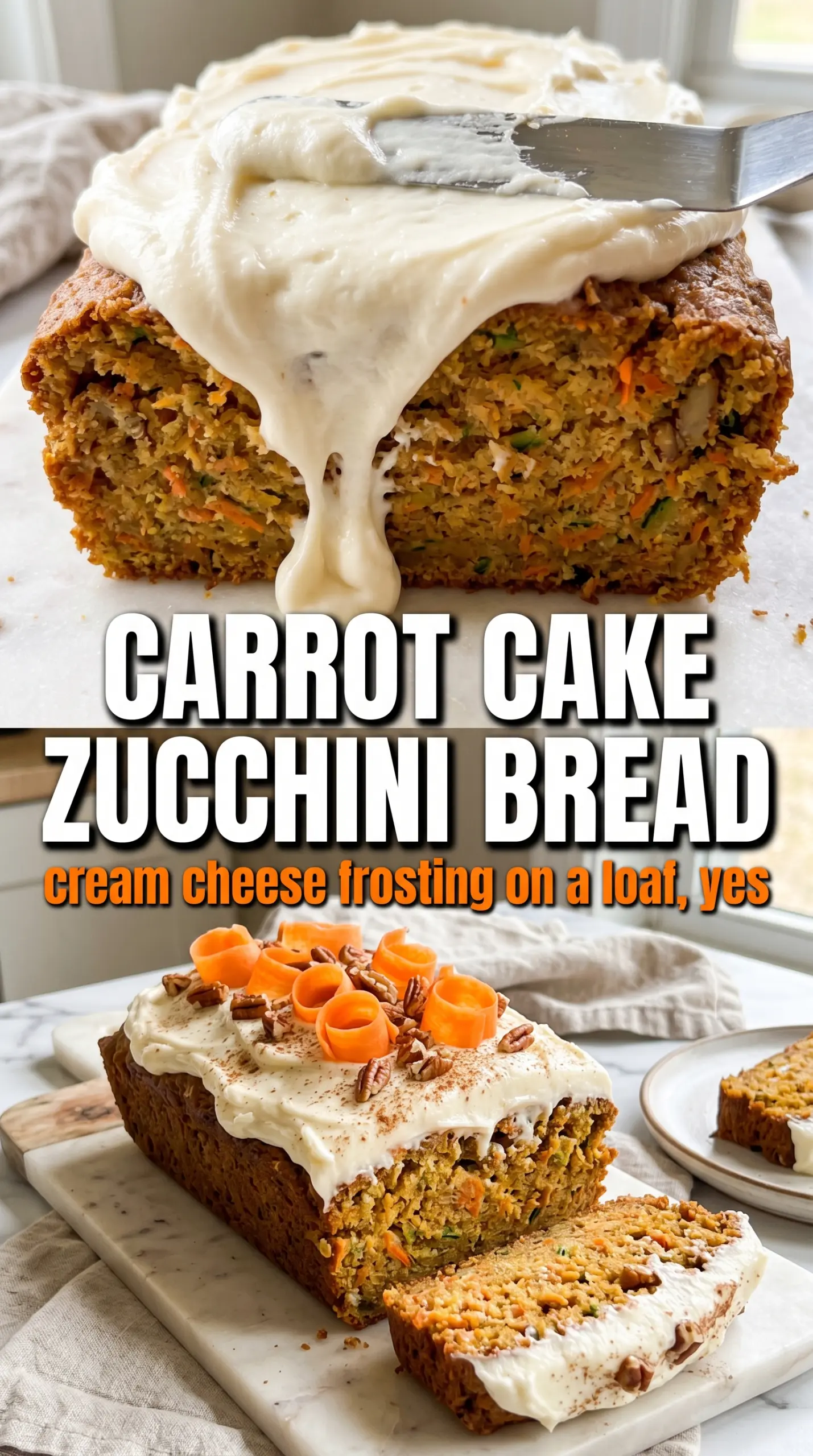
Carrot cake zucchini bread comes out tender, warmly spiced, and just sturdy enough to slice cleanly once it cools. The zucchini disappears into the crumb, but it leaves behind the kind of moisture that keeps a loaf from drying out on day two, while the carrots bring sweetness and those little orange flecks that make every slice look homemade in the best way. The cream cheese frosting on top turns it from a simple quick bread into something you’d gladly serve for breakfast, brunch, or an afternoon coffee break.
What makes this version work is the balance. Brown sugar adds depth, Greek yogurt brings tang and softness, and the oil keeps the loaf plush without making it heavy. The vegetables need a little attention before they go in, though. Zucchini should be squeezed dry so the batter doesn’t turn wet and gummy, and the carrots should be finely grated so they melt into the loaf instead of staying stringy.
Below, I’ll show you how to avoid the two mistakes that ruin most vegetable quick breads: a soggy center and overmixed batter. I’ve also included a few easy variations, plus the best way to frost it so the topping stays thick and spreadable instead of sliding off the loaf.
The loaf baked up moist without being dense, and squeezing the zucchini first made a huge difference. The cream cheese frosting set up nicely once it cooled, and the cinnamon came through in every slice.
Save this carrot cake zucchini bread for the day you want a moist loaf with cream cheese frosting and warm spice in every bite.
The Reason This Loaf Stays Moist Instead of Heavy
Most vegetable quick breads fail the same way: the batter looks fine going into the pan, then the center turns dense because the vegetables were too wet or the batter was mixed too long. This loaf avoids both problems by using just enough zucchini for moisture and just enough flour to hold everything together without becoming tight. The result is tender, but not fragile.
The other thing that matters here is the ratio of fat to liquid. Oil keeps the crumb soft longer than butter does, and Greek yogurt adds body without making the loaf taste flat. If your last zucchini bread came out gummy, the issue was probably one of two things — un-squeezed zucchini or too much stirring after the flour went in. Stop mixing as soon as the dry streaks disappear.
- Why the zucchini needs squeezing — Grated zucchini holds a lot of water, and that water gets released in the oven. Squeeze it dry in a clean kitchen towel or sturdy paper towels before measuring. If you skip that step, the loaf can bake up wet in the middle even when the edges look done.
- Why the carrots should be finely grated — Fine shreds soften during baking and blend into the crumb. Coarse carrot pieces stay firm and can make the loaf slice unevenly.
- Why brown sugar beats white sugar here — Brown sugar adds moisture and a little molasses depth that works with the cinnamon and ginger. White sugar will still sweeten the loaf, but it won’t give the same soft, bakery-style crumb.
What Each Ingredient Is Doing in the Batter
The flour gives the loaf its structure, but this is not a recipe where more flour means a better slice. Measure carefully and don’t pack it into the cup. Too much flour is the fastest way to lose that soft, cake-like crumb.
- Brown sugar — This sweetens the loaf and keeps it moist. Packed brown sugar gives the best texture here, and it helps the spices taste fuller.
- Eggs — They bind the batter and help the loaf rise cleanly. Room-temperature eggs mix in more smoothly, but cold eggs will still work if that’s what you’ve got.
- Oil — This is what keeps the bread tender for days. Melted butter can be used in a pinch, but the crumb won’t stay as soft.
- Greek yogurt — It adds tang and a little extra richness without thinning the batter. Sour cream works the same way if that’s what’s in your fridge.
- Spices — Cinnamon does most of the work, while the ginger and nutmeg round it out. Fresh spices matter more than fancy brands here; stale cinnamon will taste flat.
- Cream cheese frosting — Use softened cream cheese, not melted. If it’s too warm, the frosting turns loose and won’t sit nicely on the cooled loaf.
Building the Loaf Without Overmixing
Mixing the Wet Base
Start by whisking the brown sugar, eggs, oil, yogurt, and vanilla until the mixture looks smooth and glossy. You’re not trying to whip air into it; you just want the sugar broken up and the eggs fully blended. If the mixture looks a little grainy from the brown sugar, that’s fine. The batter will finish coming together once the dry ingredients go in.
Adding the Vegetables
Stir in the grated zucchini and carrots before the flour. That gives them a chance to distribute evenly without forcing you to overwork the batter later. If the zucchini was squeezed properly, the mixture should look moist but not watery. If liquid pools at the bottom of the bowl, the zucchini still needs more squeezing before it goes any further.
Bringing in the Dry Ingredients
Fold the flour, baking soda, baking powder, salt, and spices into the wet mixture just until no dry streaks remain. Stop the moment the batter looks combined. Overmixing develops the gluten in the flour and gives you a tough, tunnel-filled loaf instead of a tender crumb. Fold in raisins or pecans at the very end if you’re using them, and keep the strokes gentle.
Baking and Cooling
Scrape the batter into a greased 9×5 loaf pan and bake until a toothpick comes out clean from the center, usually 55 to 65 minutes. The top should be deeply golden and set, and the loaf should spring back lightly when touched. If the top browns too quickly, lay a loose piece of foil over it for the last part of baking. Let the loaf cool completely before frosting or the cream cheese topping will melt and slide off.
How to Tweak It Without Losing the Texture
Make It Nutty and More Dessert-Like
Fold in the pecans instead of the raisins for a little crunch and a more classic carrot cake feel. Toasted pecans bring the best flavor, but even plain ones add a nice contrast to the soft crumb. This version tastes a little richer and is the one I’d serve with coffee after dinner.
Skip the Frosting for an Everyday Breakfast Loaf
Leave off the cream cheese frosting and you’ve got a softer, less sweet breakfast bread that still tastes complete on its own. The crumb is flavorful enough that you won’t miss the topping. A light smear of butter on a warm slice is enough if you want something simpler.
Dairy-Free Version
Use a plain dairy-free yogurt in place of Greek yogurt, then frost with a dairy-free cream cheese substitute if you want the topping. The loaf itself still bakes up tender and moist because the oil carries most of the texture here. Just check that your yogurt is unsweetened, or the bread can turn a little too sweet.
Storage and Reheating
- Refrigerator: Store frosted or unfrosted loaf in an airtight container for up to 5 days. The crumb stays moist, though the frosting firms up in the fridge.
- Freezer: Freeze the unfrosted loaf for up to 2 months, tightly wrapped and then placed in a freezer bag. Frost after thawing for the cleanest texture, since cream cheese frosting doesn’t thaw as neatly.
- Reheating: Warm slices in the microwave for 10 to 15 seconds or in a low oven until just heated through. Don’t overheat it, or the bread loses its soft crumb and the frosting can separate.
Answers to the Questions Worth Asking
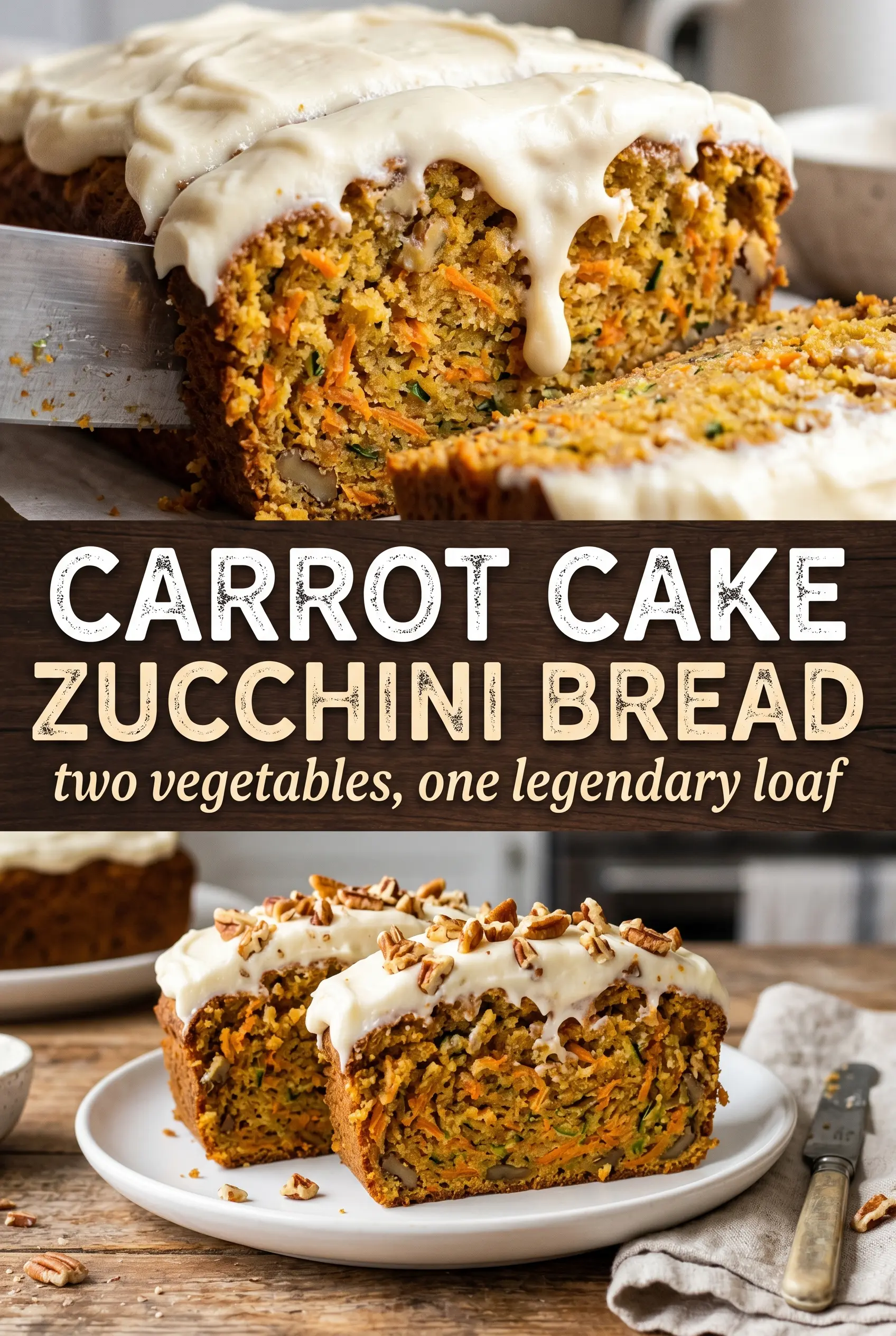
Carrot Cake Zucchini Bread
Ingredients
Equipment
Method
- Preheat the oven to 350°F and grease a 9x5 loaf pan.
- Set the pan on a stable baking area so it’s ready for the batter.
- Whisk all-purpose flour, baking soda, baking powder, salt, cinnamon, ginger, and nutmeg together until evenly combined.
- Beat brown sugar, eggs, vegetable oil, Greek yogurt, and vanilla extract until smooth.
- Stir the grated zucchini and finely grated carrots into the wet mixture.
- Fold the dry ingredients into the wet just until combined, then fold in raisins or pecans if using.
- Bake the loaf for 55–65 minutes at 350°F, until a toothpick comes out clean.
- Cool the loaf completely before frosting.
- Beat cream cheese frosting ingredients—softened cream cheese, powdered sugar, vanilla, and milk—until smooth.
- Spread the frosting generously over the cooled loaf.