Caprese pasta salad works because it keeps the best parts of a caprese plate intact: sweet tomatoes, creamy mozzarella, and basil that still tastes alive when it hits the bowl. The pasta turns those flavors into something more substantial without weighing them down, and the balsamic glaze at the end gives each bite a sharp, glossy finish that makes people go back for another forkful.
The key is treating the pasta like a neutral base, not the main event. I cook it just to al dente, cool it all the way down, then dress it while it’s no longer steaming so the basil stays bright and the mozzarella doesn’t soften into mush. A little minced garlic in the dressing adds backbone, but the real trick is adding the glaze after everything else is mixed so it stays concentrated instead of disappearing into the salad.
Below, I’ll show you how to keep the tomatoes juicy without making the bowl watery, when to fold in the basil so it stays fresh, and the small serving trick that makes this look as good as it tastes.
The balsamic glaze stayed right on top instead of soaking in, and the mozzarella held its shape even after chilling. I made it in the morning for a cookout and it still tasted fresh by dinner.
Love the fresh mozzarella, basil, and balsamic finish? Save this Caprese Pasta Salad for the next time you need a side that looks polished without much effort.
The Reason This Pasta Salad Stays Fresh Instead of Turning Heavy
Most pasta salads go wrong the same way: the pasta is hot, the cheese gets soft, and the dressing disappears into a bland coating. This version stays light because the pasta cools before it meets the mozzarella and basil, which keeps the cheese from losing its shape and keeps the herbs from bruising into the bowl. You still get a full coating of dressing, but it clings instead of pooling.
The other thing working in your favor is the balance between acid and fat. Olive oil softens the sharpness of the balsamic vinegar, and the garlic gives the salad enough bite to keep it from tasting like plain pasta with toppings. That balance matters even more once the balsamic glaze goes on, because the glaze brings sweetness and tang in a concentrated finish that makes the tomatoes taste even more tomato-y.
What Each Ingredient Is Actually Doing in the Bowl
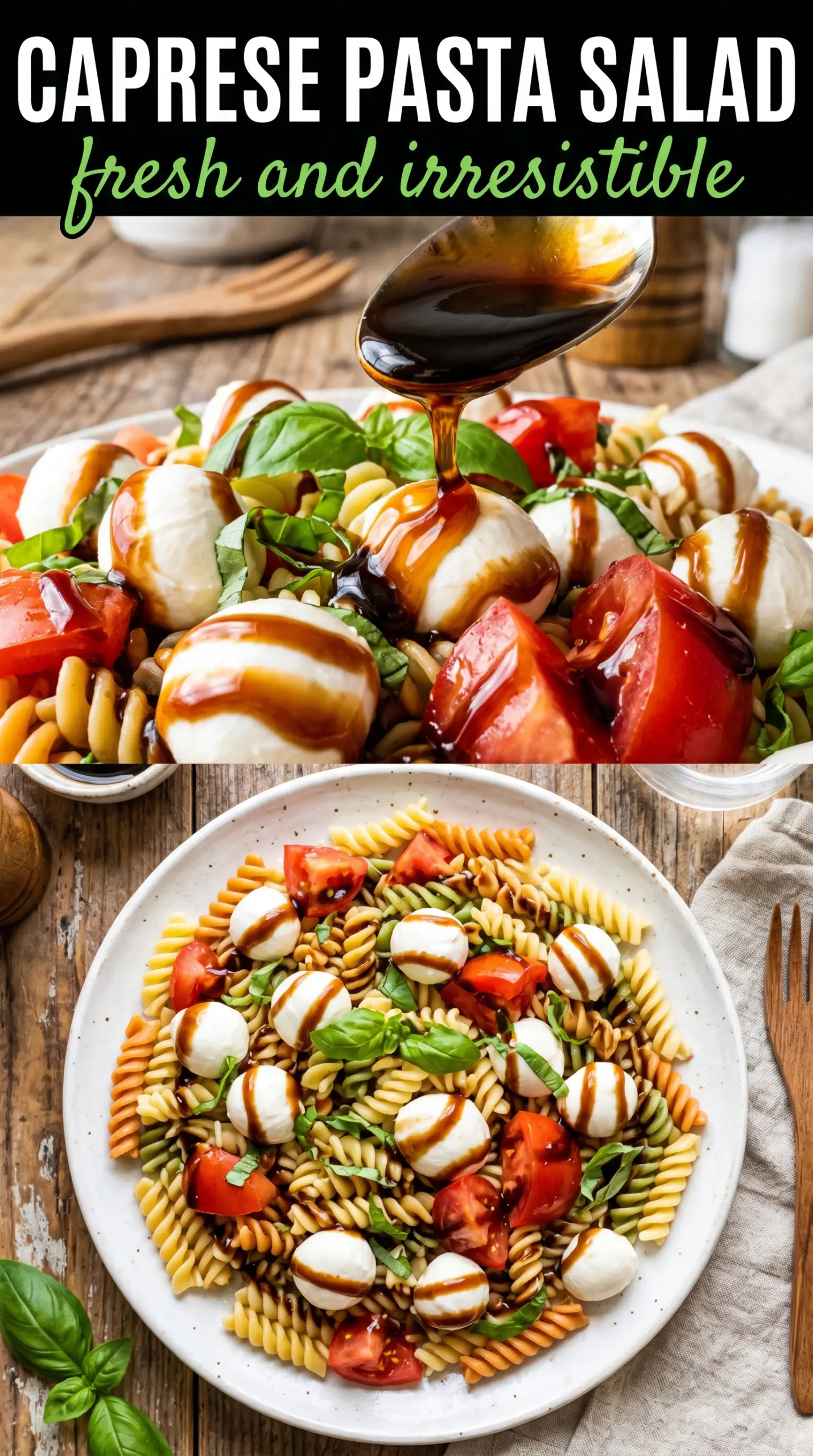
- Penne or gemelli — Both shapes hold onto the dressing well, but gemelli gives you a little more twist and cling if you want each bite to catch bits of tomato and basil. Penne is the more familiar choice and works just fine.
- Cherry tomatoes — Use ripe tomatoes here. They bring the sweetness that makes the salad taste like caprese instead of just pasta. Halving them helps their juices mingle with the dressing without flooding the bowl.
- Fresh mozzarella — This is not the place for shredded mozzarella. Fresh mozzarella gives you the milky, soft texture that makes the salad feel like a real caprese. Bocconcini is the easiest swap because it’s already portioned and stays neat when tossed.
- Fresh basil — Basil should go in near the end so it stays green and fragrant. If you chop it too finely, it bruises and darkens faster, so I like to tear larger leaves or leave smaller ones whole.
- Balsamic glaze — The glaze is what makes the dish look finished and taste layered. Regular balsamic mixed into the dressing gives acidity, but the glaze adds thickness and a sweet-sour punch on top. If you don’t have glaze, simmer balsamic vinegar until it coats a spoon.
Building the Salad So the Basil Stays Bright
Cool the Pasta All the Way Down
Cook the pasta just until al dente, then drain it and let it come to room temperature before you dress it. Warm pasta wilts basil and softens the mozzarella too fast, which is how you end up with a salad that looks tired by the time it reaches the table. If the pasta is still steaming, spread it out briefly on a tray so it stops cooking and sheds heat faster.
Whisk the Dressing Until It Looks Emulsified
Olive oil, balsamic vinegar, garlic, salt, and pepper should come together in a bowl before anything else goes in. The dressing doesn’t need to turn thick, but it should look combined instead of separated into shiny oil and dark vinegar. If the garlic is added raw and left in the dressing for a few minutes, it softens and spreads through the whole salad instead of tasting harsh in one bite.
Fold, Don’t Smash
Once the pasta is cool, toss it with the dressing and tomatoes first, then gently fold in the mozzarella and most of the basil. That order matters because the tomatoes can take a little mixing, while the cheese and herbs need a lighter hand. Use a wide spoon or spatula and stop as soon as everything is coated; overmixing is what tears the basil and turns the mozzarella ragged.
Finish at the Platter, Not in the Bowl
Arrange the salad on a serving platter if you want the best look and texture. Drizzle the balsamic glaze over the top in thin lines, then finish with flaky sea salt right before serving so it still crunches against the soft cheese and tomatoes. The glaze belongs on top because it should be a visible finish, not something lost in the dressing.
How to Adapt It Without Losing the Caprese Character
Make It Gluten-Free
Swap in your favorite gluten-free short pasta and cook it just to the point of tenderness. GF pasta can go soft fast after mixing, so rinse it briefly after draining if that brand tends to stick, then cool it completely before dressing.
Use Burrata for a Richer Finish
Burrata gives you a creamier center and a more indulgent result, but it should be torn over the top right before serving instead of stirred through. You lose the clean slices of mozzarella, but you gain a luscious texture that works especially well for a special dinner.
Turn It Into a Heartier Main
Add grilled chicken, white beans, or chickpeas if you want this to eat like lunch instead of a side. Keep the caprese components dominant and season the add-ins lightly so they support the salad instead of taking it in a different direction.
Storage and Reheating
- Refrigerator: Store for up to 3 days. The basil will darken a bit and the pasta will absorb more dressing, so the salad tastes best on day one and day two.
- Freezer: Don’t freeze this one. Fresh mozzarella and tomatoes change texture in a way that can’t be fixed after thawing.
- Reheating: Serve it cold or at room temperature. If it’s been refrigerated, let it sit out for 15 to 20 minutes and add a fresh drizzle of olive oil or balsamic glaze if it tastes tight.
Questions I Get Asked About This Recipe
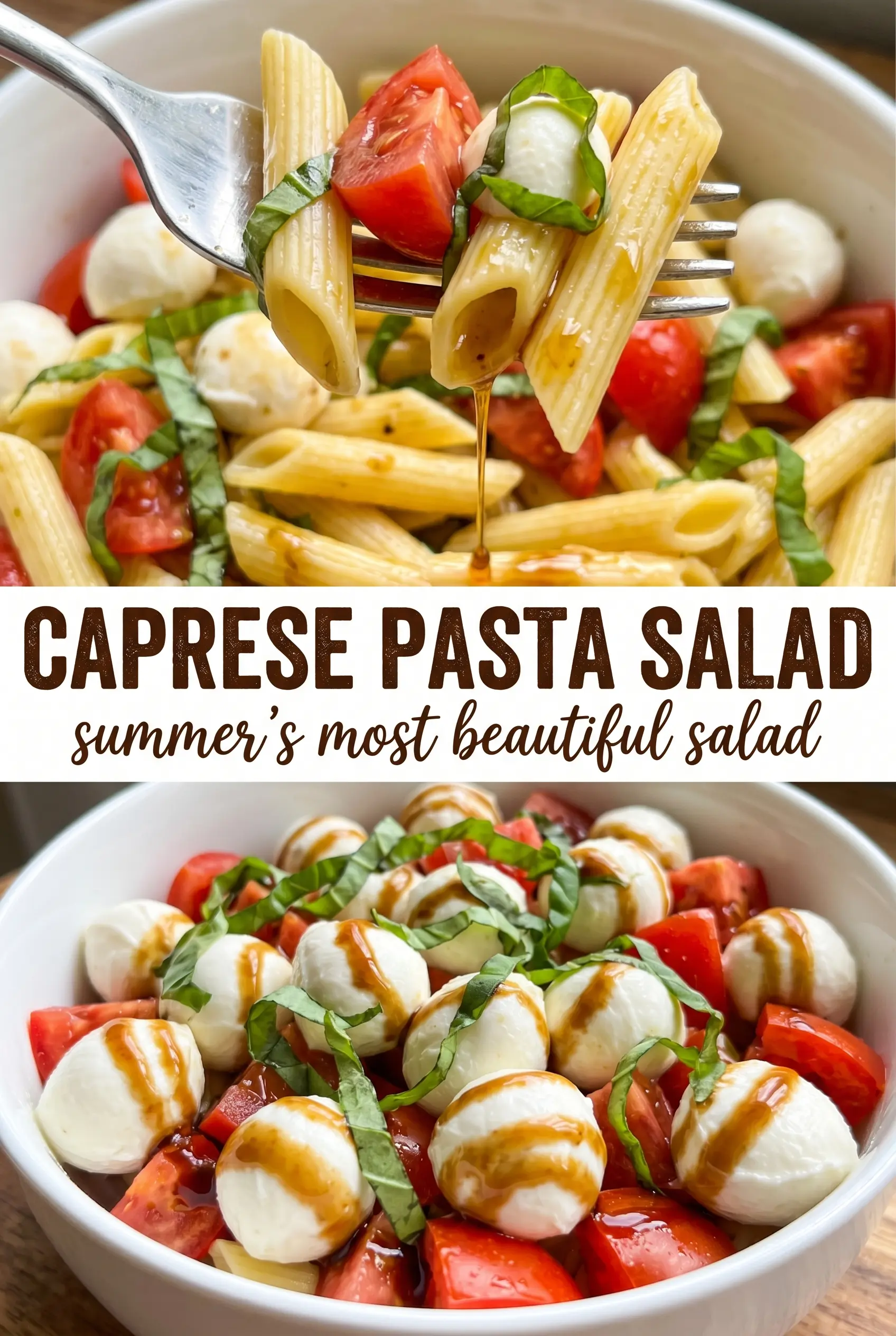
Caprese Pasta Salad
Ingredients
Equipment
Method
- Bring a pot of water to a boil, then cook the penne or gemelli to al dente (follow package timing). Drain the pasta and spread it to cool to room temperature.
- Whisk olive oil, balsamic vinegar, minced garlic, salt, and black pepper until smooth and emulsified.
- Toss the cooled pasta with the dressing and the halved cherry tomatoes until evenly coated.
- Gently fold in the sliced fresh mozzarella and most of the basil so the pieces stay intact.
- Arrange the pasta salad on a serving platter and scatter the remaining basil over the top.
- Drizzle generously with balsamic glaze in an even layer, then finish with flaky sea salt.