Blackened Cajun chicken thighs over creamy orzo hit that sweet spot between bold and comforting. The chicken brings a smoky crust and a little heat, while the orzo turns silky and rich without feeling heavy. Bell peppers and onion keep the whole pan bright, and the lemon at the end sharpens everything so the dish doesn’t taste flat.
What makes this version work is the order. The chicken sears first, so the pan gets those dark, seasoned bits that carry into the sauce. Orzo toasts briefly before the broth goes in, which helps it stay flavorful instead of turning soft and bland. The cream and Parmesan finish the dish, but they go in after the pasta has already absorbed the broth, so the sauce ends up thick and glossy instead of loose.
Below, I’ve included the small timing details that keep the chicken juicy and the orzo creamy, plus a few swaps if you want to adjust the heat or make it a little lighter.
The chicken got that perfect blackened crust and the orzo stayed creamy instead of turning mushy. I added the lemon at the end like you said, and it cut through the richness in the best way.
Save this Cajun Chicken Orzo for a creamy one-pan dinner with blackened chicken, tender orzo, and just enough heat.
The Trick to Keeping the Chicken Blackened Without Drying It Out
Cajun chicken gets its best flavor from a hard sear, but that’s also where people overcook it. Boneless thighs are forgiving, which is why they work here. They can take the high heat needed for that dark crust without turning stringy before the rest of the pan is ready.
The key is to let the chicken develop color before you touch it. If it sticks at first, it usually isn’t ready yet. Once the crust releases and the centers hit 165°F, pull the chicken out right away. It finishes sliced on top of the orzo, so it doesn’t need to sit in the pan any longer.
- Cajun seasoning — This does more than add heat. It seasons the chicken, flavors the vegetables, and gives the broth a darker, richer taste once it hits the pan. If your blend is salt-heavy, use a lighter hand elsewhere.
- Chicken thighs — Thighs stay juicier than breasts in a hot skillet, which matters because this recipe depends on a strong sear. Chicken breast will work, but it needs less time and can dry out fast if you push it past done.
- Orzo — Orzo thickens the pan sauce as it cooks, almost like a risotto shortcut. Regular pasta won’t behave the same way. If you swap it, the liquid ratio and timing will need to change.
What Each Ingredient Is Doing in the Pan

Boneless skinless chicken thighs bring enough fat to brown well and stay tender while the orzo finishes. If you use breasts, cut them a little thinner so they cook through before the pan dries out.
Bell peppers and onion build sweetness under the spice. They also keep the dish from tasting like straight cream and seasoning. Dice them small so they soften in the few minutes you give them.
Garlic, smoked paprika, and Parmesan carry the depth. The garlic blooms in the hot pan, the smoked paprika adds a little extra warmth, and the Parmesan helps the sauce tighten at the end. Heavy cream is the ingredient that keeps everything smooth; milk can work in a pinch, but the sauce will be thinner and less luxurious.
Building the Creamy Sauce Without Breaking It
Get the Chicken Out First
Season the thighs with half the Cajun seasoning and sear them in hot oil until the surface is dark and the centers are cooked through. Pull them onto a plate before you start the vegetables. If you leave the chicken in while the orzo cooks, it will keep tightening and lose the juiciness that makes this dish work.
Cook the Vegetables in the Drippings
Add the peppers and onion to the same skillet and cook them until they start to soften and pick up color from the pan. That browned residue is part of the sauce, so don’t scrub it out. Stir in the garlic and the remaining Cajun seasoning for just a minute; garlic burns fast once the pan is hot and dry.
Toast the Orzo Before the Broth Goes In
Stir the dry orzo into the vegetables and let it toast briefly. You’re looking for a nutty smell, not deep color. Then add the broth and keep the mixture at a steady simmer, stirring often so the pasta doesn’t stick to the bottom and scorch before it softens.
Finish With Cream and Cheese Off the Hard Heat
Once the orzo is tender and most of the broth is absorbed, stir in the cream and Parmesan. Keep the heat low enough that the sauce just bubbles gently. If it boils hard, the cheese can turn grainy and the cream can separate, which is the fastest way to ruin the silky texture you want.
How to Adjust This Cajun Chicken Orzo Without Losing the Point
Make it lighter
Swap the heavy cream for half-and-half and use a little less Parmesan. The sauce won’t be as thick, but it still coats the orzo well if you simmer it gently at the end. Full milk works in a pinch, though the finish will be thinner and less rich.
Dial back the heat
Use 1 tablespoon of Cajun seasoning on the chicken instead of 2, and hold back a little in the vegetable base. You’ll still get the smoky, savory backbone, just with less burn on the finish. A squeeze of lemon matters more here because it keeps the dish bright when the spice is gentler.
Make it gluten-free
Use a gluten-free orzo-style pasta and watch the liquid closely, because some gluten-free pastas soften faster and release starch differently. Stir often and stop cooking as soon as the pasta is tender. The sauce should still look loose in the pan before the cream goes in, since it thickens as it rests.
Use chicken breast instead of thighs
Cut the breast into thick strips or cutlets so it cooks evenly and fast. Sear it just until done, then pull it out the same way you would with thighs. Breast meat dries out faster, so the biggest mistake is leaving it in the skillet while the orzo simmers.
Storage and Reheating
- Refrigerator: Store leftovers in an airtight container for up to 3 days. The orzo thickens as it chills, so it will look more set the next day.
- Freezer: It freezes, but the cream sauce can separate a little after thawing. For the best texture, freeze the chicken and orzo mixture before adding the cream, then finish with cream and Parmesan after reheating.
- Reheating: Warm gently on the stove with a splash of broth or cream over low heat. Microwave reheating works too, but stop and stir often so the orzo doesn’t dry out at the edges before the center heats through.
Answers to the Questions Worth Asking
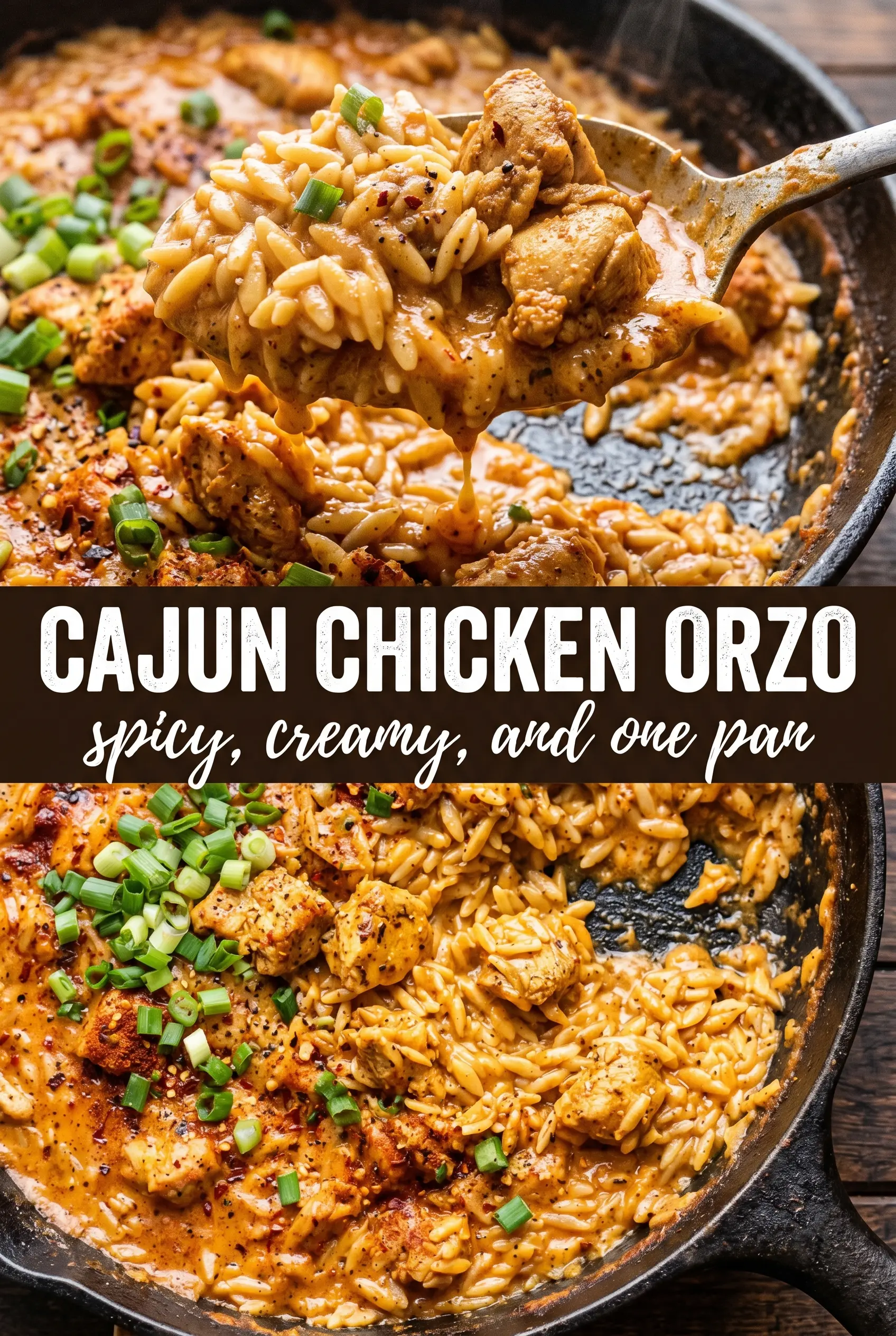
Cajun Chicken Orzo
Ingredients
Equipment
Method
- Rub the chicken thighs with 1 tablespoon Cajun seasoning and sear in olive oil in a large deep skillet over medium-high heat for 4-5 minutes per side until blackened and cooked through to 165°F; remove and slice.
- Slice the cooked chicken thighs and set aside while you build the orzo in the same skillet.
- In the same skillet, cook bell peppers and onion over medium heat for 4 minutes.
- Add garlic and the remaining Cajun seasoning and cook for 1 minute.
- Add the orzo and toast for 1 minute, then pour in the chicken broth and bring to a simmer.
- Cook uncovered for 10-12 minutes, stirring often, until the orzo is tender.
- Stir in the heavy cream and Parmesan and simmer for 2 minutes until creamy.
- Top with sliced Cajun chicken.
- Garnish with sliced green onions and serve with lemon wedges.