Blackened Cajun chicken thighs over creamy orzo hit the table with the kind of heat and comfort that makes people pause halfway through the first bite. The chicken brings a deep, seasoned crust, while the orzo soaks up broth, cream, and Parmesan until it turns rich and spoonable without losing its shape. Bell peppers and onion keep the skillet tasting fresh, and the little pops of green onion and lemon at the end keep the whole dish from feeling heavy.
What makes this version work is the order of the cooking. The chicken sears first, and those browned bits stay in the pan to season the vegetables and the orzo. Toasting the dry pasta before the broth goes in gives it a nuttier edge and helps it hold up in the creamy sauce. The cream and Parmesan go in at the end, after the orzo is tender, so the sauce stays smooth instead of turning gummy.
Below, you’ll find the skillet rhythm that keeps the chicken juicy, the orzo from clumping, and the sauce bold enough to stand up to all that Cajun seasoning. There’s also a few useful swaps if you want to lighten it up or stretch it into another meal.
The chicken stayed juicy and the orzo came out creamy without turning mushy. I loved that the peppers kept a little bite, and the lemon at the end cut through the richness perfectly.
Save this Cajun Chicken Orzo for a one-pan dinner with blackened chicken, creamy orzo, and just enough heat to keep every bite interesting.
The Part Most Cajun Chicken Orzo Gets Wrong: The Chicken Has to Season the Pan
The biggest mistake in a skillet pasta like this is treating the chicken like a separate component. If you pull it out too early or leave the pan too clean, you lose the browned bits that give the whole dish its backbone. Those dark spots on the bottom are not burned debris; they’re concentrated flavor, and they’re exactly what the broth loosens into the orzo later.
The other place people miss is heat control. Cajun seasoning can scorch if the pan is screaming hot for too long, but if the heat is too low, you won’t get that blackened crust on the thighs. Medium-high heat gives you the crust you want, and the chicken finishes cooking as it rests and gets sliced. Use an instant-read thermometer if you have one, and pull it at 165°F so it stays juicy.
What Each Ingredient Is Doing in This Skillet
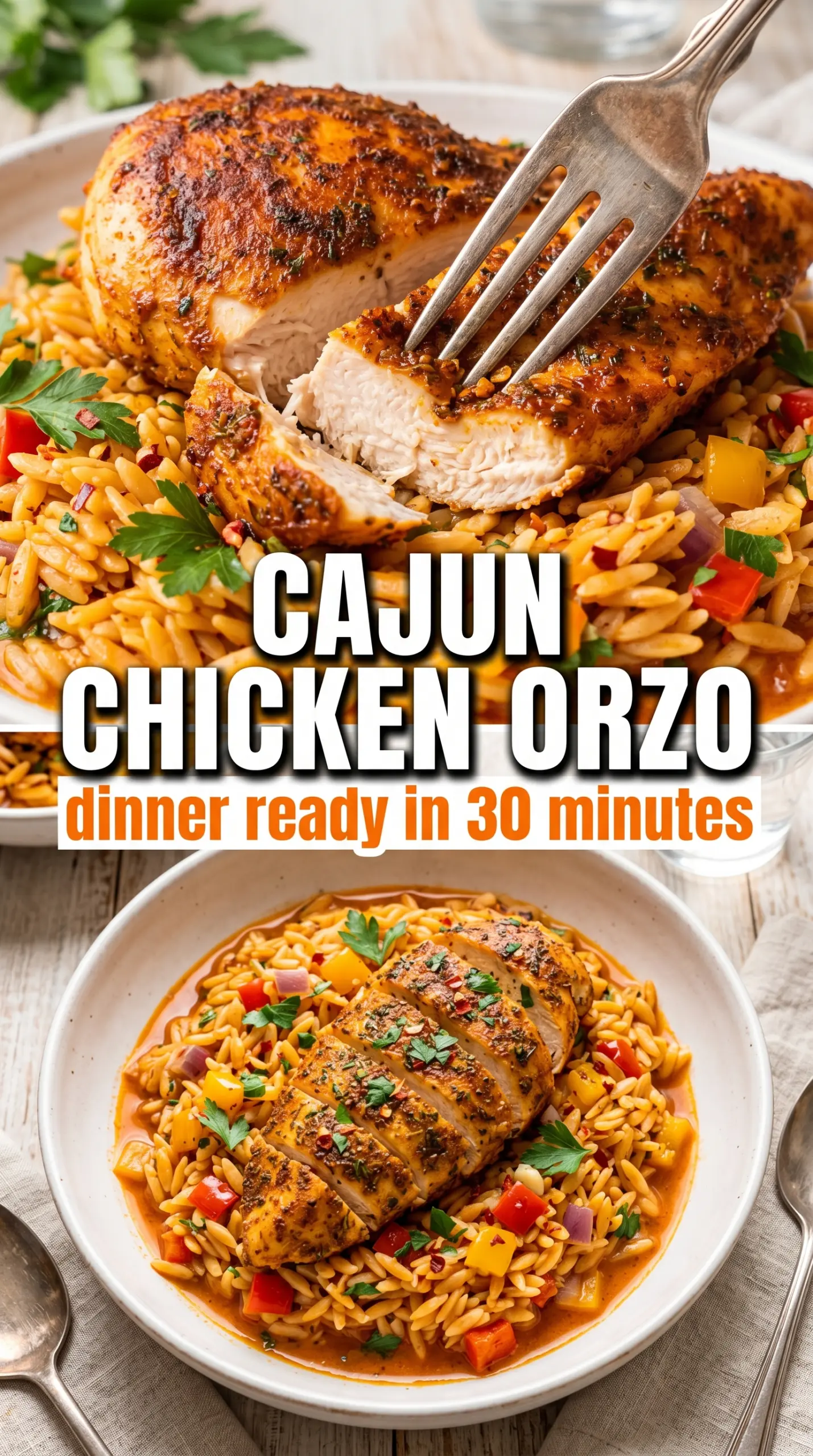
- Boneless skinless chicken thighs — Thighs stay juicier than breasts and handle the high heat needed for that blackened crust. If you swap in chicken breasts, cut them thinner so they cook through before the seasoning burns.
- Cajun seasoning — This is the main source of heat, salt, and smoke, so use one you like on its own. If your blend is salt-heavy, taste the finished orzo before adding extra salt anywhere else.
- Orzo — Orzo gives you the creamy feel of risotto with much less fuss, but it still needs stirring so it doesn’t stick. Toasting it in the pan before the broth goes in keeps the texture from going soft or pasty.
- Heavy cream and Parmesan — These finish the sauce and give it body. Half-and-half works in a pinch, but the sauce will be a little looser and less rich; add the Parmesan off the heat if you want the smoothest texture.
- Bell peppers, onion, and garlic — They build the sweet, savory base that balances the spice. Dice them evenly so they soften at the same pace and disappear into the orzo instead of staying chunky and raw-tasting.
- Smoked paprika — This deepens the color and adds a round smoky note without making the dish taste like barbecue. It matters more if your Cajun seasoning leans bright or salty rather than smoky.
Building the Creamy Orzo Without Letting It Go Gluey
Blackening the Chicken First
Rub the chicken thighs with one tablespoon of Cajun seasoning, then lay them in hot olive oil and leave them alone long enough to form a crust. If you move them too early, the seasoning will smear and stick instead of searing. You want a dark, almost lacquered surface and an internal temperature of 165°F. Once they’re done, set them aside on a plate; don’t cover them tightly or the crust will soften.
Cooking the Vegetables in the Same Pan
Add the peppers and onion straight into the skillet with the browned chicken drippings. They should soften and pick up color at the edges, not steam in a puddle. When the garlic goes in, stir constantly for about a minute so it smells fragrant but doesn’t turn bitter. That short burst is enough to wake it up before the liquid hits the pan.
Letting the Orzo Toast Before It Simmer
Stir the dry orzo into the vegetables and cook it for a minute before adding the broth. That quick toast gives the pasta a little more structure and keeps the finished dish from tasting flat. Once the broth goes in, stir often and scrape the bottom of the pan so the orzo cooks evenly and picks up every bit of flavor. If the liquid disappears before the pasta is tender, add a splash more broth rather than cranking the heat.
Finishing with Cream and Cheese
When the orzo is tender and most of the broth is absorbed, lower the heat and stir in the cream and Parmesan. This is the point where a lot of skillet pastas break, usually because the heat is too high or the cheese goes in too fast. A gentle simmer is enough here. The sauce should turn glossy and cling to the pasta instead of pooling around it. Nestle the sliced chicken on top and let it warm through for a minute before serving.
How to Adapt This Cajun Chicken Orzo for Different Kitchens and Tastes
Make it dairy-free
Use full-fat coconut milk or an unsweetened dairy-free creamer in place of the heavy cream, and skip the Parmesan or use a plant-based alternative that melts well. The sauce will be a little less sharp and a little more rounded, but it still clings nicely if you keep the heat low at the end.
Swap the chicken thighs for chicken breasts
Chicken breasts work if that’s what you have, but they dry out faster, so slice them in half horizontally or pound them to even thickness before seasoning. They’ll sear faster and won’t have quite the same richness as thighs, so watch the thermometer closely and pull them as soon as they hit 165°F.
Make it a little less spicy
Cut the Cajun seasoning back to 1 tablespoon total and add a little extra smoked paprika for color and warmth without as much burn. You’ll still get the classic Cajun taste, just with a softer finish that works better for kids or anyone who likes heat in the background.
Storage and Reheating
- Refrigerator: Store leftovers in an airtight container for up to 3 days. The orzo thickens as it sits, so expect it to tighten up a bit.
- Freezer: It freezes, but the cream sauce loses some of its smooth texture after thawing. If you do freeze it, cool it completely first and thaw overnight in the fridge.
- Reheating: Reheat gently on the stove with a splash of broth or cream over low heat, stirring often. The common mistake is blasting it in the microwave until the sauce separates and the chicken dries out.
Answers to the Questions Worth Asking

Cajun Chicken Orzo
Ingredients
Equipment
Method
- Rub chicken thighs with 1 tbsp Cajun seasoning and press the coating evenly onto the surface. Heat olive oil in a large deep cast iron skillet over medium-high until shimmering, then sear chicken for 4-5 minutes per side until blackened and cooked through to 165°F (74°C).
- Transfer chicken to a plate and slice into bite-size pieces after it rests briefly, so juices redistribute.
- In the same skillet, cook diced bell peppers and onion over medium heat for 4 minutes until slightly softened. Add minced garlic and the remaining Cajun seasoning (plus smoked paprika) and cook for 1 minute until fragrant.
- Add orzo to the skillet and toast for 1 minute, stirring to coat in the Cajun oil. Pour in chicken broth, bring to a simmer, then cook uncovered for 10-12 minutes, stirring often, until the orzo is tender.
- Stir in heavy cream and grated Parmesan, then simmer for 2 minutes until creamy and glossy. Top with sliced Cajun chicken and let everything warm through for 1-2 minutes.
- Garnish with sliced green onions and serve with lemon wedges for brightness.