Butternut squash casserole earns its spot on the table because it lands somewhere between a side dish and dessert in the best possible way: silky squash underneath, a buttery pecan crunch on top, and just enough brown sugar to round everything out without turning it cloying. The contrast is the whole point. You get a creamy base that holds its shape when served, then that streusel-like topping breaks into crisp little clusters with every spoonful.
The part that makes this version work is the squash itself. It needs to be cooked until it mashes almost effortlessly, then drained well so the filling stays rich instead of watery. The eggs help set the casserole, while the vanilla and cinnamon give the squash a warm, almost pie-like backbone. The pecan topping stays crumbly because the butter is mixed into flour and sugar just enough to form coarse pieces, not a paste.
Below, you’ll find the small details that matter most: how to keep the casserole from getting loose, why the topping bakes up better when it’s evenly scattered, and a few smart swaps if you need to adjust the dish for your table.
The squash baked up creamy instead of watery, and the pecan topping stayed crisp even after sitting on the table for a while. My family kept going back for seconds.
Save this butternut squash casserole for the holidays, potlucks, and any dinner that needs a creamy squash side with a crisp pecan topping.
The Step That Keeps the Filling Creamy, Not Watery
Butternut squash carries a lot of water, and that’s the biggest reason casseroles like this go loose in the center. Boiling until the squash is tender is only half the job; draining it well is what keeps the finished dish spoonable instead of soupy. If the squash sits in a colander for a few extra minutes, even better. That little bit of patience pays off in a thicker, more custardy bake.
The other thing that matters here is balance. The eggs set the filling, the butter gives it richness, and the brown sugar doesn’t just sweeten the squash — it gives the whole dish that caramel note people expect from a Southern-style casserole. Stir everything until smooth, but don’t beat it until airy. You want a dense, creamy base that will slice and hold once it comes out of the oven.
What the Squash, Pecans, and Vanilla Are Each Doing Here
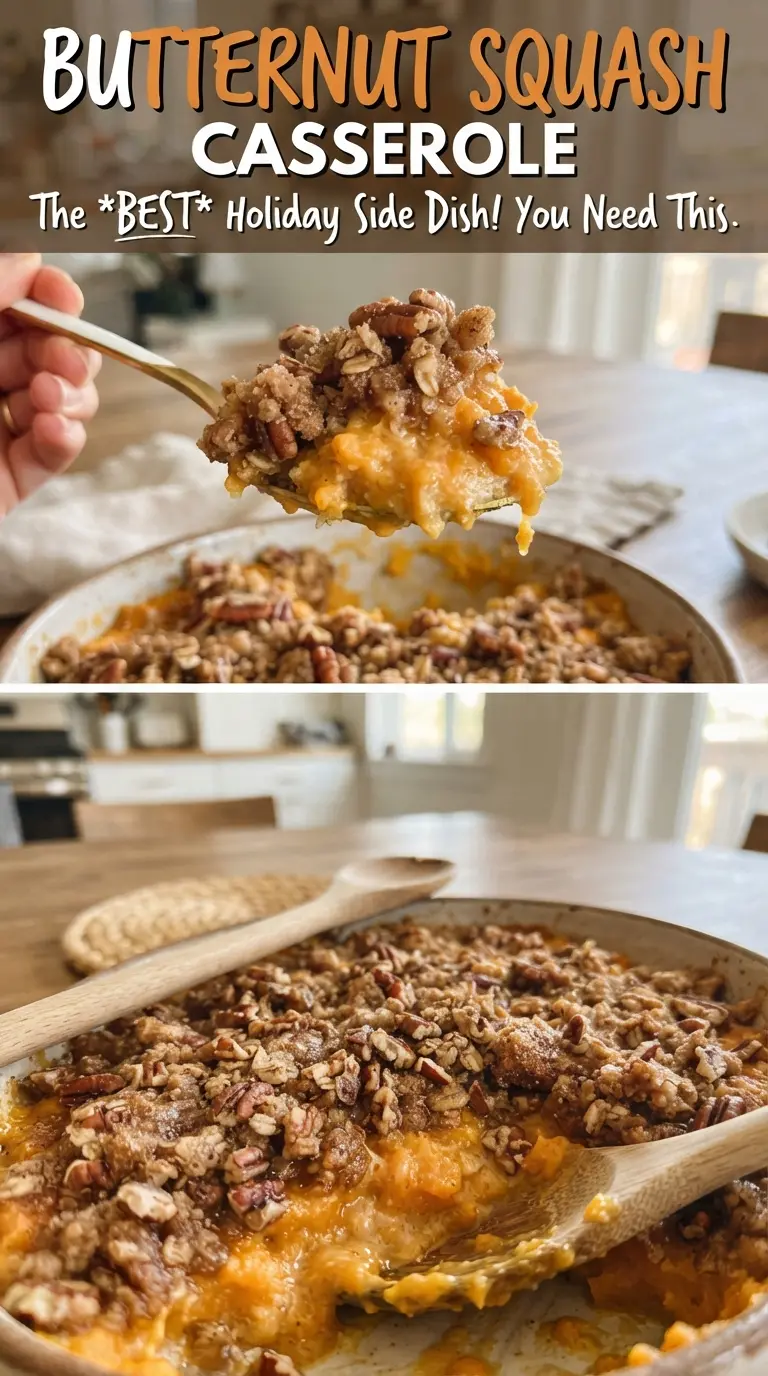
- Butternut squash — Fresh squash gives you the cleanest, sweetest base and the best texture. Frozen squash can work in a pinch, but it usually holds more water, so drain it thoroughly and expect a slightly softer casserole.
- Butter — Melted butter carries the brown sugar through the filling and keeps the top crumbly instead of dry. Use real butter here; the flavor shows up in both layers.
- Brown sugar — This is what gives the casserole its warm, caramelized depth. You can cut it back a little if you want a less sweet side dish, but don’t remove it entirely or the flavor turns flat.
- Eggs — The eggs are what turn mashed squash into a casserole that sets. If you skip them, the filling will taste fine but it won’t slice cleanly.
- Pecans — Chop them small enough that they cling to the topping, not so fine that they disappear. If you only have walnuts, they’ll work, but the flavor will be sharper and a little less buttery.
- Flour — This gives the topping structure. If you need a gluten-free version, use a 1:1 gluten-free flour blend; the topping won’t brown quite the same, but it will still crumble nicely.
Building the Casserole So the Top Stays Crisp
Cooking Down the Squash
Boil the squash until a fork slides through it with no resistance at all. If there’s any firmness left in the center, the casserole won’t mash smoothly and you’ll end up with little hard pockets in the finished dish. Drain it well before you add anything else, because excess water is what makes the filling thin. A rough mash is fine at this stage as long as the squash is fully tender.
Mixing the Filling
Add the butter, brown sugar, eggs, milk, vanilla, cinnamon, and salt while the squash is still warm enough to mash easily. That warmth helps the butter melt and the sugar dissolve, which gives you a smoother texture. Stop mixing once the filling is uniform. If you whip it hard, you can make it gluey instead of creamy.
Making the Pecan Topping
Work the flour, pecans, remaining butter, and remaining brown sugar together until the mixture looks sandy with uneven clumps. Those clumps are what bake into the crisp top, so don’t press it into a paste. Sprinkle it evenly over the filling so every bite gets some crunch. If you pile it in one spot, the center bakes up soft while the edges brown too fast.
Baking Until the Edges Bubble
Bake until the topping is golden and the edges are actively bubbling, which tells you the filling underneath has heated through and set. The center should still look soft, but not loose or jiggly. If the top browns before the filling is hot, lay a loose piece of foil over the dish for the last part of baking. That keeps the pecans from scorching while the casserole finishes underneath.
Three Ways to Change the Dish Without Losing What Makes It Good
Make it less sweet for a dinner side
Cut the brown sugar in the filling by 2 tablespoons and keep the topping as written. You’ll still get the caramel notes and pecan crunch, but the squash will read more like a true side dish and less like a dessert-adjacent bake.
Gluten-free version
Swap the all-purpose flour for a cup-for-cup gluten-free blend. The topping will still turn crisp and crumbly, though it may brown a little less deeply than the original.
Use walnuts instead of pecans
Walnuts work if that’s what you have, but they bring a sharper, more earthy flavor. Toasting them first helps, since they don’t have the same naturally buttery taste pecans bring to the topping.
Storage and Reheating
- Refrigerator: Store covered for up to 4 days. The topping softens a little, but the flavor holds.
- Freezer: It freezes well baked. Cool completely, wrap tightly, and freeze for up to 2 months. Thaw in the refrigerator before reheating.
- Reheating: Warm in a 325F oven, covered loosely with foil, until heated through. The biggest mistake is microwaving it hard, which makes the eggs tighten and the topping turn soggy.
Answers to the Questions Worth Asking
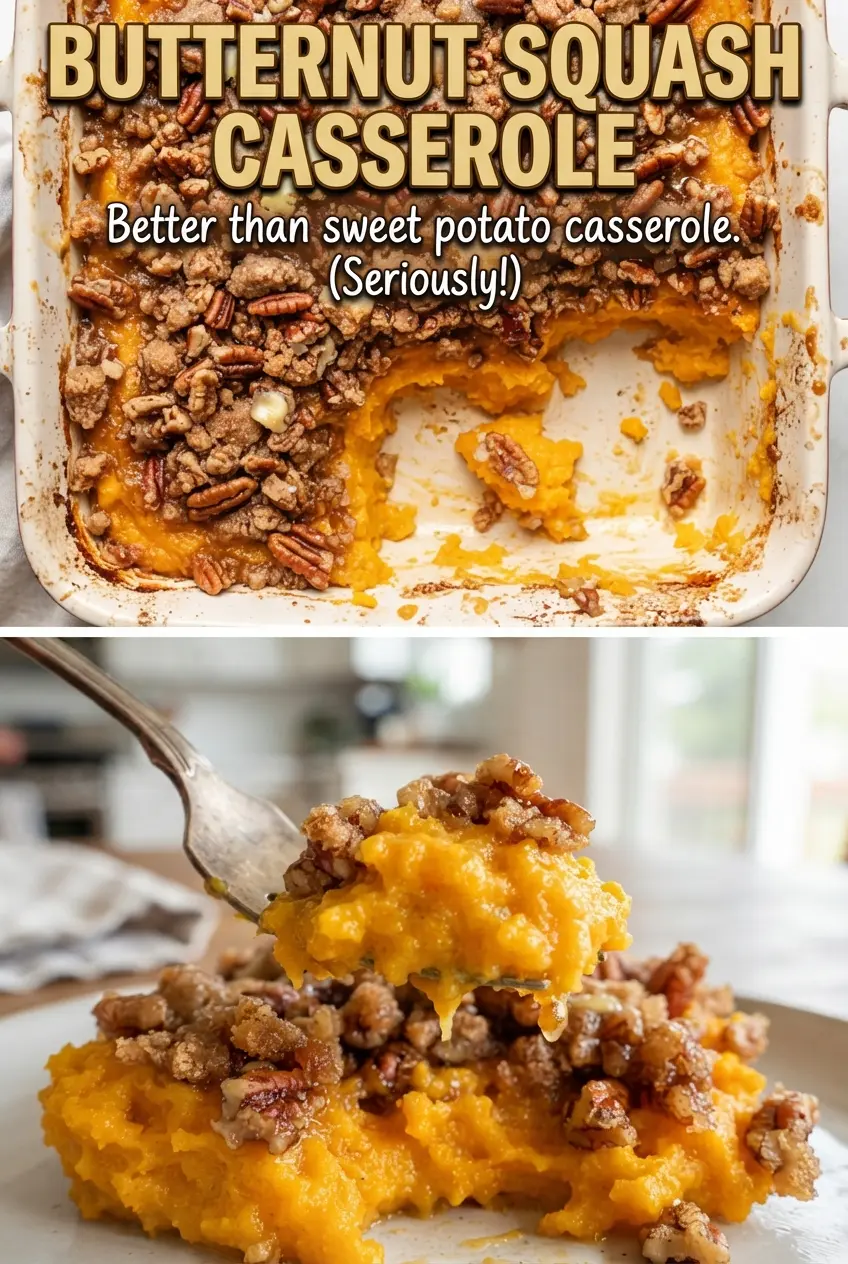
Butternut Squash Casserole
Ingredients
Equipment
Method
- Bring a pot of water to a boil and cook the peeled and cubed butternut squash for 15 minutes until very tender, then drain well.
- Preheat the oven to 350F and grease a 9x13-inch baking dish.
- Mash the hot butternut squash with 1/4 cup butter, 1/4 cup brown sugar, eggs, milk, vanilla extract, ground cinnamon, and salt until smooth.
- Spread the smooth squash mixture evenly into the prepared baking dish.
- Mix the all-purpose flour, chopped pecans, remaining butter, and remaining brown sugar into a crumbly topping.
- Sprinkle the pecan crumb topping over the squash in an even layer.
- Bake at 350F for 35-40 minutes until the topping is golden and the edges bubble, watching for an even browning cue.