Buttermilk banana cake has a way of baking into something bigger than the sum of its parts: a soft, pillowy crumb, a deep banana flavor, and just enough tang to keep every bite from tasting flat or one-note. The cake stays tender for days, which is part of why it disappears so quickly around here. It slices cleanly, stacks nicely with frosting, and still tastes like it came from a bakery case, not a box.
The trick is in the balance. Bananas bring moisture and sweetness, but buttermilk keeps the crumb light and gives the cake that subtle tang that makes the banana flavor pop. Creaming the butter and sugar until pale and airy matters here, because that little bit of trapped air helps the cake lift instead of baking up dense. The batter also handles a gentle alternating mix of dry ingredients and buttermilk, which keeps the texture soft instead of tough.
Below, I’m walking through the part that matters most: how to avoid a heavy banana cake and how to frost it without dragging up crumbs. I’ve also included a few smart swaps for when you want to change the frosting or bake it in a different pan shape.
The cake came out incredibly moist without being gummy, and the tang from the buttermilk kept the banana flavor from getting too sweet. I followed the cooling time before frosting and the cream cheese topping spread perfectly.
Save this buttermilk banana cake for when you want a soft, tangy banana cake with thick cream cheese frosting.
The Reason This Banana Cake Stays So Tender
Most banana cakes get heavy because the batter is overmixed once the flour goes in, or because the bananas are used as the only source of moisture. That gives you a dense, almost pasty crumb that tastes fine on day one and dulls out fast. This cake avoids that by leaning on buttermilk for lift and acidity, then using mashed bananas for flavor and softness instead of making them do every bit of the work.
The other thing that matters is the structure from creaming the butter and sugar properly. You want it pale and fluffy, not just combined. That step creates the lightness that keeps the finished cake from eating like banana bread in sheet-cake form. Once the dry ingredients go in, mix only until the streaks disappear. If you keep beating after that, the cake turns tight.
What Each Ingredient Is Actually Doing in This Cake
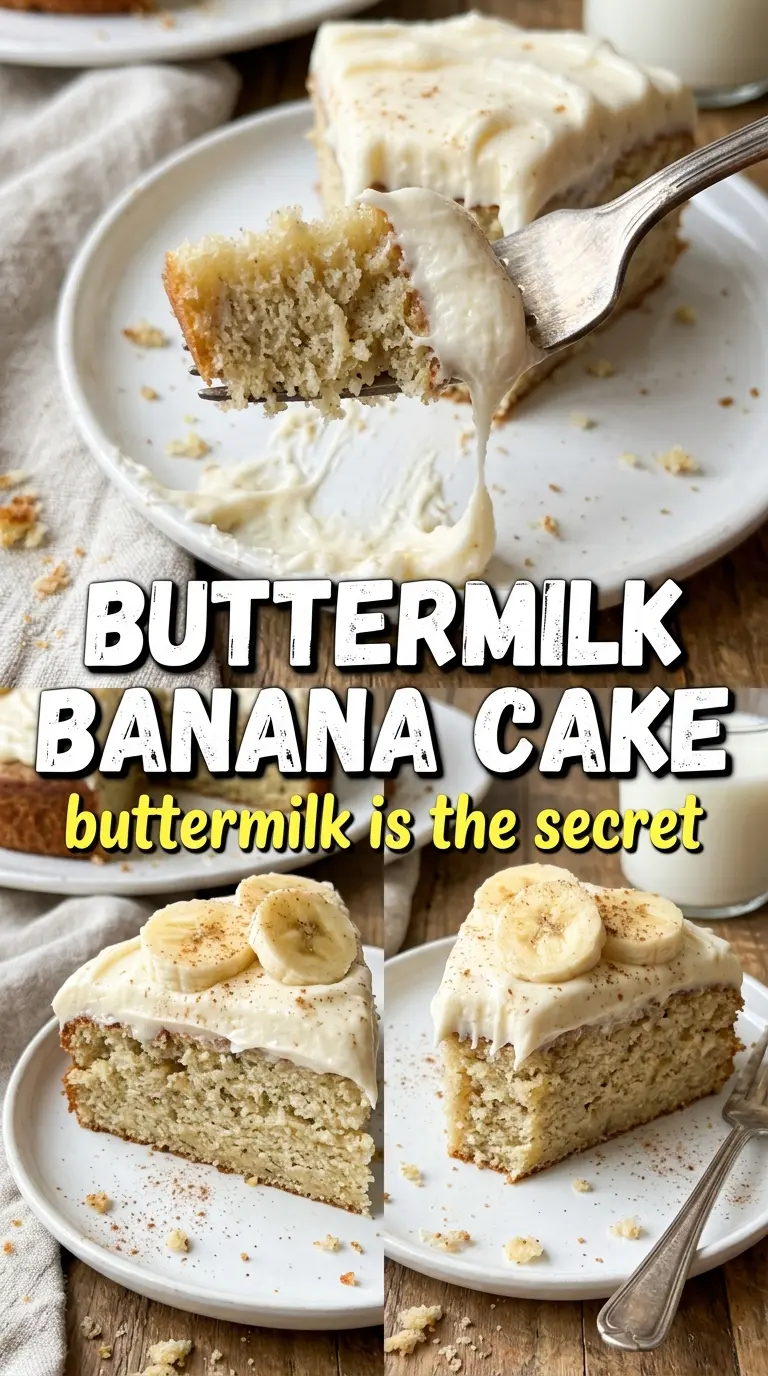
- Ripe bananas — Use bananas with plenty of brown spotting. They mash smoothly and bring the strongest flavor. Under-ripe bananas leave the cake bland and less moist.
- Buttermilk — This is what gives the cake its tender crumb and gentle tang. If you’re out, you can use whole milk plus a little lemon juice or vinegar, but the texture won’t be quite as soft or flavorful.
- Butter — Softened butter creams with the sugar to build lift and a fine crumb. Margarine won’t give the same structure or flavor.
- Baking soda — It reacts with the acidity in the buttermilk and bananas to help the cake rise. Don’t swap it for baking powder here unless you also adjust the rest of the formula.
- Cinnamon — This is subtle but important. It warms the banana flavor without taking over.
- Cream cheese frosting — The tangy frosting balances the sweetness of the cake and gives it that bakery-style finish. If you want a softer, sweeter top, banana buttercream works too, but it won’t have the same bite.
How to Mix the Batter Without Turning It Dense
Start with a Proper Cream
Beat the butter and sugar until the mixture looks noticeably lighter in both color and texture. It should look fluffy and a little expanded in the bowl, not gritty and damp. If you rush this part, the cake will still bake, but it won’t have the same airy crumb. Add the eggs one at a time so the batter stays smooth and doesn’t look curdled.
Fold in the Dry Ingredients and Buttermilk in Batches
Alternate the flour mixture with the buttermilk in three additions, beginning and ending with the dry ingredients. That order helps the batter stay emulsified and keeps the gluten from tightening up too fast. Stop mixing as soon as you no longer see dry flour, because a streak-free batter is enough here. Overbeating after the flour goes in is the fastest way to lose that soft, tender texture.
Bake Until the Center Springs Back
Pour the batter into a greased 9×13 pan and bake until the center bounces back when lightly pressed and a toothpick comes out clean. The edges will pull slightly from the pan and the top will look set with a soft golden color. If the center still looks wet and jiggly, give it a few more minutes. Pulling it too early leaves the middle gummy, and banana cake is hard to rescue once it sinks.
Cool Completely Before Frosting
This cake needs to be fully cool before the frosting goes on. Warm cake melts cream cheese frosting into a loose layer, and then you lose the thick, swirled finish that makes it look special. If you’re short on time, slide the pan onto a rack and let the cake cool with good airflow. The frosting should spread thickly and hold its shape as you smooth it across the top.
Ways to Make It Fit What You Have
Dairy-Free Version
Swap the butter for a good plant-based baking stick and use dairy-free yogurt thinned with a little lemon juice in place of the buttermilk. The cake will still be moist, but the tang will be slightly different and the crumb may be a touch less rich. For the frosting, use a dairy-free cream cheese alternative that’s firm enough to hold swirls.
Cupcake or Layer Cake Swap
This batter bakes well as cupcakes or in two 8-inch round pans. Cupcakes usually finish faster, while layers bake a little more gently and give you a more birthday-cake feel. Watch the center closely and don’t rely on color alone, since banana batter browns before it’s fully set.
Less Sweet Frosting
If you want the banana cake to stay front and center, cut the powdered sugar slightly and add the cream a teaspoon at a time until the frosting is thick but spreadable. You’ll get a cleaner tang from the cream cheese and a less sugary finish. This works best when the cake itself is already made with very ripe bananas.
Storage and Reheating
- Refrigerator: Store covered for up to 5 days. The cake stays moist, and the frosting firms up slightly, which actually helps clean slicing.
- Freezer: Freeze unfrosted or frosted slices wrapped well for up to 2 months. Thaw in the refrigerator so the frosting doesn’t weep.
- Reheating: If you want a room-temperature slice, let it sit out for 20 to 30 minutes. Don’t microwave cream cheese frosting for long bursts or it will turn soft and greasy.
Questions I Get Asked About This Recipe
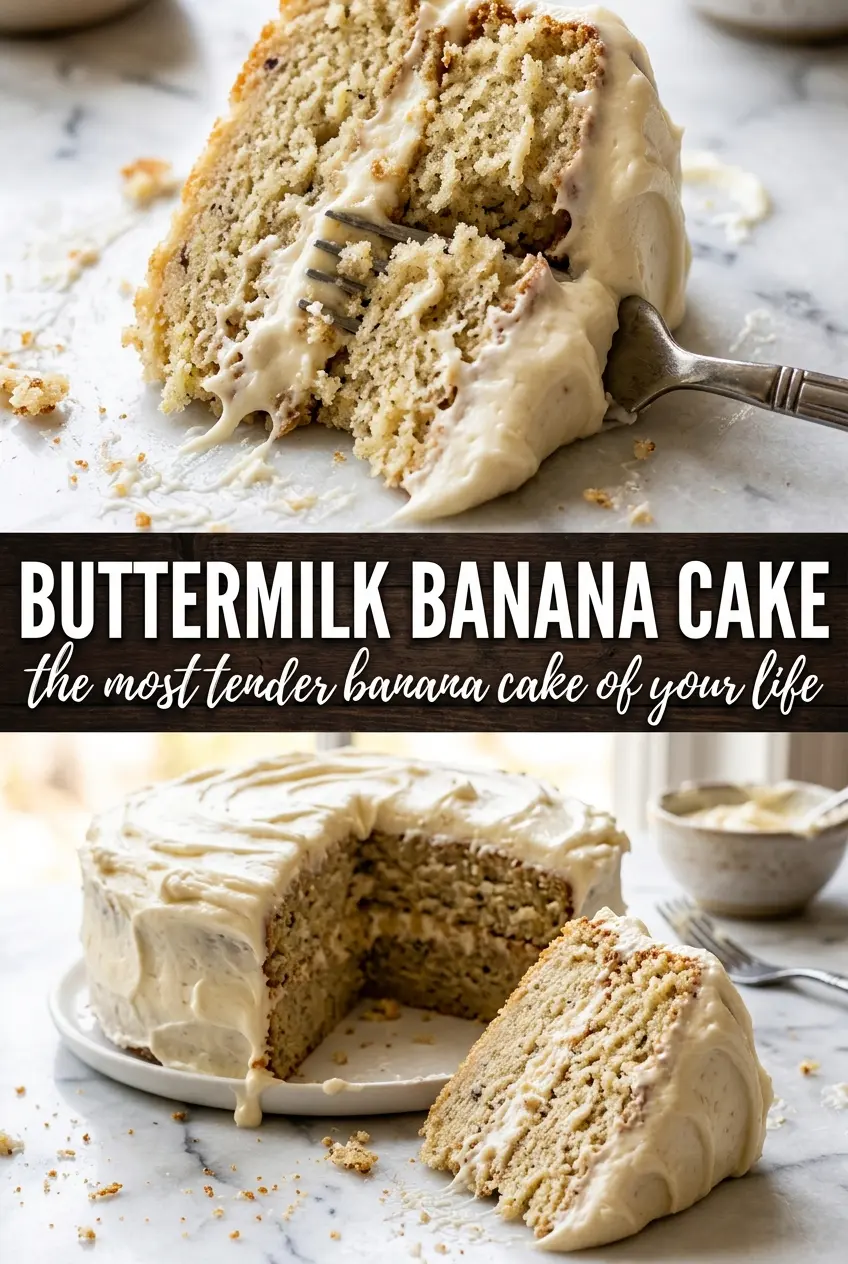
Buttermilk Banana Cake
Ingredients
Equipment
Method
- Preheat the oven to 350°F and grease a 9x13 pan.
- Beat the butter and sugar until very light and fluffy, then add the eggs one at a time and mix in the vanilla and mashed bananas.
- In a separate bowl, fold together the flour, baking soda, salt, and cinnamon.
- Alternate folding in the flour mixture and the buttermilk in three additions until just combined.
- Pour the batter into the pan.
- Bake for 30–35 minutes at 350°F until the center bounces back when pressed and a toothpick comes out clean.
- Cool the cake completely before frosting.
- Beat the cream cheese, butter, powdered sugar, vanilla, and heavy cream until thick and fluffy.
- Spread the frosting generously over the completely cooled cake.