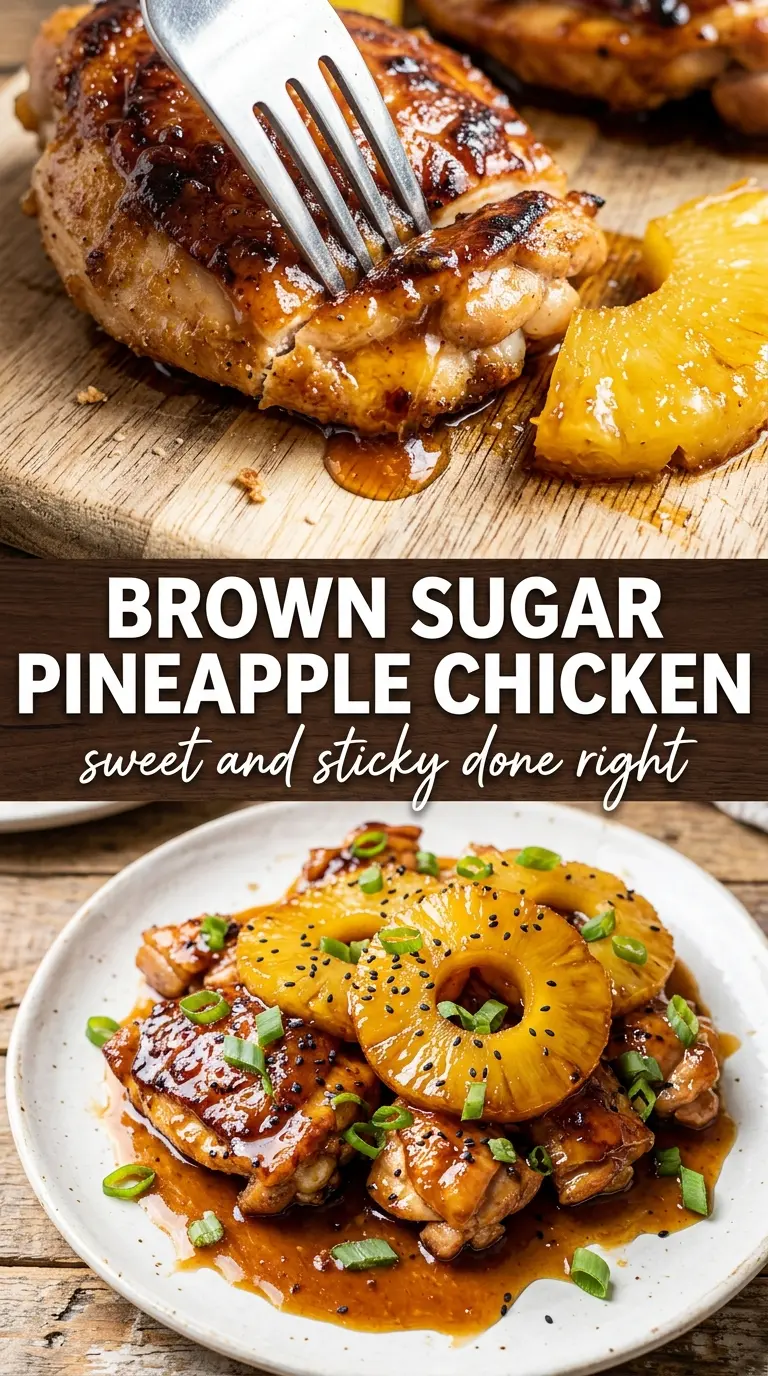
Sticky brown sugar pineapple chicken earns its place in the weeknight rotation because it gives you glossy, caramelized chicken with a sauce that lands between sweet, tangy, and savory without tasting heavy. The glaze clings to every bite, and the pineapple chunks soften just enough to keep their shape while adding little bursts of brightness through the sauce.
The trick is building the glaze in the same skillet after the chicken comes out. Those browned bits left behind are what give the sauce depth, and the cornstarch slurry turns the pineapple juice mixture into something that coats instead of pooling on the plate. A short marinating/resting window is all you need here; the flavor comes from a good sear and a properly reduced sauce, not from a long soak.
Below, I’m walking through the part that matters most: how to keep the glaze thick and glossy instead of thin or clumpy. I’ve also included a few smart swaps for the chicken and the sauce so you can work with what you have and still end up with dinner that tastes like you put in far more effort than you did.
The sauce thickened up beautifully and coated the chicken instead of turning watery. I served it with rice, and the pineapple chunks held their shape just enough to make every bite taste fresh.
Like this sticky brown sugar pineapple chicken? Save it to Pinterest for the nights when you want a glossy skillet dinner with sweet-tangy sauce and almost no cleanup.
The Brown Sugar Glaze Needs a Fast Hand, Not a Long Simmer
Chicken breasts can go dry fast, which is why the sear matters more here than a long cook in sauce. You want a deep golden exterior and an internal temperature of 165°F, then you pull the chicken out before starting the glaze. If it stays in the pan too long, the sauce reduces around it and the edges can turn stringy.
The other mistake is rushing the glaze before the pan has a chance to release those browned bits. Once the pineapple juice, brown sugar, soy sauce, ketchup, garlic, and ginger hit the pan, the liquid should come to a steady simmer before the slurry goes in. That short burst of heat is what wakes up the cornstarch and turns the mixture into a shiny coating instead of a thin sauce.
What the Pineapple Juice Is Doing That Sugar Alone Can’t
- Pineapple juice — This brings the tang that keeps the glaze from tasting flat. Bottled juice works fine here, but avoid anything labeled cocktail or drink blend, since extra sugar can make the sauce cloying before it thickens.
- Brown sugar — Packed brown sugar gives the glaze its deep molasses note and sticky finish. Light or dark both work; dark brown sugar makes the sauce a little richer and more caramel-like.
- Soy sauce — This is the savory backbone that balances the sweetness. If you need a gluten-free version, use tamari in the same amount and keep the rest of the recipe unchanged.
- Ketchup — It adds body, color, and a little acidity, which helps the glaze taste round instead of one-note. Don’t skip it unless you’re changing the sauce structure on purpose.
- Cornstarch slurry — Mixing the cornstarch with cold water first keeps the sauce smooth. If you dump the dry starch into the pan, it will clump before it can dissolve.
- Pineapple chunks — These go in at the end so they stay intact and don’t turn mushy. Fresh or canned both work; if you use canned, drain them well so the sauce doesn’t thin out.
Building the Skillet in the Right Order
Searing the Chicken First
Season the chicken generously with salt, pepper, garlic powder, and smoked paprika, then sear it in olive oil over medium-high heat. You’re looking for a golden crust and juices that run mostly clear when the thickest part is cut or probed. If the pan is crowded, the chicken will steam instead of brown, so cook in batches if needed. Once it reaches 165°F, move it to a plate and don’t worry if it looks a little under sauced at this point; the glaze is coming.
Turning Pan Drippings Into Glaze
Whisk the pineapple juice, brown sugar, soy sauce, ketchup, garlic, and ginger right in the same skillet. Those browned bits should dissolve as the liquid heats, and that’s the flavor base you want. Bring it to a simmer over medium heat, not high heat, or the sugars can tighten too quickly and taste scorched before the sauce thickens. When the slurry goes in, stir constantly for 2 to 3 minutes until the sauce looks glossy and coats the back of a spoon.
Finishing the Chicken in the Sauce
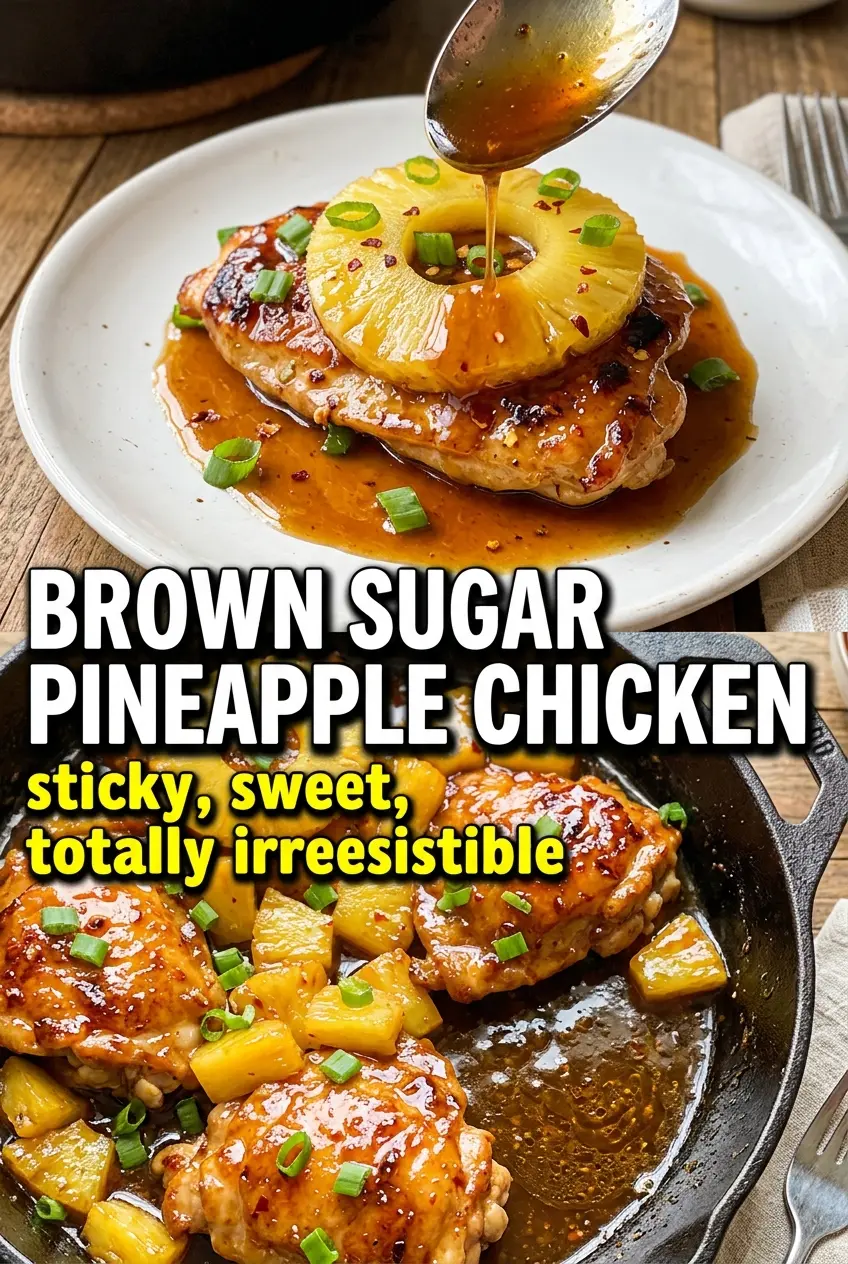
Return the chicken to the pan and spoon the glaze over the top so every piece gets coated. Let it cook for about 2 minutes, just long enough for the sauce to cling and the chicken to reheat through. Add the pineapple chunks near the end so they warm without falling apart. Finish with sesame seeds and sliced green onions for a little nutty crunch and a fresh sharp note against the sweet glaze.
How to Adjust Brown Sugar Pineapple Chicken Without Losing the Sticky Finish
Make it with chicken thighs
Boneless skinless thighs stay juicier and are more forgiving if you cook them a minute or two longer than the breasts. They also handle the sticky glaze well because the higher fat content keeps the meat from tasting dry.
Use tamari for a gluten-free version
Swap the soy sauce for tamari in the same amount. The glaze will still have the same salty backbone, and you won’t lose the glossy texture that makes the sauce cling to the chicken.
Turn it dairy-free and egg-free without changing a thing
This recipe is naturally dairy-free and egg-free as written. That means the biggest win is keeping the method intact: sear first, reduce second, and add the pineapple chunks at the end so the texture stays clean.
Storage and Reheating
- Refrigerator: Store leftovers in an airtight container for up to 4 days. The sauce will thicken as it chills, which is normal.
- Freezer: It freezes well for up to 2 months, though the pineapple chunks soften a bit after thawing. Freeze in portions with the sauce over the chicken so it reheats more evenly.
- Reheating: Warm gently in a covered skillet over low heat with a splash of water or pineapple juice. High heat can make the chicken tough and can turn the glaze sticky in the wrong way, so go slow and stir the sauce as it loosens.
Questions I Get Asked About This Recipe
Brown Sugar Pineapple Chicken
Ingredients
Equipment
Method
- Season the chicken breasts all over with salt, pepper, garlic powder, and smoked paprika, using a light even coating for consistent flavor. Let the seasoned chicken rest 20 minutes for marinating.
- Heat olive oil in a large cast iron skillet over medium-high heat until it shimmers. Sear the chicken for 5-6 minutes per side until golden and cooked through to 165°F, then remove to a plate.
- Whisk pineapple juice, brown sugar, soy sauce, ketchup, minced garlic, and grated ginger in the same pan, scraping up the browned bits. Bring to a simmer over medium heat, then keep it bubbling so the flavors concentrate.
- Stir in the cornstarch slurry and cook 2-3 minutes, stirring, until the sauce thickens to a glossy glaze. Add pineapple chunks and simmer just until they look glossy and slightly caramelized.
- Return the chicken to the pan and turn to coat in the pineapple glaze. Cook 2 more minutes so the sauce clings thickly to the caramelized edges.
- Turn off the heat and garnish with sesame seeds and sliced green onions for a bright, fresh top finish.
- Serve the brown sugar pineapple chicken over steamed rice so the amber glaze soaks in between bites.