Sticky brown sugar pineapple chicken hits that sweet-savory spot where the glaze clings to every bite and the chicken stays juicy underneath. The sauce turns glossy and dark amber in the pan, with pineapple chunks softening just enough to catch on the edges without falling apart. It’s the kind of skillet dinner that looks like it took more work than it did.
What makes this version work is the way the glaze is built in the same pan as the chicken. Those browned bits left behind after searing get whisked into the pineapple juice, brown sugar, soy sauce, ketchup, garlic, and ginger, which gives the sauce depth before the cornstarch even goes in. The slurry thickens it fast, but only if you let it simmer long enough to go from thin and foamy to lacquered and spoon-coating.
You’ll find the timing that keeps the chicken tender, the point where the glaze is thick enough to coat instead of run off, and a few useful swaps if you need to change the cut of chicken or serve it a different way.
The glaze thickened up exactly the way you described, and the pineapple stayed in little golden pieces instead of turning mushy. My husband went back for seconds before I even sat down.
Brown sugar pineapple chicken with a glossy skillet glaze and caramelized pineapple chunks.
The Secret to a Glaze That Sticks Instead of Slipping Off
The biggest mistake with pineapple chicken is rushing the sauce before the liquid has time to tighten. Pineapple juice brings a lot of water with it, and if you add the slurry too early or boil it hard, you end up with a thin, shiny sauce that never really coats the chicken. The goal here is a glaze that leaves a slow trail on the spoon and clings to the pan sides when you tilt it.
That’s why the chicken comes out before the sauce goes in. Searing it first builds flavor in the pan, then the glaze gets reduced in those same browned drippings. Once the cornstarch goes in, the sauce only needs a couple minutes to go from loose to sticky; after that, the chicken goes back in just long enough to pick up the glaze without overcooking.
What Each Ingredient Is Actually Doing in This Skillet
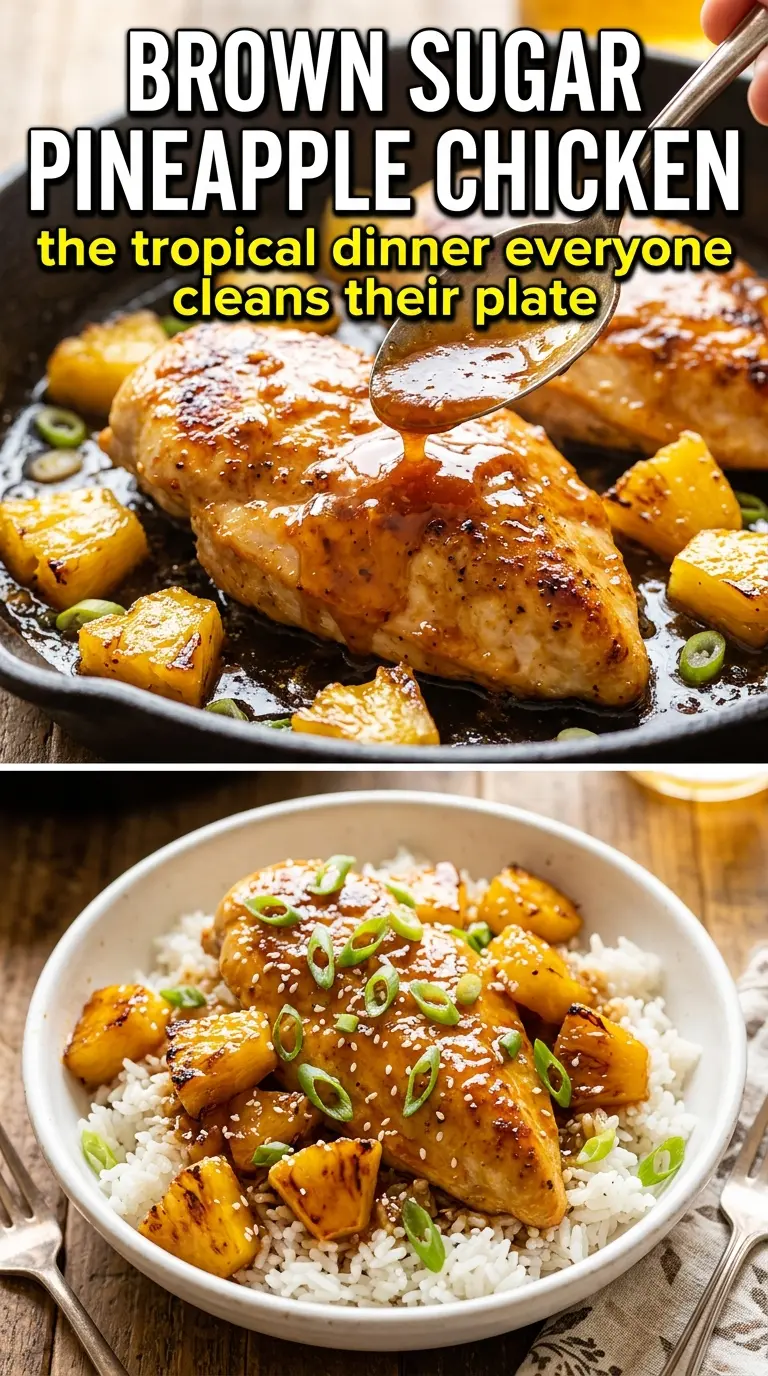
- Chicken breasts — Boneless, skinless breasts keep this fast and lean, but they need even thickness so the centers cook at the same pace as the outside. If yours are thick on one end, pound them lightly or slice them into cutlets. That’s the difference between juicy and dry.
- Pineapple juice — This is the base of the glaze, and fresh or canned both work well as long as it’s 100% juice. Pineapple nectar is too sweet and usually makes the sauce heavy instead of bright. Use the juice, not the syrup from canned fruit.
- Brown sugar — This gives the glaze that dark, sticky finish and helps it caramelize in the pan. Packed light brown sugar is fine. Dark brown sugar adds a little more molasses depth if that’s what you have.
- Soy sauce and ketchup — Soy sauce handles the salty backbone while ketchup adds body, acidity, and a little tomato richness that makes the glaze taste fuller. Don’t skip either one unless you’re intentionally changing the character of the dish. Together they keep the sweetness from going flat.
- Cornstarch slurry — This is what turns the sauce from thin and glossy into a true glaze. Mix it with cold water first so it disperses cleanly; if you dump dry cornstarch into the pan, it clumps and cooks unevenly. The sauce should thicken in a few minutes, not instantly.
- Pineapple chunks — Add them at the end so they warm through and pick up the glaze without breaking down. Fresh pineapple stays firmer and gives a brighter bite, but canned chunks work if they’re drained well. Wet fruit can thin the sauce again.
Building the Chicken and Glaze in the Right Order
Searing the Chicken
Season the chicken well, then lay it into hot oil and leave it alone long enough to form a real crust. If you keep moving it, the surface steams and sticks. Five to six minutes per side is a guide, but the real signal is a deep golden color and juices that run clear when the thickest part is cut. Pull it at 165°F and set it aside; it’ll finish back in the glaze.
Making the Pan Sauce
Whisk the pineapple juice, brown sugar, soy sauce, ketchup, garlic, and ginger into the same pan. The browned bits should dissolve into the liquid as it heats, and the mixture should go from cloudy to fully combined and lightly bubbling. Keep the heat at medium so the sugar doesn’t scorch before the sauce has a chance to reduce.
Thickening to a True Glaze
Stir in the cornstarch slurry and cook the sauce for two to three minutes. It should shift from thin and noisy to noticeably thicker, with bubbles that look slower and heavier. If it still runs like juice off the spoon, it needs another minute. Once it turns glossy and coats the back of a spoon, add the pineapple chunks.
Finishing the Dish
Return the chicken to the pan and turn each piece through the glaze until every side is lacquered. Let it cook just long enough for the sauce to cling and the chicken to rewarm, about two minutes. Garnish with sesame seeds and green onions after the heat is off so they stay fresh and bright. Serve it right away over rice, while the glaze is still sticky.
How to Adapt This Brown Sugar Pineapple Chicken Without Losing the Point
Use chicken thighs for a richer, juicier finish
Boneless thighs work well if you want more forgiveness and a little extra richness. They can go a bit longer without drying out, and they hold up nicely against the sweet glaze. Cook them until they reach 165°F as well, but expect a slightly deeper browned edge and a softer bite.
Make it gluten-free with tamari
Swap the soy sauce for tamari in the same amount and everything else can stay the same. You’ll keep the salty balance without changing the texture of the glaze. Just check that your ketchup is gluten-free too if you need the dish to stay strict.
Turn it into a stronger tropical version
Add a little extra pineapple and finish with toasted sesame seeds plus extra green onion. If you want a brighter edge, a squeeze of lime at the end lifts the glaze without making it sour. Keep the lime small and late, or it starts to compete with the caramel notes.
Make it a little lighter on sugar
You can reduce the brown sugar slightly, but don’t cut it too far or the glaze loses its sticky finish. The sauce still needs enough sugar to caramelize and balance the soy sauce and pineapple juice. If you lower it, let the sauce reduce an extra minute so it still coats properly.
Storage and Reheating
- Refrigerator: Store leftovers in an airtight container for up to 4 days. The glaze will tighten as it chills, which is normal.
- Freezer: It freezes well for up to 2 months, though the pineapple texture softens a bit after thawing. Freeze the chicken and sauce together in a sealed container, then thaw overnight in the fridge.
- Reheating: Warm it gently in a skillet over low heat with a splash of water or pineapple juice. High heat can make the glaze seize up and push the chicken toward dry edges before the center is hot.
Questions I Get Asked About This Recipe
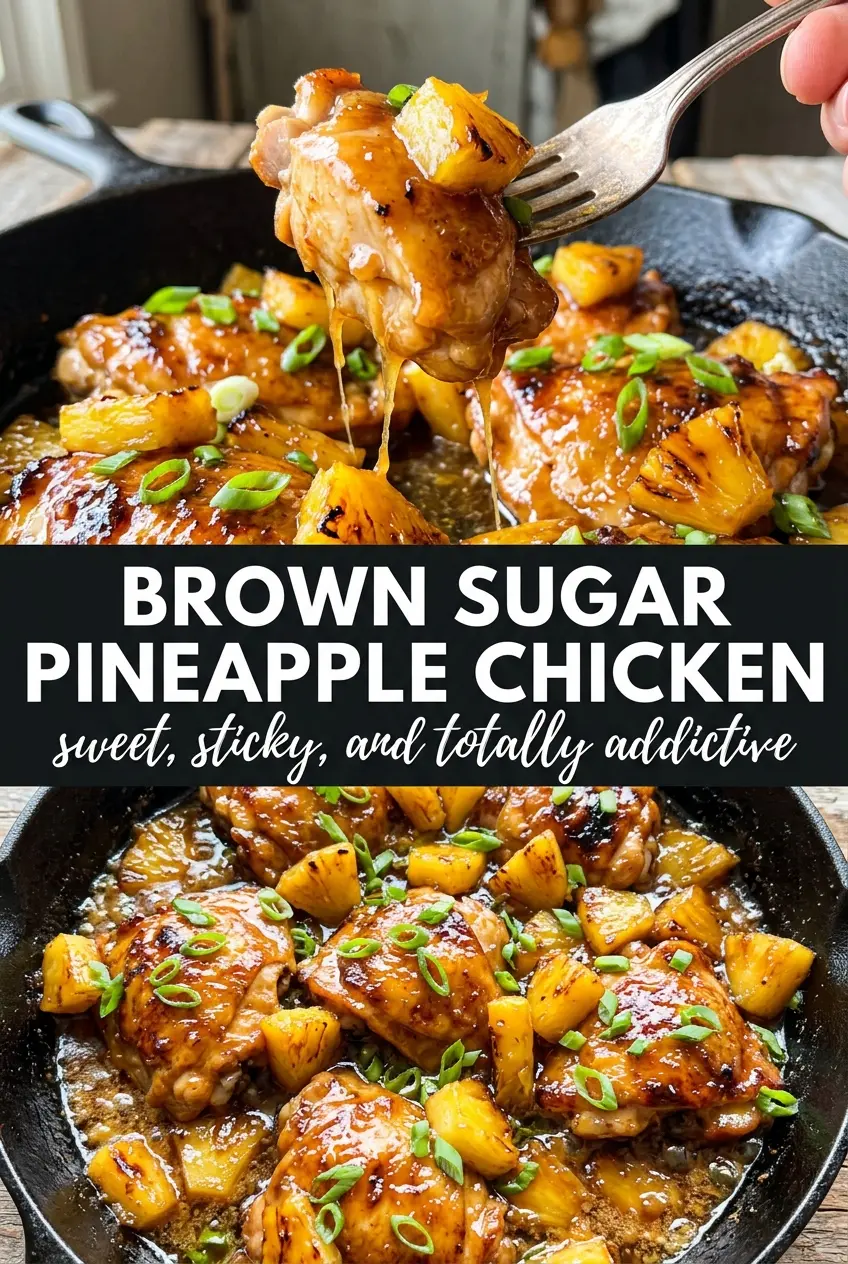
Brown Sugar Pineapple Chicken
Ingredients
Equipment
Method
- Season the chicken breasts with salt, pepper, garlic powder, and smoked paprika, then let them sit for 20 minutes to absorb the flavors (resting/marinating time, no heat).
- Heat the olive oil in a large skillet over medium-high heat until shimmering, then sear the chicken for 5-6 minutes per side until golden and cooked through to 165°F; remove to a plate.
- In the same pan, whisk together pineapple juice, brown sugar, soy sauce, ketchup, garlic, and ginger, then bring to a simmer over medium heat (bubbles across the surface).
- Stir in the cornstarch slurry (cornstarch mixed with water) and cook 2-3 minutes until the sauce thickens to a glaze (coats the back of a spoon).
- Add the pineapple chunks and cook until they heat through and begin to look glossy.
- Return the chicken to the pan, turn to coat in the glaze, and cook 2 more minutes until sticky and caramelized at the edges (bubbling glaze visible around the chicken).
- Turn off the heat and garnish with sesame seeds and sliced green onions.
- Serve the brown sugar pineapple chicken over steamed rice, spooning extra amber glaze and pineapple chunks on top (glossy, sticky finish).