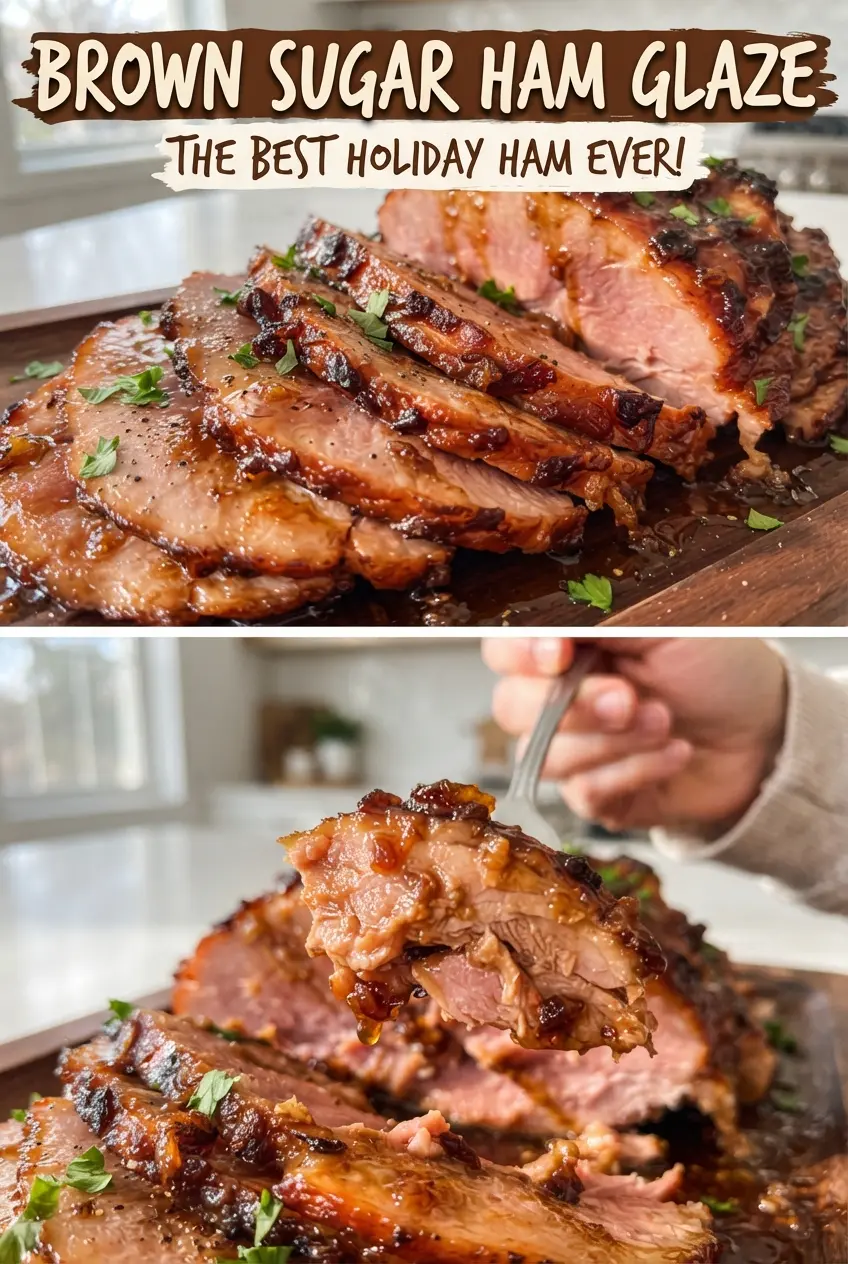
Brown sugar ham glaze is what turns a good holiday ham into the kind people hover around for second helpings. It bakes into a shiny, amber coating that clings to every ridge of the score marks, with just enough sweetness to balance the salt in the ham. The best versions don’t taste flat or candy-like; they taste layered, with warmth from cinnamon and cloves, a little tang from mustard and vinegar, and a fruit note that keeps the glaze from feeling heavy.
This version works because it’s built to thicken fast without turning grainy. Brown sugar and honey give body, pineapple or orange juice loosens everything just enough to brush on smoothly, and Dijon cuts through the richness so the glaze tastes balanced instead of sticky-sweet. A brief simmer is all it needs. Push it too far and it turns tacky in the pan before it ever gets to the ham.
Below, you’ll find the timing that keeps the glaze glossy instead of burned, plus a few smart swaps if you need to change the juice or want a slightly sharper finish.
The glaze thickened just enough to cling to the ham, and the pineapple juice kept it from tasting one-note sweet. I brushed it on three times and the edges came out sticky and caramelized without burning.
Keep this brown sugar ham glaze handy for a shiny, caramelized ham with just the right sweet-savory balance.
The Reason This Glaze Stays Glossy Instead of Gritty
Brown sugar glaze can go wrong in two common ways: it stays thin and runs off the ham, or it gets too hot and turns grainy before it has a chance to shine. The fix is simple. Start by dissolving the sugar fully over medium heat, then simmer just long enough for the mixture to look slightly syrupy and coat a spoon. That short cook gives you the gloss without cooking off all the moisture.
Dijon matters here more than people expect. It doesn’t make the glaze taste mustardy; it sharpens the sweetness and keeps the finish from tasting one-note. Vinegar does the same job in a quieter way, lifting the brown sugar and honey so the glaze tastes balanced once it hits a salty ham. If your glaze looks thick in the pan, that’s the cue to stop. It will tighten more as it cools and again when it bakes on the ham.
What Each Ingredient Is Actually Doing in the Pan

- Packed brown sugar — This is the backbone of the glaze. Use dark brown sugar if you want a deeper molasses note and a darker finish; light brown sugar gives a cleaner sweetness. Don’t swap in granulated sugar here, because it won’t give you the same body or caramel depth.
- Honey — Honey helps the glaze cling and gives it that lacquered look once it’s brushed on. Any mild honey works. A strongly flavored wildflower honey will change the taste more than you might want, while clover or orange blossom keeps things balanced.
- Pineapple or orange juice — The juice loosens the glaze enough to brush, but it also brings acid and fruit brightness. Pineapple tastes a little rounder and more classic with ham; orange is slightly fresher and sharper. Use the juice from a carton, not a heavily sweetened cocktail mixer, or the glaze can turn cloying.
- Dijon mustard — This is the ingredient that keeps the glaze from tasting flat. It adds a subtle bite and helps the sweetness settle into something more savory. Stone-ground mustard works in a pinch, but the texture will be a little more rustic.
- Butter — Butter smooths out the glaze and gives it a silkier finish. Salted or unsalted both work; just know that salted butter will nudge the glaze a little more savory. Add it while the pan is warm, not at a full boil, so it melts evenly.
- Apple cider vinegar — The vinegar keeps the glaze bright. It won’t taste sour once everything is simmered together, but it cuts the richness enough that you still want another bite. White wine vinegar can stand in if that’s what you have.
- Cinnamon and cloves — These are small amounts, but they matter. Cinnamon adds warmth, and cloves bring that classic ham-glaze aroma. Go easy on the cloves; too much and the glaze tastes like potpourri instead of dinner.
Brushing, Baking, and Building the Shine
Dissolving the Sugar First
Combine everything in a saucepan and stir over medium heat until the sugar disappears and the butter melts into the mixture. The liquid should look smooth, not sandy. If you still see grains at the bottom, keep stirring before the glaze comes to a simmer, because undissolved sugar is what makes the finish rough instead of glossy.
Letting It Thicken Just Enough
Once the glaze starts bubbling gently, let it simmer for 3 to 4 minutes. It should look slightly thicker and coat the back of a spoon, but it should still pour easily. If it boils hard, the sugars can tighten too fast and you’ll end up with a sticky mass instead of a brushable glaze.
Layering It on the Ham
Brush the glaze over a fully cooked ham during the last 30 minutes of baking, then repeat every 10 minutes. That repeated brushing builds a thick lacquer instead of one thin coat that slides off. If your oven runs hot, watch the edges closely; the sugars can darken fast, and the goal is a deep amber shine, not burnt patches.
Serving the Last Spoonfuls
Warm the remaining glaze and spoon it over sliced ham at the table. This is where the flavor really pops, because the fresh glaze gives each slice a glossy finish right before serving. If the glaze thickens too much as it sits, whisk in a teaspoon of warm water or juice until it loosens again.
Ways to Adjust the Glaze Without Losing the Shine
Use orange juice instead of pineapple
Orange juice gives the glaze a brighter, cleaner finish and a slightly less tropical flavor. It’s the better swap if you want the ham to taste a little more classic and less sweet-fruity, but the glaze will still brush on and caramelize the same way.
Make it dairy-free
Swap the butter for a plant-based butter that melts cleanly. You’ll lose a little richness, but the glaze still thickens and shines because the sugar, honey, and juice are doing the heavy lifting. Choose a dairy-free butter with a neutral flavor so it doesn’t fight the ham.
Skip the cloves for a milder finish
If you don’t love that old-school holiday spice note, leave out the cloves and add a little extra cinnamon instead. The glaze will taste warmer and sweeter, with less sharp spice on the finish. This is the version to use if kids are eating or if you want the ham to stay more honey-forward.
Thin it slightly for spiral-cut ham
Spiral-cut ham has more exposed edges, so a thinner glaze can seep between the slices instead of sitting only on top. Stir in an extra tablespoon of juice if needed. The glaze will still reduce in the oven, but it’ll coat the ham more evenly from the start.
Storage and Reheating
- Refrigerator: Store leftover glaze in an airtight container for up to 5 days. It will thicken as it chills.
- Freezer: Freeze for up to 2 months in a small freezer-safe container. Thaw overnight in the fridge before reheating; the texture may need a quick whisk.
- Reheating: Warm gently in a small saucepan over low heat or in short microwave bursts. Don’t boil it again, or the sugars can over-thicken and turn sticky.
Questions I Get Asked About This Recipe
Brown Sugar Ham Glaze
Ingredients
Equipment
Method
- In a saucepan, combine brown sugar, honey, pineapple or orange juice, Dijon mustard, butter, apple cider vinegar, cinnamon, and cloves.
- Bring the mixture to a simmer over medium heat, stirring until the sugar dissolves, until the surface starts bubbling steadily.
- Simmer for 3-4 minutes, stirring occasionally, until slightly thickened and glossy, with a slow coating consistency.
- Brush the warm glaze over a fully cooked ham during the last 30 minutes of baking, every 10 minutes, so each layer looks glossy as it sets.
- Spoon the remaining warm glaze over sliced ham at the table for extra shine and stickiness.