Brown sugar banana nut bread bakes up with a darker crumb, a softer center, and a caramel note that plain white sugar banana bread just can’t give you. The loaf stays tender for days, and the walnuts do more than add crunch — they give each slice a toasted, almost buttery finish that makes the whole thing taste deeper and more complete.
The trick is starting with melted butter and brown sugar, then whisking until the mixture looks smooth before the eggs go in. That step helps the sugar dissolve enough to keep the crumb moist instead of gritty, and it also gives the loaf that warm amber color. Ripe bananas carry the flavor, but the brown sugar is what turns this into something richer than standard banana bread.
Below, you’ll find the small details that keep the loaf from turning dense or dry, plus the one cooling step that helps it slice cleanly without collapsing. If you’ve ever had banana bread sink in the middle or come out bland, this version fixes both problems.
The loaf came out incredibly moist with that deep brown sugar flavor all the way through, and the walnuts stayed nicely toasted on top instead of getting soggy.
Save this brown sugar banana nut bread for when you want a caramel-tinged loaf with a moist crumb and toasted walnuts in every slice.
The Part Most Banana Breads Miss: Brown Sugar Needs Time With the Butter
Most banana breads lean on the bananas alone for moisture and sweetness, which works until the loaf tastes flat or turns gummy in the center. Here, the brown sugar is doing more than sweetening. It melts into the butter, bringing molasses depth and helping the crumb bake up tender instead of dry and cakey.
The other common mistake is overmixing once the flour goes in. Banana bread batter should look a little rough when it goes into the pan. If you beat it smooth, the loaf gets tight and loses that soft, almost custardy middle that makes a good slice stand up on its own.
What Each Ingredient Is Actually Doing in This Loaf
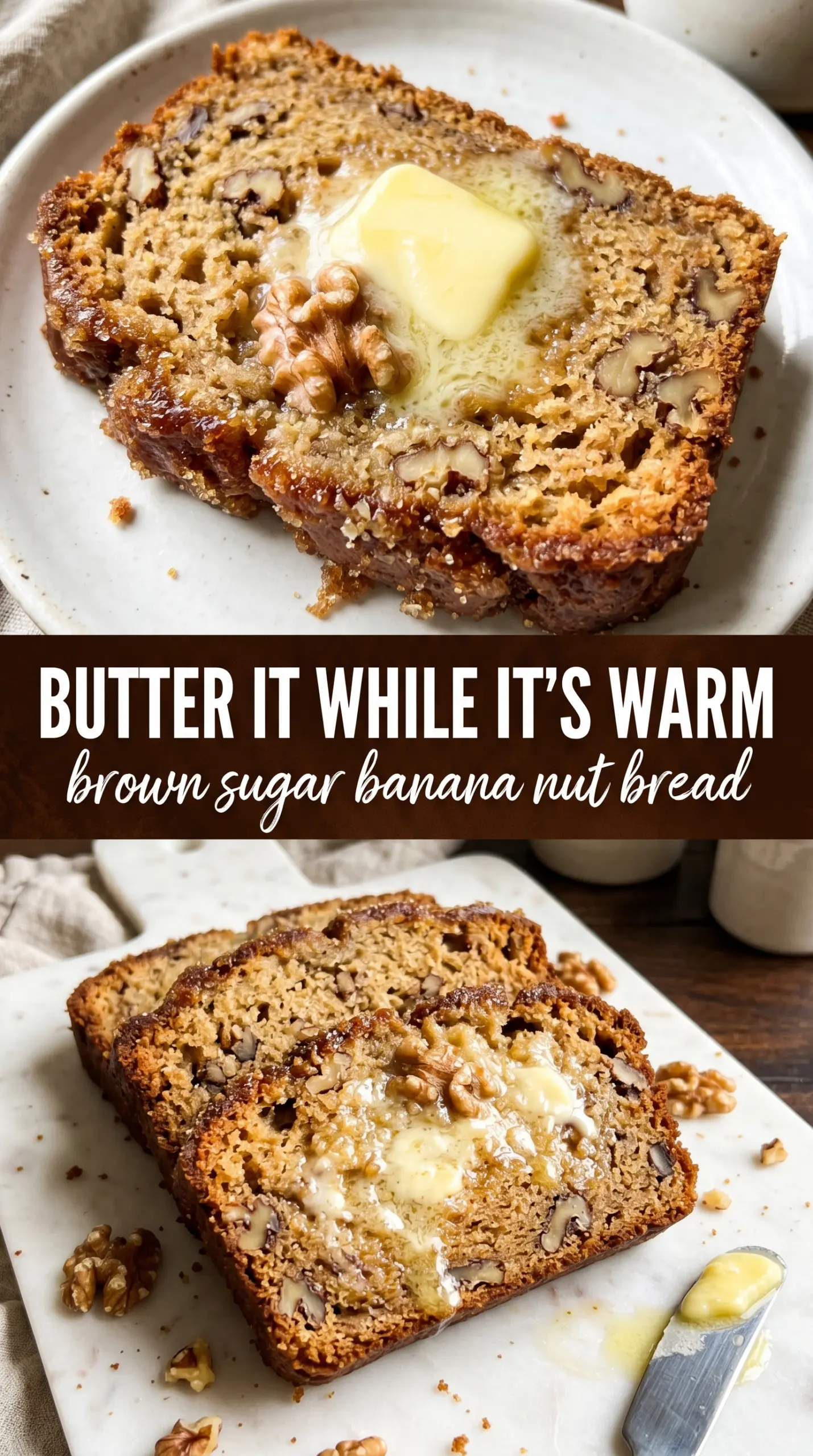
- Brown sugar — This is the flavor engine. White sugar would sweeten the loaf, but it wouldn’t give you that deeper caramel note or the darker color that makes this bread taste richer.
- Butter — Melted butter gives the crumb a denser, more luscious texture than neutral oil and adds a baked-in richness that works especially well with brown sugar.
- Very ripe bananas — You want bananas with plenty of brown spots, or even mostly black peels. That extra ripeness means more flavor and easier mashing, which helps the banana blend evenly instead of leaving streaks.
- Walnuts — Roughly chopped walnuts give crunch without turning the loaf bulky. If you like a stronger nut flavor, toast them first for a few minutes in a dry skillet; it takes the edge off raw walnuts and makes the crust taste even better.
- Cinnamon and nutmeg — These don’t turn the bread into spice cake. They just round out the banana and brown sugar so the loaf tastes warmer and more complete.
How to Keep the Center Moist Without Letting the Loaf Sink
Building the Brown Sugar Base
Whisk the melted butter and brown sugar until the mixture looks glossy and mostly smooth before adding the eggs. This helps break up the sugar and keeps the crumb from feeling sandy. Once the eggs and vanilla go in, the mixture should look thick and unified, not greasy or separated. If it looks broken, the butter may have been too hot, so let it cool a few minutes before you start.
Bringing in the Bananas
Stir in the mashed bananas until they’re fully blended into the batter. You want an even, speckled mixture with no big pockets of banana puree hiding at the bottom. This is where the loaf gets its moisture, so don’t drain off any liquid from the mashed fruit. Banana bread batter should look loose but not runny.
Folding the Dry Ingredients
Add the flour, baking soda, cinnamon, nutmeg, and salt, then fold just until the last streaks disappear. Overmixing at this stage develops too much gluten, which makes banana bread tough instead of tender. Fold in the walnuts at the end so they stay distributed through the loaf and don’t sink to the bottom. The batter will be thick and a little lumpy, and that’s exactly what you want.
Baking to the Right Color
Pour the batter into a greased 9×5 loaf pan and bake until the top is deep golden brown and a toothpick comes out clean from the center. The top should crack along the middle, and the edges will pull just slightly from the pan. If the top is browning too quickly before the middle is done, tent it loosely with foil for the last 15 minutes. Let it cool in the pan for 15 minutes before turning it out, or it can split apart while it’s still too soft.
Three Ways to Make This Banana Nut Bread Fit Your Kitchen
Dairy-Free Version
Swap the butter for melted coconut oil or a neutral dairy-free butter alternative. Coconut oil gives the loaf a slightly firmer crumb and a faint coconut note, while vegan butter keeps the flavor closest to the original. Either way, let the fat cool a little before whisking it with the sugar so the eggs don’t scramble.
No-Walnut Version
Leave the walnuts out completely, or replace them with chopped pecans for a softer, sweeter nut flavor. Without the nuts, the loaf bakes a little more evenly and slices a bit cleaner, but you lose the crunch on top and throughout the crumb.
Gluten-Free Swap
Use a 1:1 gluten-free baking flour that includes xanthan gum. The texture will be a touch more delicate, and the loaf may need the full bake time, but you’ll still get a moist crumb if you don’t overmix it. Let it cool completely before slicing so it holds together.
Extra-Caramel Twist
Replace 2 tablespoons of the brown sugar with dark brown sugar for a deeper molasses flavor. The loaf will taste a little more robust and the crumb will be slightly darker, which works especially well if your bananas are very ripe and sweet.
Storage and Reheating
- Refrigerator: Store tightly wrapped for up to 4 days. The crumb firms up a little in the fridge, but the flavor stays rich.
- Freezer: This loaf freezes well. Wrap individual slices or the whole loaf in plastic, then foil, and freeze for up to 3 months.
- Reheating: Warm slices in the microwave for 10 to 15 seconds or in a low oven until just heated through. Don’t overheat it or the bread dries out fast, especially if it’s already been refrigerated.
Questions I Get Asked About This Recipe
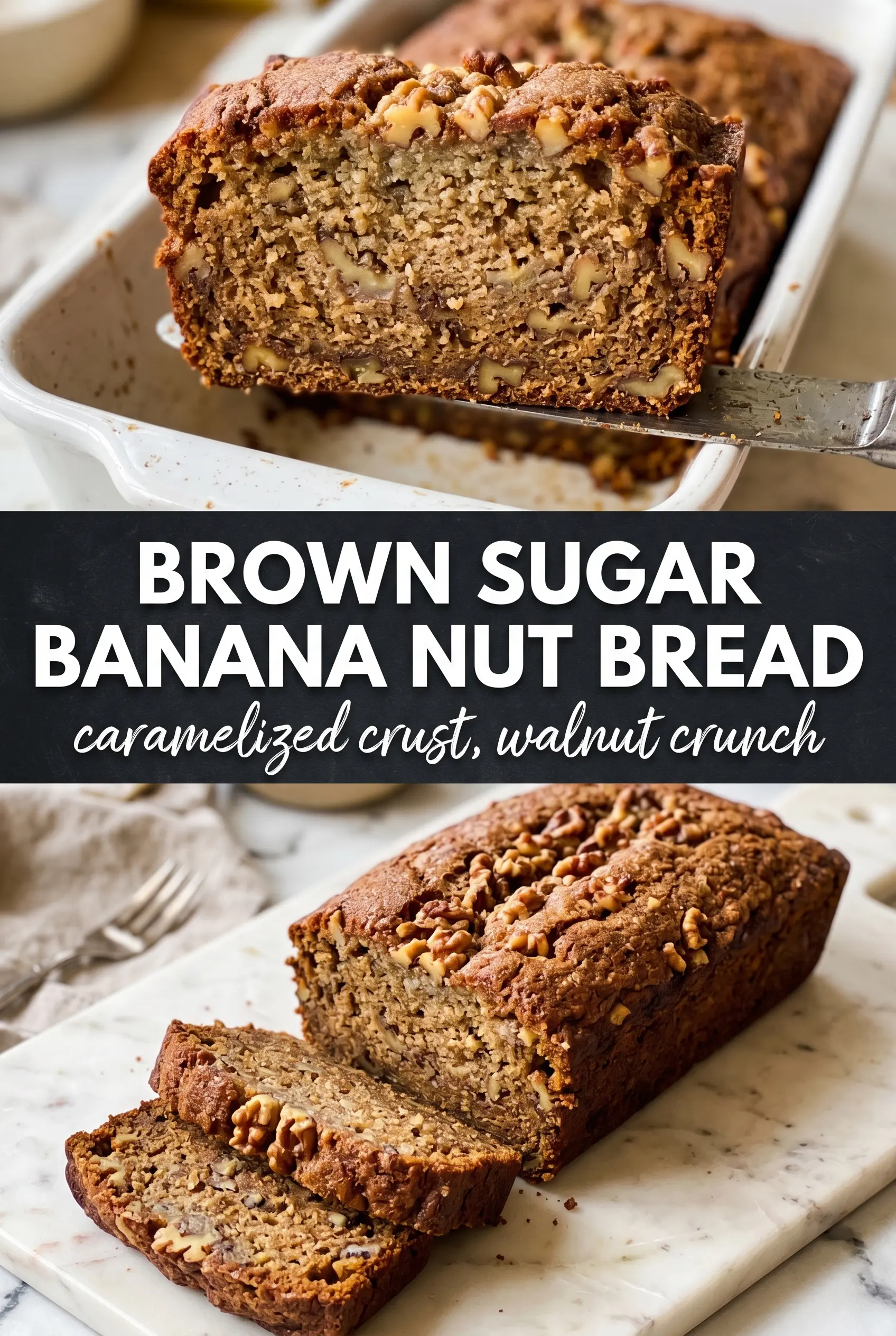
Brown Sugar Banana Nut Bread
Ingredients
Equipment
Method
- Preheat the oven to 350°F and grease a 9x5 loaf pan.
- Whisk the melted butter and brown sugar together until smooth.
- Whisk in the eggs and vanilla until the mixture looks evenly blended.
- Stir in the mashed bananas until fully incorporated and no dry banana streaks remain.
- Fold in the all-purpose flour, baking soda, cinnamon, nutmeg, and salt until just combined, with a few small flour pockets still acceptable.
- Fold in the walnuts so they are evenly distributed throughout the batter.
- Pour the batter into the loaf pan and tap once to settle the surface.
- Bake for 60–70 minutes at 350°F until a deep golden brown crust forms and a toothpick inserted in the center comes out clean.
- Cool in the pan for 15 minutes, so the loaf firms up and the caramel-colored crumb sets.
- Turn out and slice once the loaf releases easily from the pan.