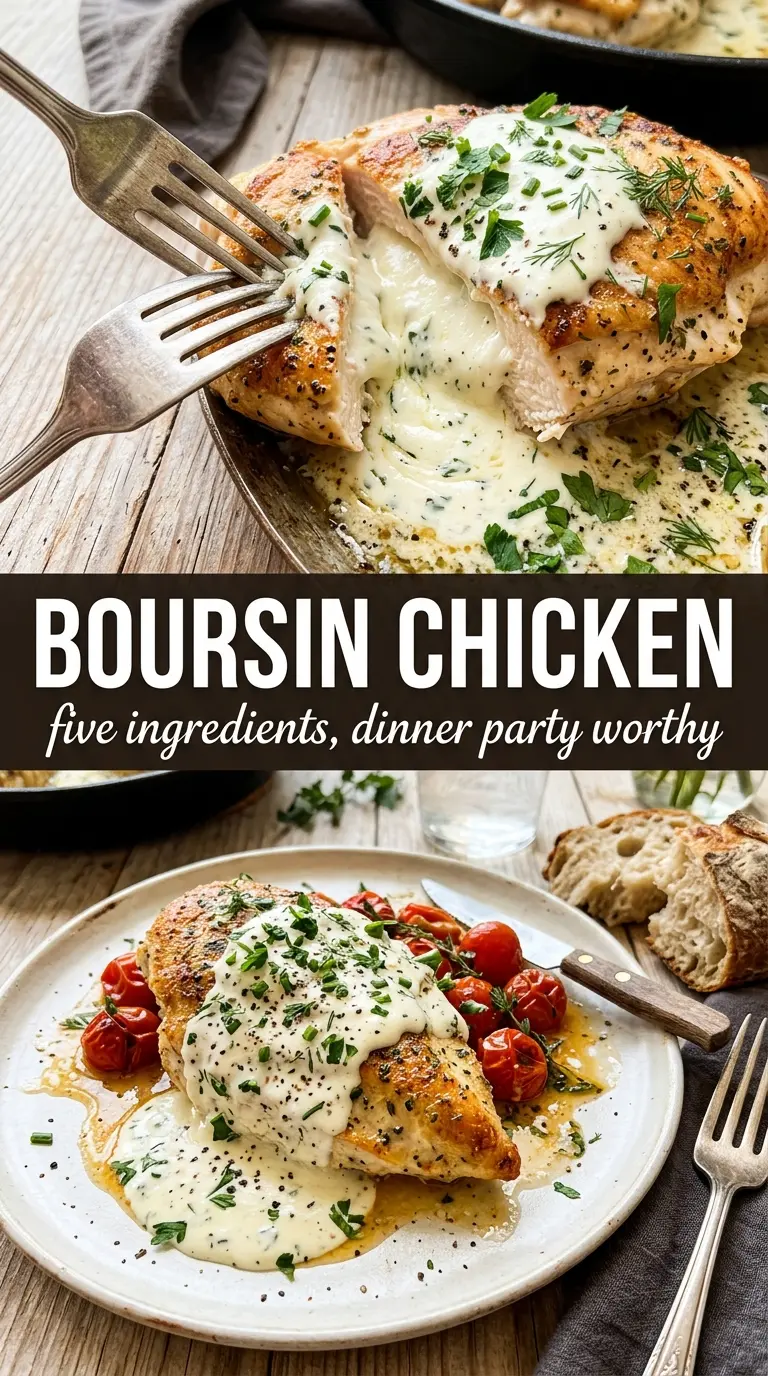
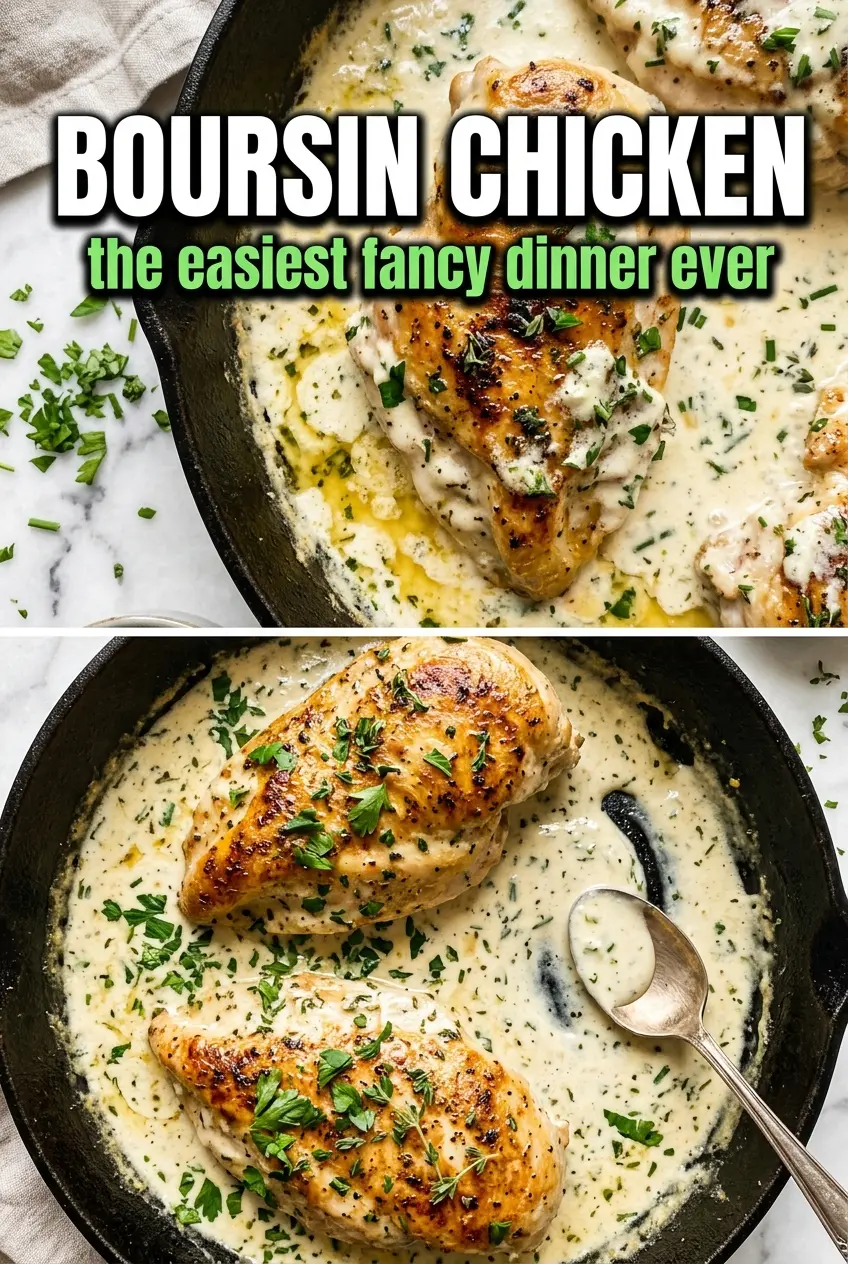
Boursin chicken lands on the plate with golden seared edges and a sauce that tastes like it took much longer than it did. The chicken stays juicy because it’s pulled as soon as it hits 165°F, then goes back into the pan only long enough to warm through in that glossy herb sauce. What you get is tender chicken coated in a creamy, garlicky blanket with thyme and pepper in every bite.
The trick here is treating the sauce like a pan sauce first and a cream sauce second. The wine or broth loosens the browned bits from the skillet, and those bits carry the deepest flavor in the dish. Boursin melts into the liquid on low heat, then the cream rounds everything out without making the sauce heavy or gluey.
Below, I’ve included the little details that keep the sauce smooth, the chicken juicy, and the whole pan balanced. If you’ve ever had a cream sauce turn grainy or thin out on the plate, the notes here will save you from repeating that mistake.
The sauce turned out silky and clung to the chicken instead of running all over the plate, and the thyme with the Boursin gave it that restaurant-style taste my family kept talking about.
Save this Boursin chicken for the nights when you want a silky herb sauce and golden chicken with almost no cleanup.
The Reason the Sauce Stays Smooth Instead of Turning Grainy
Most cream sauces break because the heat is too high when the cheese or cream goes in. Boursin already has fat and dairy in it, so it melts best in a gentle simmer, not a hard boil. Once the sauce starts bubbling aggressively, the dairy can separate and the texture goes from silky to speckled in a hurry.
The other thing that matters is the order. First you loosen the pan with wine or broth, then you melt the Boursin into that liquid, and only then do you add the cream. That sequence gives the cheese something to emulsify into, which is why the sauce clings to the chicken instead of pooling thinly at the bottom of the plate.
- Medium-high heat for searing gives you color on the chicken, but the sauce should come together over low to medium-low heat.
- Drying the chicken first helps it brown instead of steam. If the surface is wet, you lose that deep golden crust.
- Let the sauce simmer, not boil once the cheese is in. A lazy bubble is enough to thicken it.
What the Boursin Is Doing That Plain Cream Can’t
- Boursin garlic and herb cheese is the core of the sauce. It brings garlic, herbs, salt, and body all at once, which is why the recipe tastes layered without needing a long ingredient list.
- Heavy cream softens the tang of the cheese and makes the sauce feel lush. Half-and-half works in a pinch, but the sauce will be thinner and less stable.
- White wine adds brightness and deglazes the pan beautifully. If you don’t cook with wine, chicken broth works well; just use a splash of lemon at the end if the sauce tastes flat.
- Fresh thyme is worth using fresh here because it echoes the herb notes already in the cheese. Dried thyme can work, but use less and let it simmer a minute longer so it doesn’t taste dusty.
- Chicken breasts cook best when they’re similar in thickness. If one side is much thicker, pound it lightly so the whole pan finishes at the same time and nothing dries out.
Building the Pan Sauce Without Overcooking the Chicken
Getting a Real Sear
Season the chicken well, then lay it into hot olive oil and leave it alone long enough to form a deep golden crust. If you try to move it too early, it’ll stick and tear. The goal is browned edges and an internal temperature of 165°F, not pale chicken with no texture. Pull it out of the skillet as soon as it’s done so it doesn’t overcook while the sauce comes together.
Using the Brown Bits
After the chicken comes out, add the garlic for just 30 seconds. It should smell fragrant, not dark and bitter. Pour in the wine or broth and scrape the bottom of the pan with a wooden spoon to lift every browned bit, because that’s where the flavor starts. If the pan looks dry at this stage, the sauce will taste thinner and less cohesive.
Melting the Cheese the Right Way
Let the liquid come to a gentle simmer before you stir in the Boursin. Break the cheese up a little as it softens so it melts evenly instead of leaving a few stubborn lumps. Once it’s smooth, stir in the cream and thyme and keep the heat low enough that the sauce only barely bubbles. If it boils hard, the texture can turn grainy or greasy.
Finishing in the Sauce
Slide the chicken back into the pan and spoon the sauce over the top. Give it a few minutes so the chicken warms through and picks up the herb flavor without drying out. The sauce should thicken slightly and coat the back of a spoon, not reduce into a paste. Garnish with fresh thyme at the end so the top keeps a bright herbal note.
Three Ways to Make This Boursin Chicken Fit Your Table
Swap the wine for broth if you want to skip alcohol
Chicken broth works cleanly in place of white wine. The sauce loses a little sharpness, so add a small squeeze of lemon at the end if you want the same lift that wine gives the pan.
Use chicken thighs for a richer, more forgiving main dish
Boneless skinless thighs stay juicy even if they cook a minute longer, and they hold up well in the sauce. They bring a deeper, more savory flavor, though they won’t plate as neatly as breasts.
Make it gluten-free without changing the texture
This recipe is naturally gluten-free as written if your broth and Boursin are certified gluten-free. Serve it over mashed potatoes, rice, or gluten-free pasta and the sauce will behave the same way.
Lighten the sauce with half-and-half
Half-and-half will work, but the sauce will be a little thinner and won’t cling as richly. Keep the simmer gentle and let it reduce a touch longer so it still coats the chicken instead of sliding off.
Storage and Reheating
- Refrigerator: Store leftovers for up to 3 days. The sauce will thicken as it chills, but it stays tasty.
- Freezer: It freezes, but the cream sauce can separate a little after thawing. If you plan to freeze it, cool it quickly and reheat gently, whisking well.
- Reheating: Warm it slowly in a covered skillet over low heat with a splash of broth to loosen the sauce. High heat is what makes dairy sauces split, so don’t rush it in the microwave.
Questions I Get Asked About This Recipe
Boursin Chicken
Ingredients
Equipment
Method
- Season boneless skinless chicken breasts with salt, pepper, and garlic powder to taste. Heat olive oil in a large skillet over medium-high heat until shimmering.
- Sear the chicken for 5-6 minutes per side until golden and the internal temperature reaches 165°F. Remove chicken to a plate while you make the sauce.
- In the same pan, cook garlic for 30 seconds until fragrant. Deglaze with dry white wine or chicken broth and cook for 2 minutes, scraping up browned bits.
- Pour in chicken broth and bring to a simmer. Add Boursin garlic and herb cheese and stir until completely melted and smooth.
- Stir in heavy cream and fresh thyme leaves, then simmer for 3-4 minutes until the sauce thickens slightly. Stir often to keep the texture glossy.
- Return the chicken to the pan and spoon Boursin sauce over each breast. Garnish with fresh thyme for a bright herbal top note.
- Serve immediately with mashed potatoes or pasta. Spoon extra sauce from the pan over the sides for best coverage.