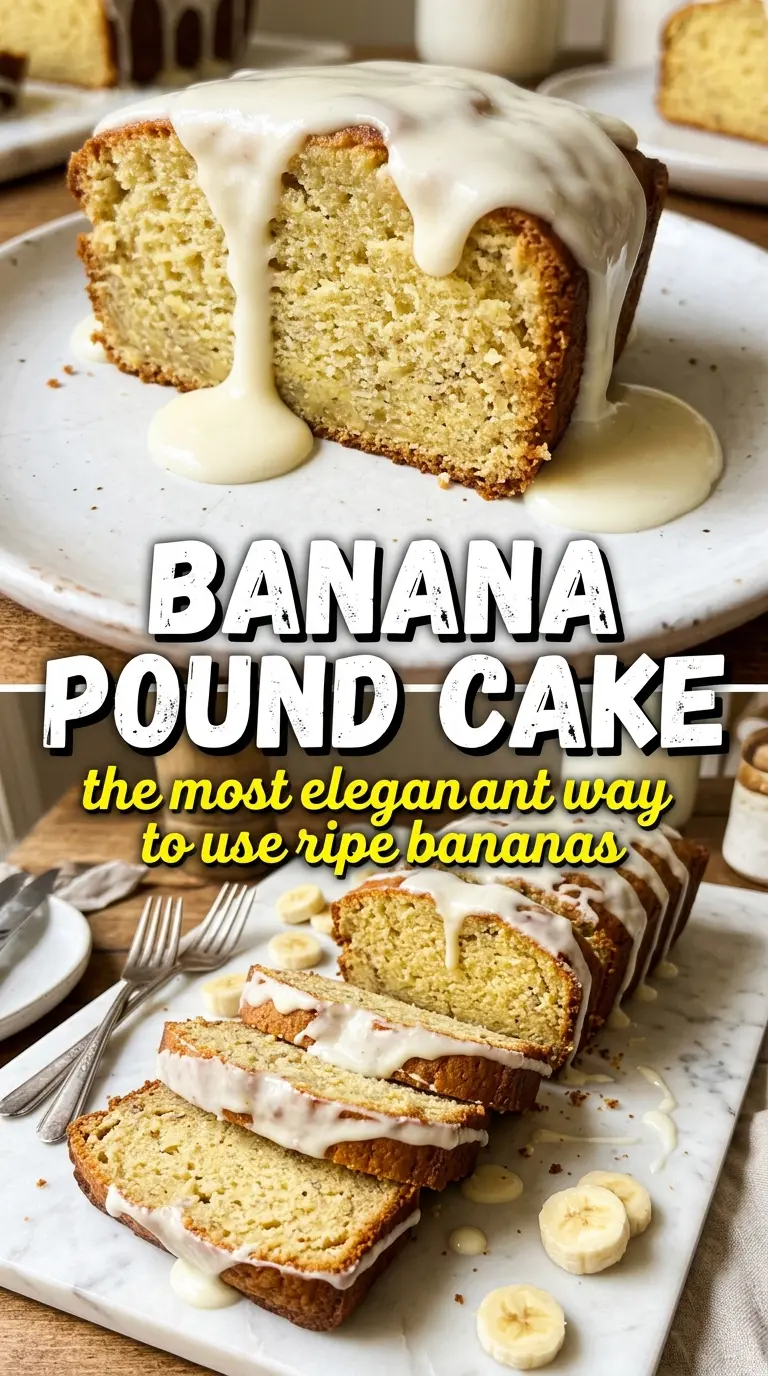
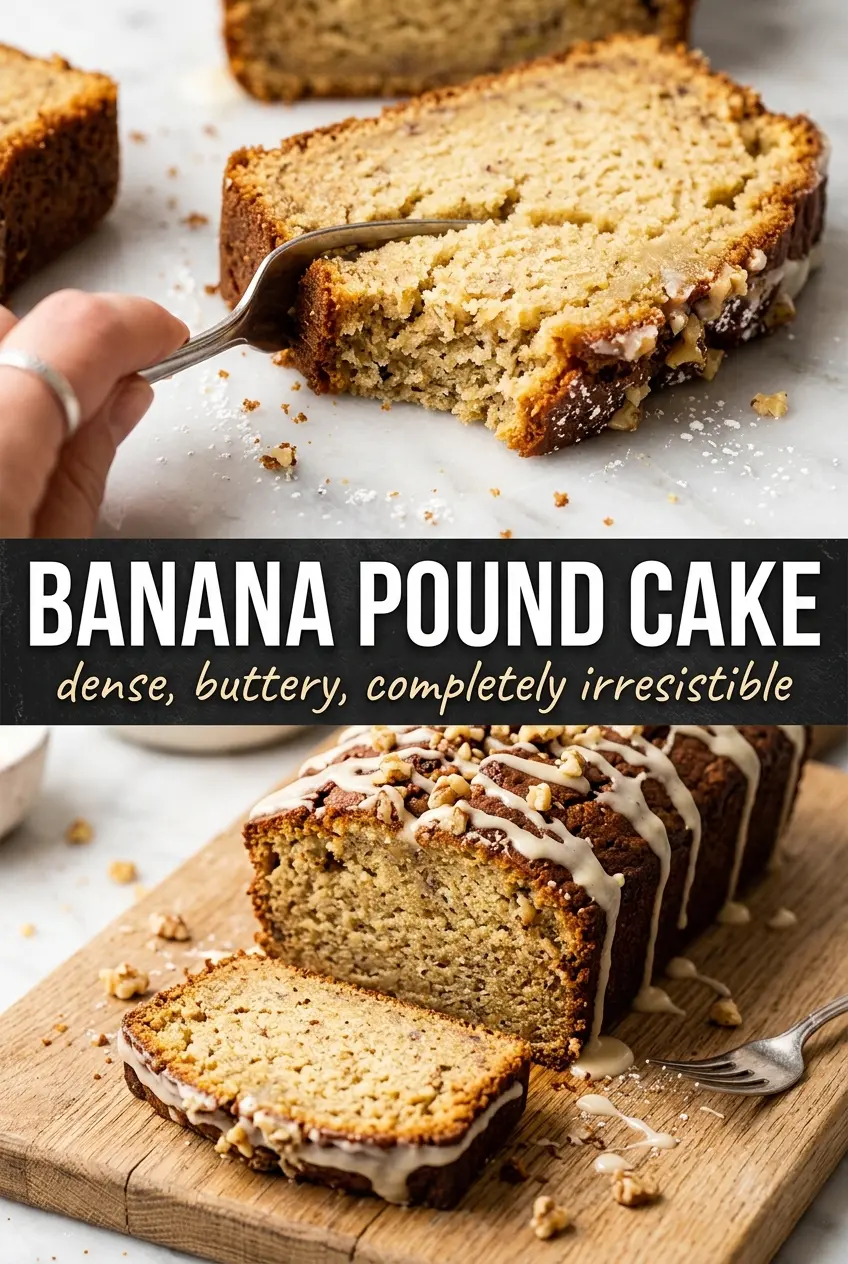
Banana pound cake lands somewhere between a classic butter cake and a banana loaf, and that’s exactly why it earns a permanent place on the counter. The crumb stays dense and velvety instead of turning airy or bready, with a deep banana flavor that tastes baked in rather than stirred on top. A good glaze helps, but the real payoff is that first slice: tight, moist, and sturdy enough to hold its shape without feeling heavy.
This version works because the butter and sugar get beaten until pale and fluffy, which builds the structure that a pound cake needs before the bananas go in. Sour cream keeps the crumb tender and gives the batter enough acidity to balance the sweetness, while the bananas bring moisture without thinning everything out. The batter is mixed in stages on purpose. That keeps the cake rich and prevents it from turning tough before it even reaches the oven.
Below, I’m walking through the small details that matter here: how ripe the bananas should be, why the pan needs a real greasing, and what to look for when the center is done even if the top still looks soft.
The cake baked up with that tight pound-cake crumb I was hoping for, and the banana flavor stayed strong even after cooling. The glaze set just enough to drip without disappearing into the cake, and the loaf sliced cleanly the next day.
Save this banana pound cake for the days when you want a dense, buttery loaf with a caramelized crust and a clean vanilla glaze.
The Part That Keeps Banana Pound Cake Dense Instead of Gummy
The mistake most banana cakes make is leaning too hard on the bananas and not enough on the butter-sugar base. Bananas add moisture fast, and if the batter is under-creamed or overmixed, the cake turns heavy in the wrong way: wet in the center, tight around the edges, and a little dull on the palate. Here, the five-minute creaming step matters because it traps air before the fruit goes in.
The other key is restraint once the flour shows up. Stirring too long develops gluten and pushes this from plush pound cake into a tougher loaf cake. Alternate the dry ingredients with the sour cream, and stop the second the batter looks smooth and thick. That’s the line between a slice that holds and a slice that turns rubbery.
What Each Ingredient Is Actually Doing in This Cake
- Ripe bananas — These bring the banana flavor and the moisture. Use bananas that are heavily spotted and soft enough to mash easily; pale bananas won’t give you enough sweetness or aroma. If yours are extra large and very soft, don’t add an extra banana unless you’re ready to risk a soggy center.
- Butter — This is the backbone of the pound cake texture. It needs to be softened, not melted, so it can cream properly with the sugar and hold air. Margarine won’t give the same rich crumb or flavor.
- Sour cream — This is the ingredient that keeps the cake tender without making it flimsy. Full-fat sour cream works best, but plain full-fat Greek yogurt can stand in if that’s what you have. The texture will be a little tangier and slightly less plush, but it still works.
- All-purpose flour — AP flour gives the cake its sturdy, sliceable structure. Cake flour makes it too delicate for this style of loaf, and bread flour will make it chewy. Measure carefully and don’t pack it into the cup.
- Baking soda and baking powder — The banana and sour cream need a little lift, but not a lot. This combination gives the cake enough rise to stay light at the edges while still baking into that dense pound-cake crumb.
Building the Batter So the Crumb Stays Tight and Velvety
Creaming the Butter and Sugar
Beat the butter and sugar for the full five minutes, until the mixture looks pale, fluffy, and a little expanded in volume. That step is what gives the cake its fine crumb and helps it bake up with a good dome instead of collapsing into a brick. If the butter is too cold, the mixture stays sandy; if it’s too warm, it won’t hold air. The texture you want is light enough to leave a visible trail on the paddle or beaters.
Adding the Eggs and Bananas
Drop the eggs in one at a time and let each one disappear before adding the next. If the batter looks curdled after the eggs, that’s usually a sign the butter was too cold or the eggs were too chilly, but it often comes together once the bananas go in. Mash the bananas until mostly smooth, with a few small soft pieces for texture, then mix them in with the vanilla. Don’t worry if the batter looks loose at this point; the flour will bring it back.
Folding in the Dry Ingredients and Sour Cream
Add the flour mixture and sour cream in alternating additions, starting and ending with the dry ingredients. This keeps the batter from breaking and helps it stay even from top to bottom. Mix only until the flour streaks disappear. If you beat it after that point, the cake gets dense in a tough, chewy way instead of dense in a rich, buttery way.
Knowing When the Cake Is Done
Bake until the top is deeply golden and a toothpick inserted in the center comes out clean or with a few moist crumbs. The surface should feel set and spring back lightly when touched, but the center can still look slightly softer than a standard layer cake. That’s normal for this style. Let it cool in the pan for 20 minutes before unmolding, or it can tear while still fragile.
Ways to Bend This Banana Pound Cake Without Breaking It
Dairy-Free Banana Pound Cake
Swap the butter for a good plant-based baking stick and use unsweetened dairy-free yogurt in place of the sour cream. The cake will still be moist and sliceable, but the flavor will be a little less rich and the crumb slightly less plush. Keep the glaze dairy-free by using a plant milk you trust for baking.
Turn It Into a Banana Bundt Cake
Bake the batter in a well-greased and floured bundt pan instead of a loaf pan. The baking time may stretch a bit depending on the pan’s shape, so start checking early and watch for the center to set. You’ll get more crust and more dramatic glaze drips, which works beautifully with this dense crumb.
Make It Less Sweet
Cut the sugar by 1/4 cup if you want the banana flavor to come forward a little more. The cake will still bake properly, though the crust won’t brown quite as deeply and the texture will be slightly less tender. I’d keep the glaze light, not thick, so it doesn’t push the dessert back into sugary territory.
Storage and Reheating
- Refrigerator: Store covered for up to 5 days. The crumb stays moist, though the texture firms up a bit when chilled.
- Freezer: This cake freezes well. Wrap slices or the whole cake tightly in plastic and then foil, and freeze for up to 2 months. Add the glaze after thawing for the cleanest finish.
- Reheating: Warm individual slices for 10 to 15 seconds in the microwave, just until the butter in the cake loosens again. Don’t overheat it or the crumb can turn dry at the edges while the center stays cool.
Answers to the Questions Worth Asking
Banana Pound Cake
Ingredients
Equipment
Method
- Preheat oven to 325°F and grease and flour a large loaf pan or bundt pan. Set up the pan so the cake releases cleanly after baking.
- Beat butter and sugar together for 5 minutes until very light and fluffy. Stop when the mixture looks pale and airy.
- Add eggs one at a time, beating well after each. Mix until each egg fully disappears before adding the next.
- Mix in vanilla extract and mashed bananas. The batter should look evenly speckled with banana.
- Alternate folding in the flour mixture and sour cream in three additions. Start with flour, then sour cream, repeating until just combined.
- Pour batter into the prepared pan and tap once to settle the surface. Spread to an even top so it bakes uniformly.
- Bake for 65–75 minutes until a toothpick comes out clean and the top is deeply golden. Look for a caramelized, browned dome before removing.
- Cool the cake in the pan for 20 minutes before unmolding. Letting it rest helps the crumb stay tight and cleanly slices.
- Whisk powdered sugar with 2–3 tablespoons milk and 1 teaspoon vanilla extract until smooth. Adjust with more milk to make a pourable glaze.
- Drizzle vanilla glaze over the cooled cake so it runs down the sides. Serve once the glaze sets slightly, with visible dense banana crumb in each slice.