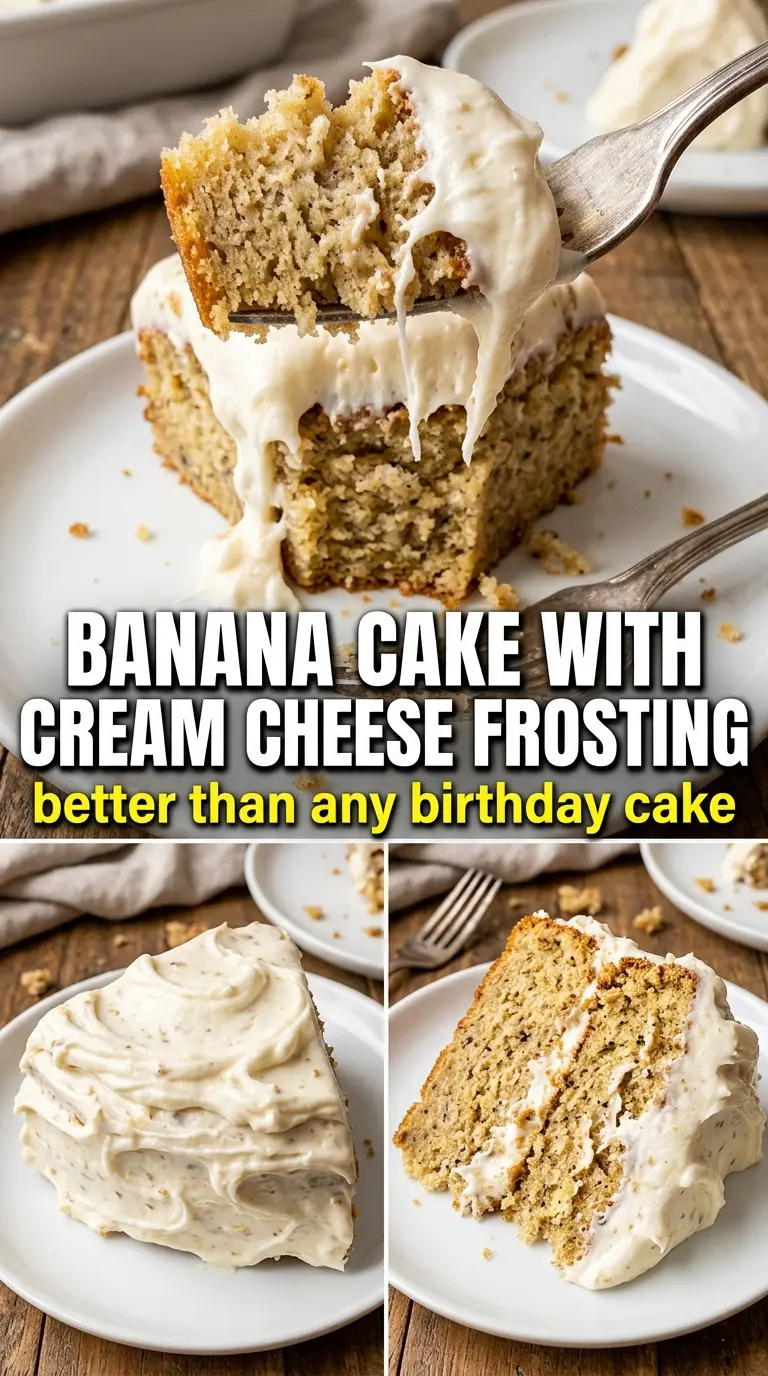
Banana cake gets its best texture when it stays tender instead of turning dense, and this version nails that balance. The crumb comes out soft and moist with a light lift from both baking soda and baking powder, while the sour cream keeps the cake plush for days. It’s the kind of cake that slices cleanly, holds together well, and still feels decadent under a thick layer of tangy cream cheese frosting.
The bananas do more than add flavor here. They bring moisture and sweetness, but they also need enough structure around them so the cake doesn’t collapse into a gummy center. That’s why the butter and sugar are beaten first, and why the flour mixture is alternated with the sour cream instead of dumped in all at once. The frosting follows the same logic: cream cheese and butter are beaten smooth before the sugar goes in, which keeps it fluffy instead of loose.
Below, I’ve included the small details that keep the cake from sinking in the middle and the frosting from turning runny. If you’ve ever had banana cake that tasted great but baked up heavy, this one will feel like a correction.
The cake stayed incredibly moist for three days, and the frosting set up thick enough that it sliced cleanly instead of sliding off. I loved the little bit of cinnamon with the bananas.
Pin this banana cake with cream cheese frosting for a moist 9×13 dessert with tangy frosting and a soft, tender crumb.
The difference between a moist crumb and a heavy banana cake
Banana cake goes wrong fast when the batter gets overmixed or the bananas are doing all the work without enough structure around them. This recipe avoids that by using a balanced mix of leaveners, sour cream, and a straightforward creaming method. The result is a cake that rises evenly and stays tender without baking up sticky in the center.
The other thing that matters here is the pan size. A 9×13 pan gives the batter enough room to bake through at the same pace the edges set, which keeps the middle from lagging behind. If you try to push this into a smaller pan, the center can stay underbaked while the edges dry out.
- Bananas — Use very ripe bananas with plenty of brown spotting. That extra sweetness and softness gives the cake its flavor and moisture, and under-ripe bananas won’t break down enough.
- Sour cream — This is what keeps the crumb plush. Plain full-fat yogurt can work in a pinch, but sour cream gives a slightly richer, softer texture.
- Baking soda and baking powder — Banana batter needs both. The baking soda reacts with the banana and sour cream, while the baking powder gives extra lift so the cake doesn’t bake flat.
- Cinnamon — It’s not here to make the cake taste spiced; it just rounds out the banana flavor. Keep it subtle.
What Each Ingredient Is Actually Doing in This Recipe
- Primary ingredient (the star) — Quality matters most. Choose the best you can find.
- Cooking medium (oil, butter, or broth) — This carries flavors and prevents dryness.
- Seasonings (salt, pepper, spices, herbs) — Layer flavors so nothing overpowers. Build depth gradually.
- Aromatics (garlic, onion, herbs) — Cook with fat to bloom flavors. Become the foundation.
- Supporting ingredients — Complement the main ingredient without overpowering it.
- Sauce or liquid (if applicable) — Brings flavors together. Balance richness with acid.
- Acid (lemon, vinegar, wine, or other) — Brightens and prevents flat-tasting results.
- Final finish (garnish, glaze, or sauce) — Prevents one-dimensional taste and adds visual appeal.
Building the batter so the cake rises evenly
Start with the butter, sugar, and eggs
Beat the softened butter and sugar until the mixture looks pale and fluffy. That step traps air, which helps the cake rise without turning dense. Add the eggs one at a time, then the vanilla and mashed bananas, mixing just until combined. If the batter looks a little broken at this stage, that’s fine; it comes together once the dry ingredients and sour cream go in.
Alternate the dry mix with the sour cream
Stir the flour mixture in two or three additions, alternating with the sour cream and ending with flour. This keeps the batter from getting overworked, which is the fastest way to end up with a tight, tough crumb. Stop mixing as soon as the flour disappears. A few small streaks are better than beating the batter smooth.
Bake until the center springs back
Pour the batter into a greased 9×13 pan and bake at 350°F until a toothpick comes out clean, usually 30 to 35 minutes. The edges should look set and lightly golden, and the center should spring back when touched gently. If the top browns before the middle is done, your oven runs hot; tent the cake loosely with foil for the last few minutes rather than raising the rack or lowering the heat too much.
Whip the frosting until it holds soft peaks
Beat the cream cheese and butter until completely smooth before adding the sugar. Any lumps at this stage will stay in the frosting. Add the powdered sugar gradually, then the vanilla and cream, and stop as soon as the frosting is thick, fluffy, and spreadable. If it looks loose, the cream cheese was too warm or the sugar went in too fast.
How to change this banana cake without losing the good texture
Banana layer cake instead of a sheet cake
Divide the batter between two greased 9-inch round pans and start checking a few minutes early. The crumb stays the same, but the layers bake a little faster and need a more careful eye so they don’t dry out at the edges. This version is better if you want a taller birthday-style cake.
Dairy-free banana cake
Use a thick dairy-free yogurt in place of the sour cream and a plant-based butter in both the cake and frosting. The cake still bakes up moist, though the frosting won’t have quite the same tang or richness as cream cheese frosting. Chill the frosted cake before slicing so the dairy-free frosting firms up.
Walnut banana cake
Fold in 3/4 cup chopped walnuts with the dry ingredients for a little crunch and a deeper bakery-style finish. Toasting them first makes the flavor stand out, but skip them if you want the crumb completely smooth for kids or picky eaters.
Storage and Reheating
- Refrigerator: Store covered for up to 5 days. The cake stays moist, and the frosting firms up a bit, which makes neat slices easier.
- Freezer: Freeze unfrosted cake tightly wrapped for up to 2 months. Frosting can be frozen separately, but the texture is best when freshly made.
- Reheating: Let chilled slices sit at room temperature for 20 to 30 minutes before serving. Microwaving too long softens the frosting and makes the crumb gummy.
Questions I Get Asked About This Recipe
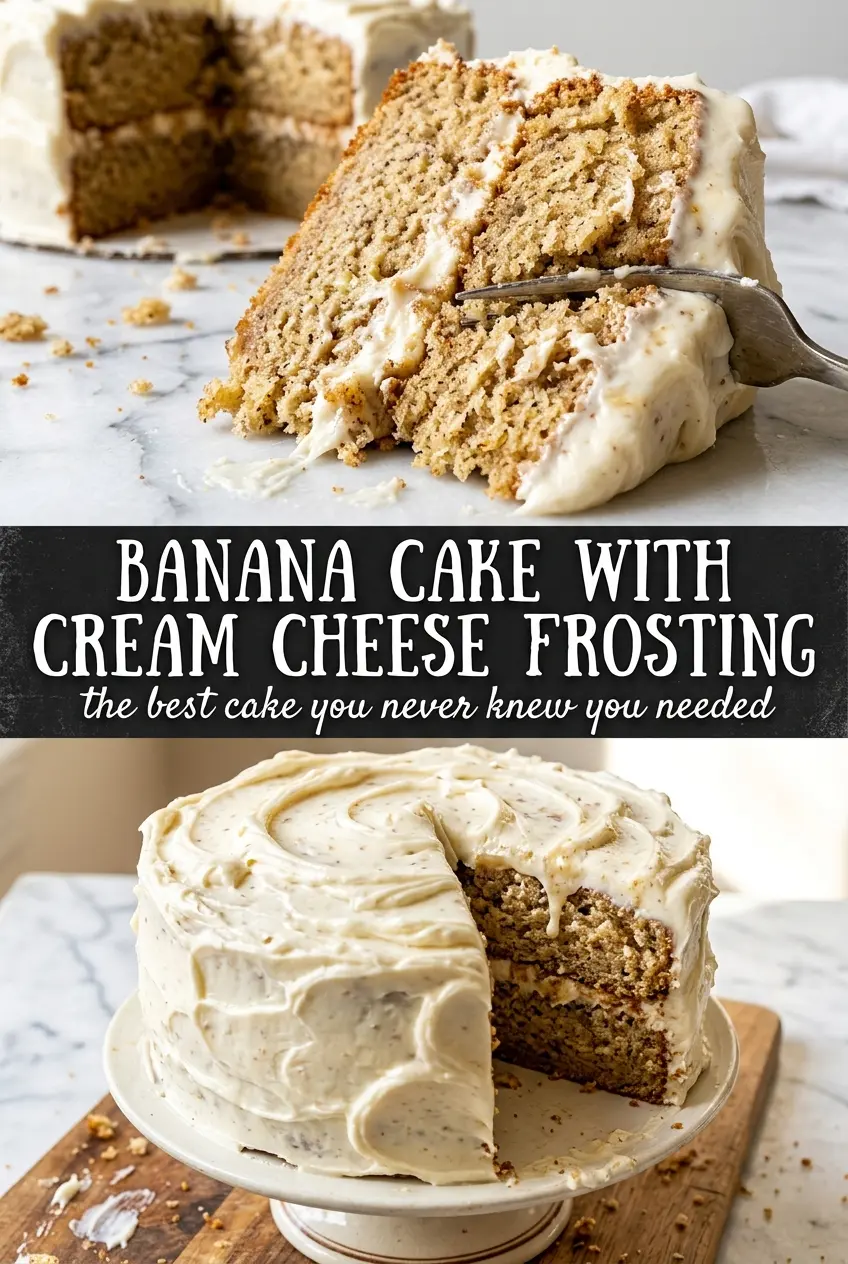
Banana Cake with Cream Cheese Frosting
Ingredients
Equipment
Method
- Preheat the oven to 350°F and grease a 9x13 pan. Set the pan aside so it’s ready for batter.
- Beat the softened butter and sugar until fluffy, about 2 minutes. Look for a lighter, smoother mixture before continuing.
- Add the eggs, vanilla extract, and mashed bananas, then mix until combined. Stop when the batter looks uniform with no dry banana streaks.
- In a separate dry mix, whisk together the all-purpose flour, baking soda, baking powder, salt, and cinnamon. Ensure the spices are evenly distributed.
- Alternate folding in the flour mixture and sour cream, starting and ending with flour. Mix just until streaks disappear, so the batter stays thick and tender.
- Pour the batter into the prepared 9x13 pan and spread evenly. Tap the pan lightly to settle the surface.
- Bake for 30–35 minutes at 350°F until a toothpick comes out clean. The edges should look set and slightly golden, with the center fully baked.
- Beat the softened cream cheese and butter until smooth, creamy, and lump-free. Scrape the sides as needed for an even texture.
- Gradually add the powdered sugar, then mix until thick. The frosting should hold shape and look glossy, not runny.
- Add the vanilla extract and heavy cream, then beat until thick and fluffy. Stop when the frosting looks lighter and billowy.
- Frost the completely cooled cake generously with the cream cheese frosting. Use sweeping motions to create billowing swoops across the entire surface.