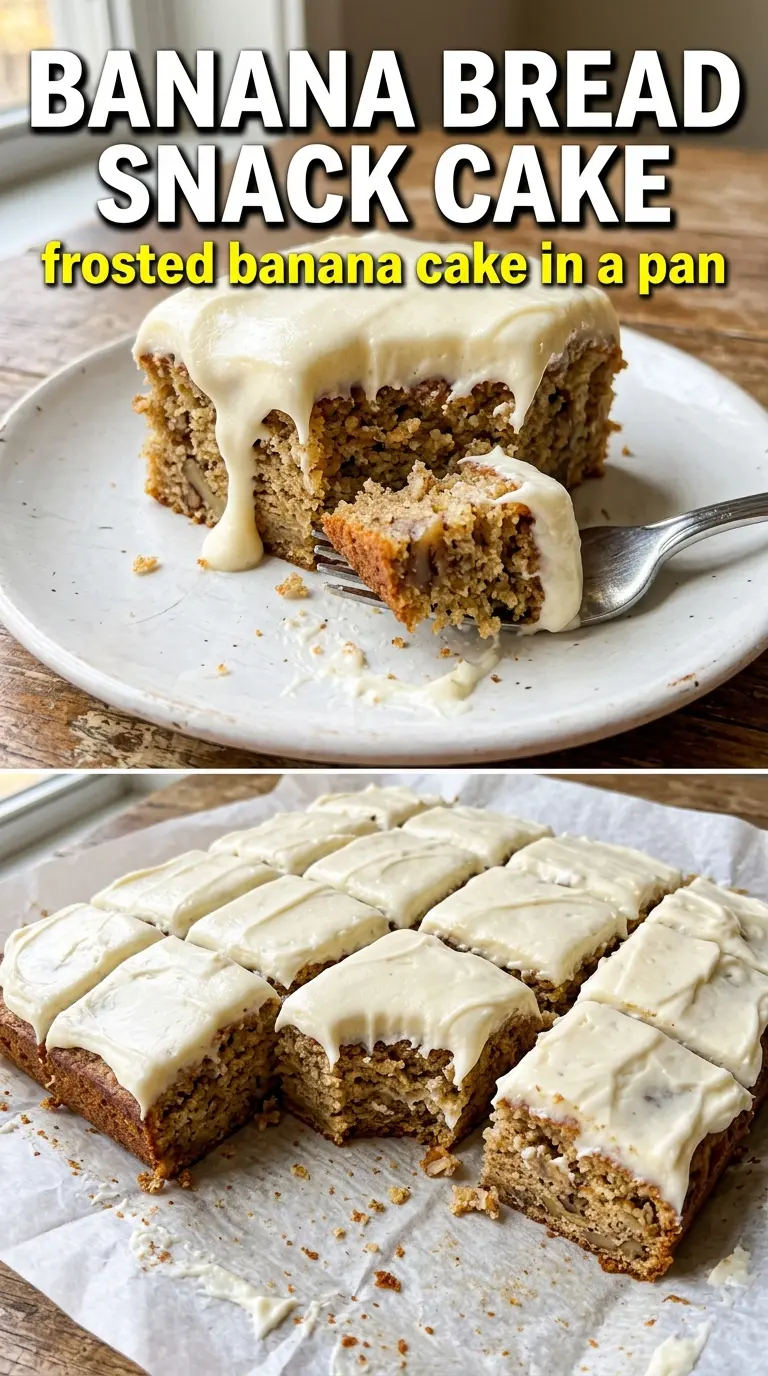
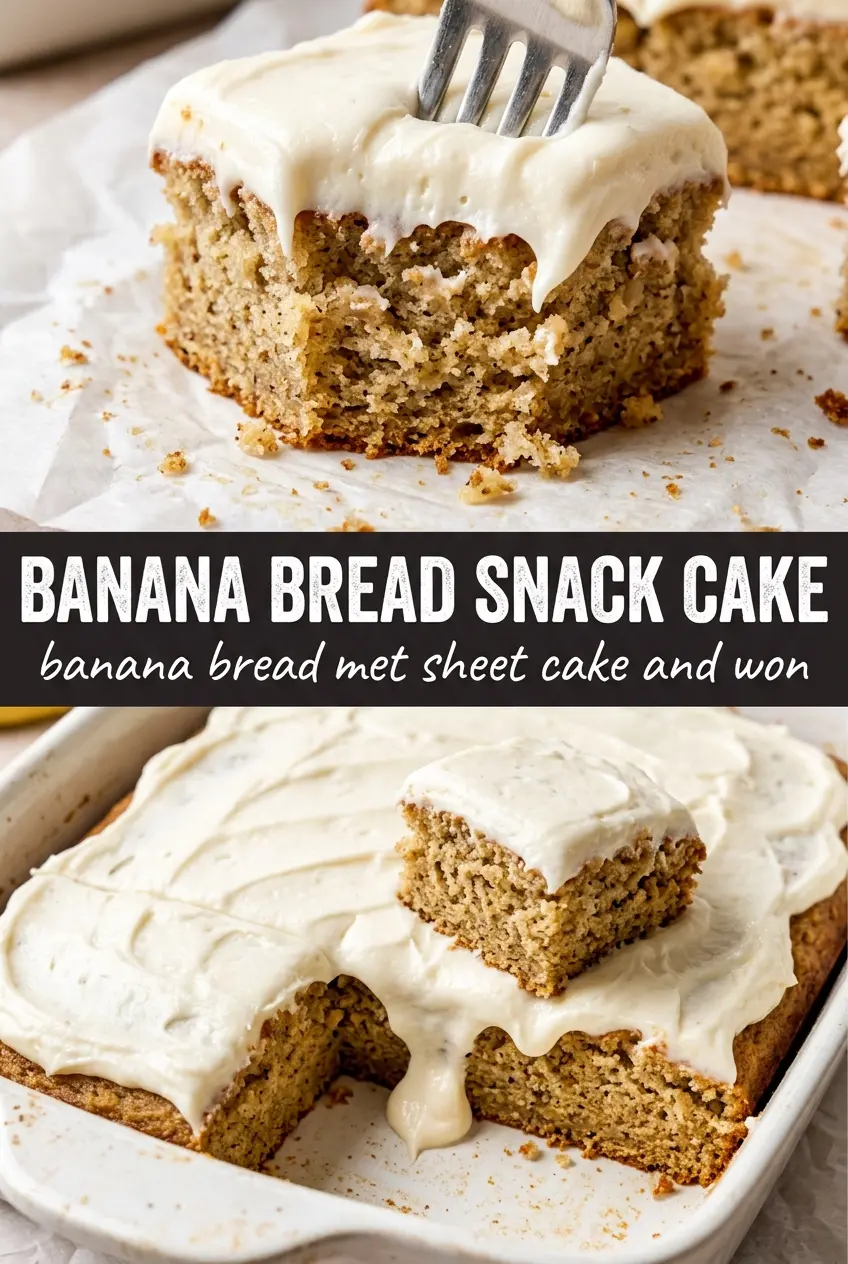
Banana Bread Snack Cake lands right in that sweet spot between breakfast comfort and dessert-worthy treat. It bakes up with a moist, dense crumb that slices cleanly, holds frosting without collapsing, and tastes like the best banana bread you’ve had — just a little more polished. The brown butter cream cheese frosting adds a nutty, tangy finish that makes each square feel special without turning the cake fussy.
This version works because the bananas do the heavy lifting for moisture, while melted butter keeps the batter simple and tender. The batter stays in one bowl, but the texture still comes out rich because the flour is folded in just until combined. That matters here. Overmixing turns a snack cake like this from soft and dense into tough and gummy, especially once the bananas are working against you with all that moisture.
Below, I’m walking through the exact points that matter most: how to keep the crumb tender, how to brown the butter without burning it, and how to frost the cake so the topping stays swoopy instead of runny.
The cake came out incredibly moist and the brown butter frosting set up fluffy after about 5 minutes of cooling. I cut it into 16 squares and it held together perfectly for lunchbox snacks all week.
Like this banana bread snack cake? Save it to Pinterest for an easy square-pan dessert with brown butter frosting and a soft, moist crumb.
The Mistake That Makes Banana Snack Cake Dense Instead of Tender
The biggest trap with banana cake is assuming more mixing will give you a smoother, better batter. It won’t. Once the flour goes in, you want to stop as soon as the dry streaks disappear, because overworking the batter develops gluten and pulls the cake toward rubbery instead of soft. This cake should feel thick but not stiff when you spread it into the pan.
The other issue is banana ripeness. Under-ripe bananas won’t bring enough sweetness or moisture, and the cake ends up tasting flat. You want bananas with plenty of brown spotting and a deeply fragrant smell. If they’re still pale yellow, wait. That extra ripeness is part of what gives the cake its moist, almost fudgy crumb.
- Melted butter — Gives the cake that rich, snack-cake tenderness without needing a stand mixer. You can use salted butter in a pinch, but keep the added salt in the batter.
- Mashed ripe bananas — The riper they are, the better the texture and sweetness. If your bananas are very large, you may only need just under 2 cups mashed.
- Baking soda — Works with the acidity in the bananas to help the cake rise. Don’t swap it for baking powder here; the lift and browning won’t be the same.
- Brown butter frosting — The nuttiness changes the whole cake. Brown the butter until you see amber specks and smell toasted hazelnuts, then cool it before adding the powdered sugar so the frosting stays smooth.
What Each Bowl Is Doing for the Final Crumb
The ingredients here are simple, but each one has a job. The eggs add structure so the cake slices neatly, while the vanilla rounds out the banana flavor without making it taste like banana bread from a loaf pan. Cinnamon is subtle here, not dominant; it warms the cake without pushing it into spice-cake territory.
For the frosting, the cream matters more than you’d think. It loosens the browned butter enough to whip into a spreadable topping, and it helps the powdered sugar dissolve into a silky finish. If you’re out of heavy cream, whole milk works, but add it slowly because the frosting will be a little softer and less plush.
- Powdered sugar — Needed for a frosting that sets with enough body to stay on top of the cake. Add it gradually so you don’t end up with a cloud of sugar dust.
- Heavy cream — Gives the frosting its spreadable texture. Start with the full amount, then add a teaspoon more only if the frosting feels too stiff.
- Vanilla extract — Sharpens the caramel notes in the browned butter. It’s a small amount, but you’d notice if it were missing.
Building the Batter and Frosting at the Right Moment
Mixing the Banana Base
Whisk the melted butter, sugar, eggs, and vanilla into the mashed bananas until the mixture looks smooth and glossy. A few banana bits are fine, but you don’t want big chunks because they can bake into wet pockets. The batter should look loose and spoonable before the flour goes in. If it already looks curdled, the bananas were probably cold; that’s not a problem once everything comes together.
Folding in the Dry Ingredients
Add the flour, baking soda, cinnamon, and salt, then fold just until you stop seeing dry flour. Stop there. If you stir until the batter looks perfectly uniform, the cake will bake up tighter and less tender. Spread it into the prepared 8×8 pan and level the top so it bakes evenly from edge to center.
Baking to the Right Doneness
Bake until the top is golden and a toothpick in the center comes out clean or with a few moist crumbs. The middle should spring back lightly when touched, but it shouldn’t feel squishy. If you wait for the top to look deeply browned all over, the edges can dry out before the center finishes. A square pan bakes quickly, so start checking at 25 minutes.
Brown Butter Frosting and Final Assembly
Brown the butter until the milk solids turn golden and smell nutty, then cool it for about 5 minutes. That short cooling window matters: too hot and the sugar melts into a greasy glaze; too cool and the frosting turns stiff and hard to spread. Whisk in the powdered sugar, cream, and vanilla until smooth, then frost the cake only after it’s completely cool. If the cake is even slightly warm, the frosting slides off instead of swooping across the top.
How to Adapt This for a Different Pan, a Little Less Sugar, or No Dairy
Make it dairy-free
Use a plant-based butter in both the cake and frosting, then swap the heavy cream for full-fat coconut milk or a thick dairy-free creamer. The cake still bakes up soft, but the frosting loses a little of that classic browned-butter depth unless your butter substitute browns well.
Turn it into banana snack bars
Bake the batter in an 8×8 pan as written, but line it with parchment for easier lifting and cleaner squares. The texture stays dense and moist, which makes this a great lunchbox-style bar cake. For sharper edges, chill the frosted cake for 20 minutes before cutting.
Use a lighter frosting
If you want less sweetness, cut the powdered sugar back by 1/4 cup and add only enough cream to keep it spreadable. You’ll get a thinner layer with a more pronounced browned-butter taste and less of the dessert-like finish.
Bake it unfrosted
The cake stands on its own if you want a simpler banana dessert. Without frosting, the banana flavor reads a little more like classic banana bread, and the crumb feels slightly less rich but still moist enough to serve plain.
Storage and Reheating
- Refrigerator: Store covered for up to 4 days. The frosting firms up, and the cake gets a little denser but stays moist.
- Freezer: Freeze unfrosted squares tightly wrapped for up to 2 months. Frosting after thawing gives the best texture; frosted slices can freeze, but the topping softens when thawed.
- Reheating: Warm an unfrosted square for 10 to 15 seconds in the microwave. If it’s frosted, let it sit at room temperature instead of heating it or the topping will melt and slide.
Answers to the Questions Worth Asking
Banana Bread Snack Cake
Ingredients
Equipment
Method
- Preheat oven to 350°F and grease an 8x8 square pan, so the batter releases cleanly after baking.
- Whisk melted butter, sugar, eggs, and vanilla into mashed bananas until smooth, with no streaks of egg or sugar.
- Fold in all-purpose flour, baking soda, cinnamon, and salt until just combined, stopping as soon as no dry pockets remain.
- Pour batter into the prepared 8x8 pan and bake for 25–30 minutes at 350°F until golden and a toothpick comes out clean.
- Brown the butter in a saucepan until golden and nutty, then cool 5 minutes to avoid melting the frosting.
- Whisk the cooled browned butter with powdered sugar, heavy cream, and vanilla until smooth and spreadable.
- Frost the completely cooled cake, then slice into squares to serve.