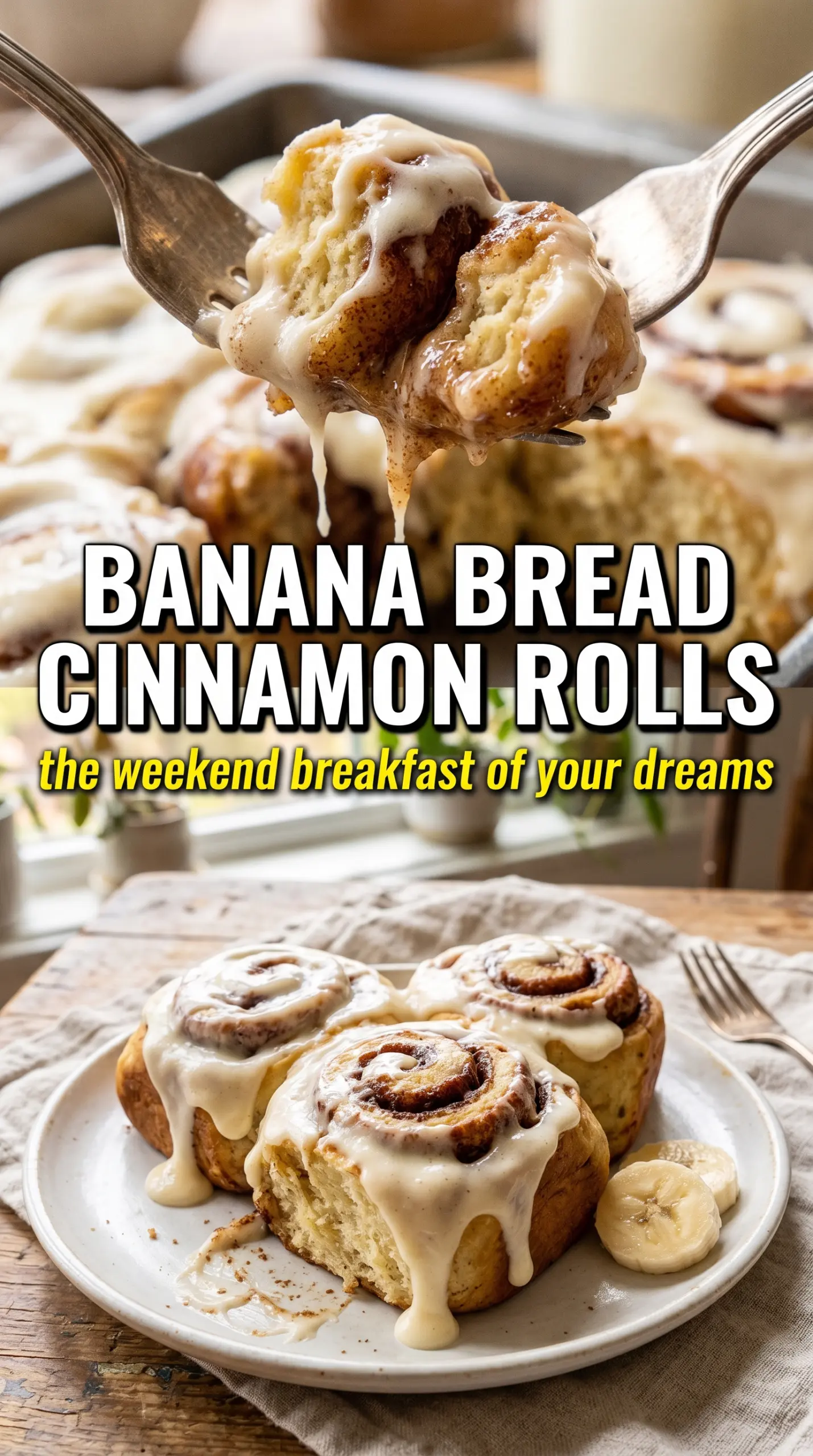
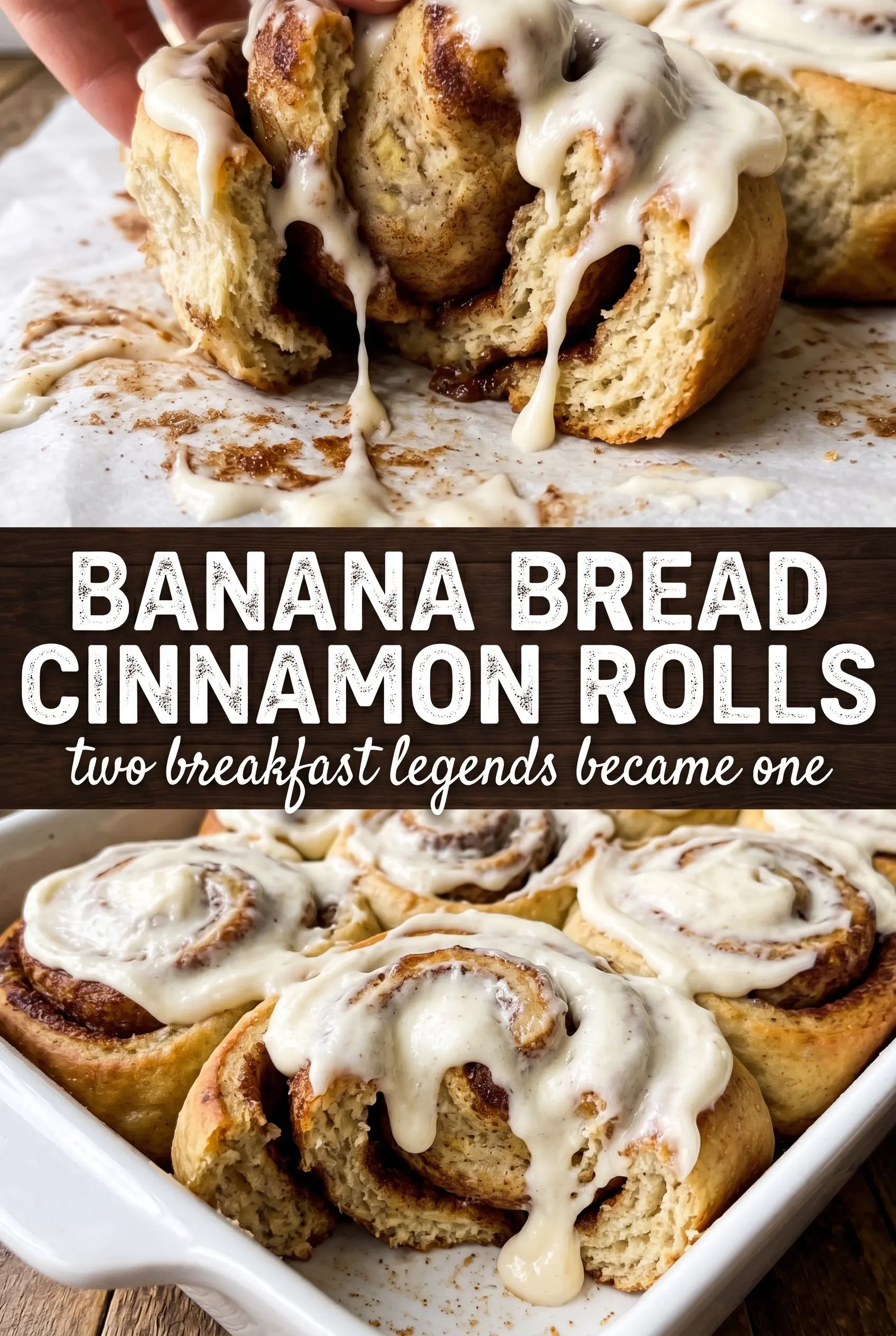
Pillowy banana bread cinnamon rolls bring the best parts of two breakfast favorites into one pan: soft, enriched dough with a gentle banana sweetness, tight cinnamon spirals, and a frosting that melts into the warm swirls instead of sitting on top. The rolls stay tender all the way through, and the banana gives them a flavor that feels familiar without turning the dough heavy or dense.
The key is keeping the banana in the background of the dough, not overpowering the structure. Ripe bananas add moisture and aroma, but the flour still needs enough room to build a supple, elastic dough that rises well. Brown sugar in the filling deepens the cinnamon without making the centers wet, and the browned butter cream cheese frosting brings a nutty edge that makes every bite taste finished.
Below, I’ll show you how to keep the dough soft, how to roll and slice clean spirals, and what changes if you want to make them ahead. If you’ve ever had banana baked into something turn gummy, this version avoids that problem.
The dough rose beautifully and baked up so soft, and the browned butter frosting was the part that had everyone going back for seconds. The banana flavor came through without making the rolls heavy.
These banana bread cinnamon rolls are the kind of soft, swirled breakfast worth planning a morning around.
The Banana Dough Trick That Keeps These Rolls Soft Instead of Heavy
Banana can make dough taste great, but it can also tip a roll toward dense if the fruit is too wet or the dough is overfloured. The goal here is a soft, enriched dough that still has enough strength to rise into tall spirals. Start with very ripe bananas and mash them smoothly so they blend into the dough without leaving pockets that tear the rolls when you slice them.
The other thing that matters is restraint with the flour. Add just enough for the dough to come together and become smooth, but stop before it turns stiff. A slightly tacky dough bakes up lighter than a dry one, and that extra softness is what makes these taste like cinnamon rolls, not banana dinner rolls.
What Each Ingredient Is Actually Doing in These Rolls
- Ripe bananas — These bring moisture, sweetness, and the banana bread flavor without needing extra extract. The riper they are, the stronger the flavor and the easier they mash into the dough. If your bananas are still pale, the rolls will taste flatter and the dough won’t have the same soft finish.
- Instant yeast — This gives the dough its lift and keeps the rolls airy despite the banana and butter. Instant yeast goes straight into the warm liquid, which makes the process simpler and helps the dough move along quickly. If you use active dry yeast, give it a few extra minutes to dissolve and wake up before adding the rest.
- Butter and cream cheese — Butter enriches the dough and the filling, while cream cheese gives the frosting its tang and body. The frosting depends on both for balance, so swapping either one changes the final texture. If you need a dairy-free version, use a plant-based butter and a dairy-free cream cheese that’s meant for spreading, not cooking.
- Brown sugar — This melts into the cinnamon filling and helps create that glossy spiral. White sugar won’t give you the same deeper flavor or the slight caramel note that makes these taste like banana bread crossed with a bakery roll.
- Browned butter — This is what sets the frosting apart. It adds a nutty, toasted note that keeps the sweetness from feeling one-dimensional. Brown it until you smell hazelnut and see golden specks, then cool it just enough so it doesn’t melt the cream cheese completely.
Rolling, Slicing, and Baking Them So the Spirals Stay Clean
Mixing the Dough Until It’s Smooth and Supple
Stir the warm milk, yeast, and sugar together first, then let it sit briefly so you know the yeast is alive and active. Add the mashed bananas, butter, egg, flour, and salt, then knead until the dough looks smooth and elastic. If it clings stubbornly to the bowl at first, that’s normal; the banana adds moisture and the dough needs a few minutes to develop before you judge it. Stop kneading when it feels soft and only slightly tacky, not wet.
Shaping the Rectangle and Building the Spiral
Roll the dough into a neat 12×18 rectangle so the rolls bake evenly and slice into clean rounds. Spread the softened butter all the way to the edges, then sprinkle the brown sugar and cinnamon in an even layer. If you leave bald spots, those rolls dry out in the oven and the filling won’t distribute evenly. Roll from the long side and keep it snug as you go so the center doesn’t leave a gap.
Proofing, Slicing, and Watching for the Right Bake
Use a sharp knife or unflavored dental floss to cut the log into 12 even rolls without squashing the spiral. Place them in a greased 9×13 pan with a little room between each one, then let them rise until they look puffy and are just touching. Bake until the tops are golden and the centers look set; if you pull them too early, the middle roll will look doughy even after the pan cools. The edges should feel light and springy when pressed gently.
Finishing With the Brown Butter Frosting
Beat the browned butter, cream cheese, powdered sugar, milk, and vanilla until smooth and spreadable. Frost the rolls while they’re still warm so the icing melts into the swirls instead of sitting in a thick layer on top. If the frosting seems too loose, it usually means the butter was still warm enough to soften the cream cheese too much; chill it for a few minutes and beat again. If it seems too thick, add milk one teaspoon at a time until it slides easily over the rolls.
How to Adapt These Rolls for Different Kitchens and Schedules
Make-Ahead Overnight Rolls
Shape the rolls, place them in the pan, cover tightly, and refrigerate overnight after the first rise. In the morning, let them sit at room temperature until puffy before baking. Cold dough straight from the fridge bakes unevenly, so give it time to wake up before it goes in the oven.
Dairy-Free Version
Use plant-based butter in the dough, filling, and frosting, plus an unsweetened dairy-free milk. Choose a dairy-free cream cheese that tastes tangy rather than sweet, or the frosting can end up flat. The rolls will still be soft, but the frosting may be a touch looser than the original.
Extra Banana Flavor
For a stronger banana note, add another half banana and hold back a spoonful of the milk if the dough feels too soft. The tradeoff is a slightly stickier dough, so use flour sparingly and rely on kneading to build structure. This version tastes more like banana bread, but the spirals will be a little more delicate.
Storage and Reheating
- Refrigerator: Store covered for up to 4 days. The rolls stay soft, but the frosting firms up in the fridge.
- Freezer: Freeze unfrosted rolls tightly wrapped for up to 2 months, or freeze frosted rolls in a single layer and thaw gently. The texture is best if you freeze them before frosting.
- Reheating: Warm individual rolls in the microwave for 15 to 20 seconds or the whole pan covered in a low oven. Don’t overheat them, or the dough turns dry and the frosting separates.
Questions I Get Asked About This Recipe
Banana Bread Cinnamon Rolls
Ingredients
Equipment
Method
- In a bowl, mix warm milk, instant yeast, and sugar, then let sit 5 minutes until foamy.
- Add mashed ripe bananas, softened butter, egg, flour, and salt, then knead until smooth and elastic.
- Shape the dough into a ball, place it in a lightly covered bowl, and let rise 1 hour until puffy.
- Roll the dough into a 12x18 rectangle on a lightly floured surface and spread the softened butter over the dough.
- Sprinkle the brown sugar and cinnamon evenly across the buttered dough.
- Roll up tightly from the long edge into a log, then slice into 12 rolls.
- Place the rolls into a greased 9x13 pan, leaving space between them, and let rise 30 minutes until swollen.
- Bake at 375°F for 20–25 minutes until the tops are golden and set.
- Beat the browned butter, softened cream cheese, powdered sugar, milk, and vanilla until smooth.
- Spread the frosting over the warm rolls immediately so it melts into the swirls.