Balsamic baked chicken breast with mozzarella lands on the plate with the kind of contrast that keeps people coming back: juicy chicken, a sticky tangy glaze, soft melted cheese, and bright tomatoes that pop against the richness. The balsamic cuts through the mozzarella instead of getting buried under it, so every bite tastes balanced, not heavy.
The trick here is starting with a short marinade that does more than season the surface. The balsamic, honey, garlic, and Dijon work together to give the chicken flavor and help the glaze cling once it hits the pan. A quick sear before baking builds color fast, and the final cheese-and-tomato finish keeps the dish in caprese territory without turning the chicken soggy.
You’ll find the timing that keeps chicken breast juicy, plus a few ways to adapt this for what you’ve got in the fridge. The goal is simple: browned edges, tender meat, and mozzarella that melts into the glaze instead of sliding off.
The balsamic glaze thickened up beautifully in the pan, and the mozzarella melted right over the chicken without turning watery. My husband asked if I could put this in the weekly rotation.
Pin this balsamic baked chicken breast with mozzarella for a chicken dinner that finishes with a glossy glaze, melted cheese, and fresh basil every time.
The Secret to Juicy Chicken Breast Is Not the Oven
Chicken breast dries out when it spends too long chasing temperature in the oven. The fix here starts before baking: a short marinade with olive oil, honey, and balsamic adds flavor and helps the surface brown faster, which means less time in the heat. The sear matters just as much as the bake because it gives you a head start on color and keeps the final texture from feeling flat.
The other thing that saves this recipe is restraint. You’re not baking until the pan looks dramatic; you’re baking until the thickest part of the chicken hits 165°F, then stopping. Once the mozzarella goes on, it only needs a few minutes to melt, and if you leave it in too long, the cheese tightens and the tomatoes lose their freshness.
What Each Ingredient Is Actually Doing in This Chicken Bake
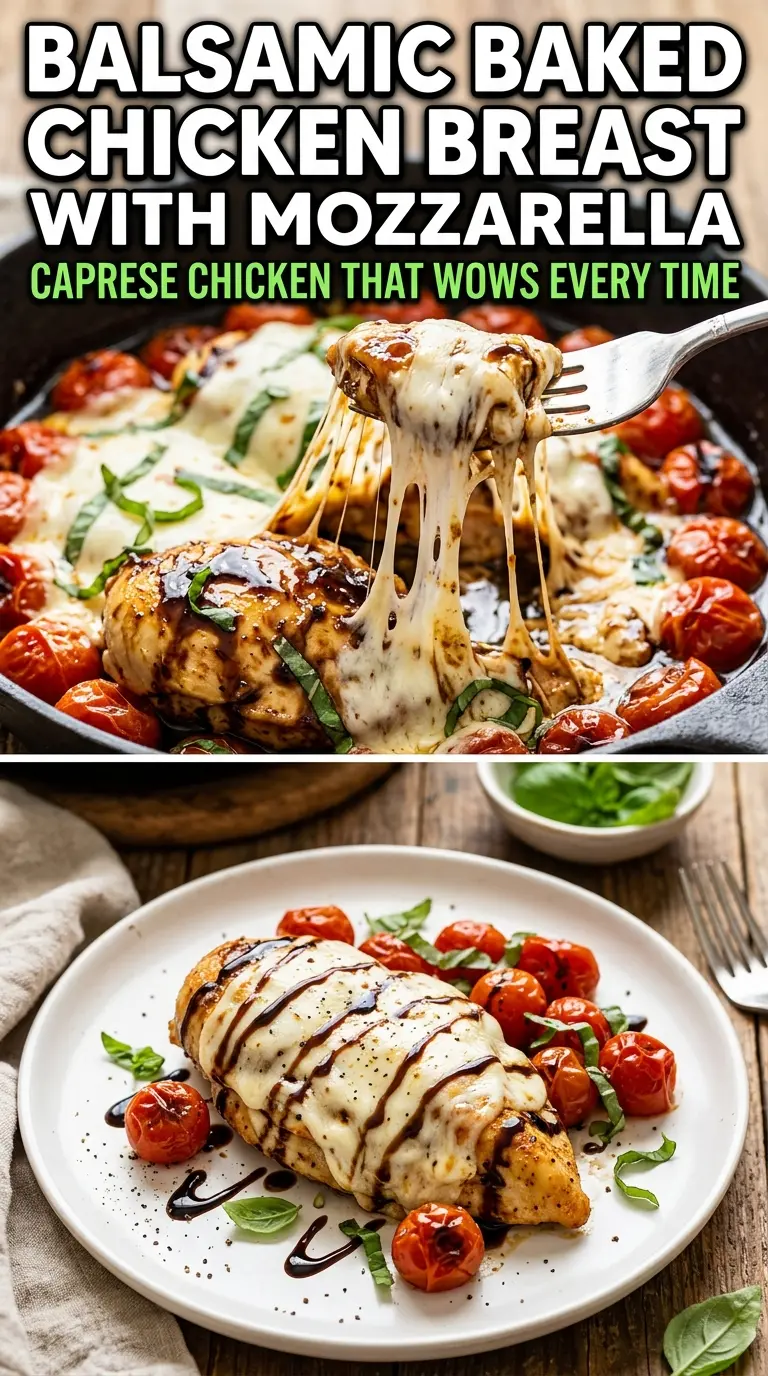
- Chicken breasts — Use even-sized pieces if you can. If one side is much thicker, pound it lightly so the whole breast finishes at the same time instead of drying out while the center catches up.
- Balsamic vinegar, honey, and Dijon — This is the core of the glaze. Balsamic gives the tang, honey smooths the sharp edge and helps it caramelize, and Dijon keeps the sauce from tasting one-dimensional. Don’t skip the mustard; it helps the marinade emulsify so it clings better to the chicken.
- Olive oil — Oil carries the seasoning and helps the chicken sear instead of sticking. A standard cooking olive oil works fine here; you don’t need your nicest finishing oil.
- Garlic and Italian seasoning — These give the chicken its savory backbone. Fresh garlic tastes best, but if you’re in a hurry, garlic powder will still carry the dish as long as you don’t burn it in the pan.
- Fresh mozzarella — This is where the caprese feel comes from. Fresh mozzarella melts into soft puddles instead of stringy, rubbery layers, and that creamy finish is worth buying the good kind.
- Cherry tomatoes and basil — The tomatoes soften just enough in the oven to burst a little, and the basil goes on at the end so it stays fragrant. If you add basil earlier, it turns dark and loses the fresh finish that makes the dish work.
- Balsamic glaze — Use it for the final drizzle, not as the marinade base. It gives you a thicker, shinier finish than straight vinegar and makes the top of the dish look as good as it tastes.
How to Build the Glaze, Sear, and Melt Without Drying Out the Chicken
Mix the Marinade First
Whisk the balsamic vinegar, olive oil, honey, garlic, and Dijon until the mixture looks smooth and glossy. Season the chicken well before it goes into the marinade so the salt starts working right away. If you skip the rest time or rush it to the pan dry, the surface won’t carry the same depth of flavor.
Give the Chicken a Fast Sear
Heat an oven-safe skillet over medium-high heat and sear the chicken for about 3 minutes per side until you get a deep golden crust. You’re not cooking it through here; you’re building color and flavor. If the pan is too cool, the chicken steams and sticks instead of browning, so wait for the oil to shimmer before it goes in.
Bake Just Until the Center Reaches 165°F
Slide the skillet into the oven with the remaining marinade and bake until the thickest part of the chicken reaches 165°F. The sauce should look glossy and lightly reduced around the edges, not dry and dark. If your breasts are small, check a few minutes early; overbaking chicken breast is the fastest way to lose the juiciness you worked for.
Finish with Mozzarella and Tomatoes
Layer the mozzarella over each breast, scatter the cherry tomatoes on top, and return the pan to the oven just long enough for the cheese to melt. The cheese should soften into creamy folds, not brown deeply. As soon as it melts, pull the pan out and add the basil and balsamic glaze so the top stays bright and fresh.
How to Adapt This for Different Kitchens and Dietary Needs
Make It Gluten-Free Without Changing the Flavor
This recipe is naturally gluten-free as written, as long as your Dijon and balsamic glaze are certified gluten-free. The flavor stays the same, and the method doesn’t need any adjustment.
Swap Chicken Breasts for Thighs
Boneless skinless thighs work well if you want richer, juicier meat. They usually need a little more time in the oven, and they’re harder to overcook, but you’ll lose that lean, sliceable breast texture that makes this version feel light.
Use Regular Mozzarella When Fresh Isn’t Available
Low-moisture mozzarella will melt more firmly and won’t give you quite the same soft caprese finish, but it still works in a pinch. Slice it thin so it melts before the chicken overcooks.
Storage and Reheating
- Refrigerator: Store leftovers in an airtight container for up to 3 days. The basil will wilt, and the tomatoes soften more, but the flavor holds up well.
- Freezer: You can freeze the cooked chicken without the basil, but the mozzarella texture changes after thawing. Wrap portions tightly and freeze for up to 2 months if you don’t mind a softer finish.
- Reheating: Rewarm gently in a 325°F oven, covered, until heated through. The biggest mistake is blasting it in the microwave or a hot oven, which turns the chicken stringy and makes the cheese split.
Answers to the Questions Worth Asking
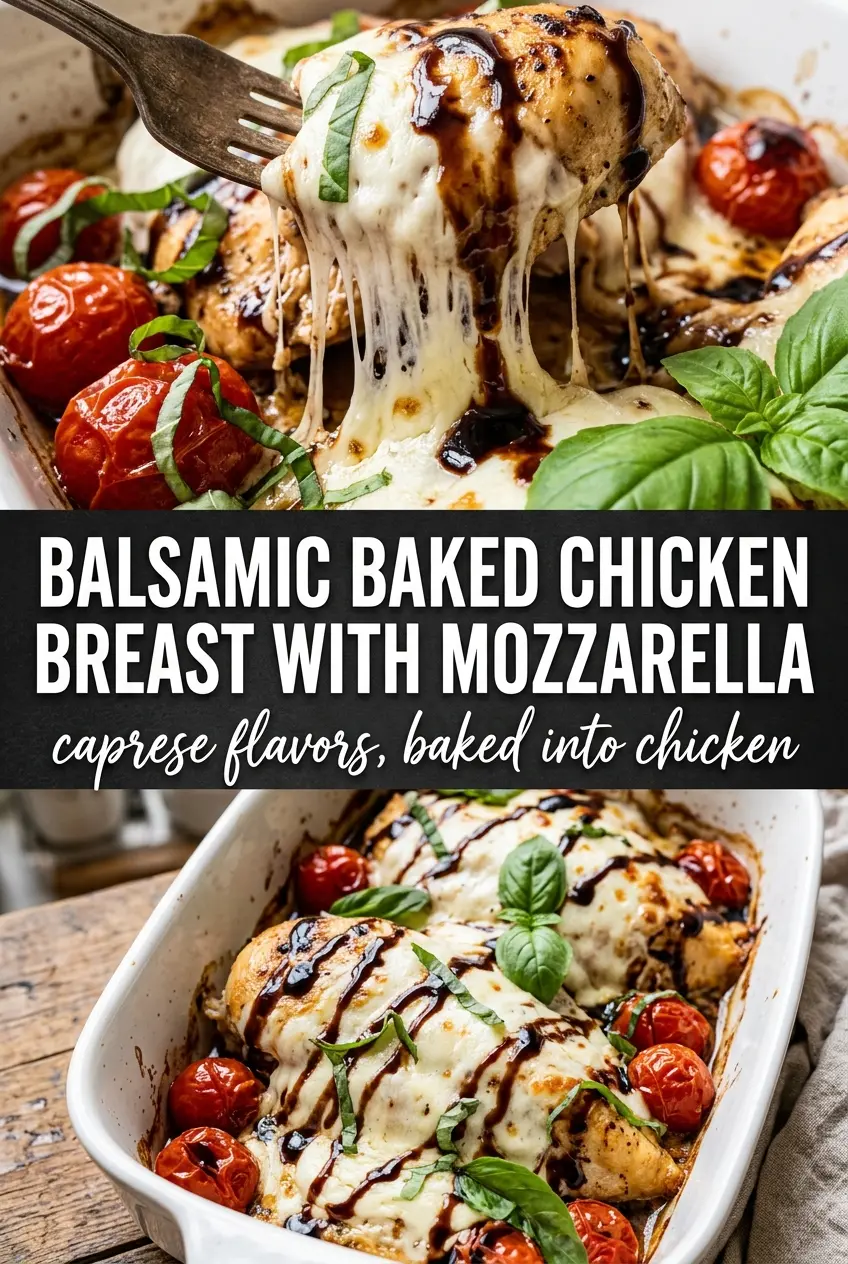
Balsamic Baked Chicken Breast with Mozzarella
Ingredients
Equipment
Method
- Whisk balsamic vinegar, olive oil, honey, minced garlic, and Dijon mustard until smooth, then season the chicken with salt, pepper, garlic powder, and Italian seasoning. Add the chicken to the mixture and marinate for 20 minutes in the refrigerator, reserving a portion of the marinade.
- Preheat the oven to 400°F. Heat an oven-safe skillet over medium-high heat and sear the marinated chicken for 3 minutes per side until golden.
- Transfer the skillet to the oven and bake for 18-20 minutes, using the reserved marinade, until the internal temperature reaches 165°F.
- Remove the chicken from the oven and top each breast with mozzarella slices and halved cherry tomatoes. Return to the oven for 4-5 minutes at 400°F until the cheese is melted and beginning to turn golden at the edges.
- Drizzle with balsamic glaze and garnish with fresh basil leaves for a caprese-inspired finish.