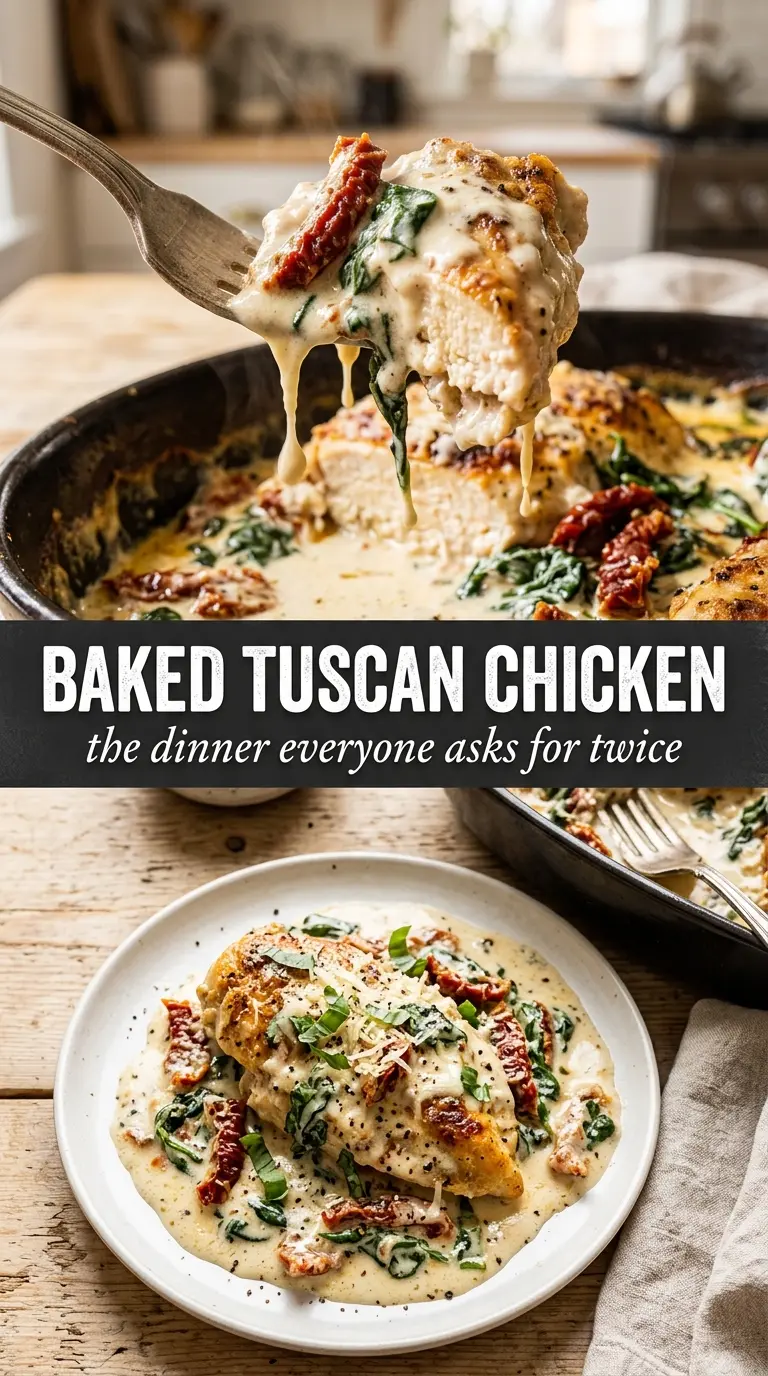
Golden, skin-on chicken thighs baked in a sun-dried tomato and spinach cream sauce earn their place on the table fast. The chicken stays crisp on top while the sauce turns rich and glossy underneath, with Parmesan, garlic, and a little heat from red pepper flakes pulling everything together. It’s the kind of skillet-to-oven dinner that looks a lot more involved than it is, which is exactly why it gets repeated so often.
What makes this version work is the order of operations. Searing the chicken first gives you that deep color and renders enough fat to flavor the sauce, and the oven finish keeps the meat juicy without overcooking the cream. The sauce also starts with the browned bits from the pan instead of a separate base, so every layer tastes like it belongs there.
Below, I’ve included the small details that keep the sauce from turning grainy, the easiest swap if you need to change the dairy, and the best way to reheat leftovers without losing that crisp chicken skin.
The sauce thickened up beautifully and the chicken skin stayed crisp even after baking. My husband kept spooning extra sauce over his rice and asked when I was making it again.
Save this baked Tuscan chicken for the nights when you want crispy chicken thighs and a creamy sun-dried tomato sauce in one pan.
The Seared Skin Is What Keeps This Dish From Turning Soft
The biggest mistake with baked Tuscan chicken is skipping the hard sear and relying on the oven to do everything. Oven heat will cook the chicken through, but it won’t build the deep golden crust that gives this dish its best flavor and texture. That crust also helps the skin stay intact while the chicken finishes in the sauce instead of sliding into it and going soggy.
Keep the heat at medium-high for the sear and leave the chicken alone once it hits the pan. If it sticks, it’s not ready to flip yet. When the skin releases cleanly and the fat in the pan looks clear and shimmering, you’ve got the right base for the sauce that comes next.
What Each Ingredient Is Actually Doing In This Dish
- Bone-in, skin-on chicken thighs — These stay juicier than breasts and give you the best payoff from the sear. The skin protects the meat in the oven and turns crisp enough to contrast with the sauce.
- Sun-dried tomatoes in oil — These bring concentrated tomato flavor and a little sweetness without watering down the sauce. Drain them, but don’t rinse them; a little of that oil carries flavor into the pan.
- Heavy cream — This is what keeps the sauce plush and stable. Half-and-half can work in a pinch, but it won’t thicken as cleanly and it’s more likely to look thin after baking.
- Parmesan cheese — Use finely grated Parmesan, not a coarse shred, so it melts smoothly. Pre-grated cheese can be a little drier and sometimes makes the sauce less silky.
- Fresh baby spinach — It wilts fast and keeps the sauce from feeling heavy. Add it at the end so it stays green instead of cooking down to dark threads.
- Chicken broth — This loosens the sauce just enough to simmer without scorching. If you use too much, the sauce turns loose; stick to the measured amount and let it reduce slightly before the cream goes in.
Building The Sauce So It Stays Smooth In The Oven
Start With The Pan Drippings
After you remove the chicken, don’t clean the skillet. Those browned bits are the difference between a sauce that tastes cooked and one that tastes flat. Add the garlic briefly, just until fragrant, then get the broth in before the garlic colors too much. If the garlic burns, the whole sauce will taste bitter, and there’s no fixing that later.
Let The Cream Heat Gently
Once the broth has loosened the pan, lower the heat before adding the cream and Parmesan. Cream can handle gentle simmering, but high heat after the cheese goes in is what makes it grainy or separated. Stir until the sauce looks smooth and lightly thickened, with small bubbles around the edge rather than a hard boil.
Finish With The Chicken Skin On Top
Nestle the chicken back into the pan skin-side up so the top stays exposed while the sauce bubbles underneath. That keeps the skin from stewing in liquid and losing all its texture. Bake until the chicken reaches 165°F in the thickest part, but start checking a few minutes early because thighs can go from perfect to dry faster than people expect.
Make It Dairy-Free Without Losing The Creamy Feel
Use full-fat coconut cream in place of the heavy cream and skip the Parmesan, then add a little extra salt at the end. The sauce will be slightly sweeter and less sharp, but it still coats the chicken well and holds up in the oven. If you want a more savory finish, stir in a spoonful of nutritional yeast.
Make It Gluten-Free Without Changing The Method
This recipe is naturally gluten-free as written, as long as your chicken broth and Parmesan are certified gluten-free. The sauce thickens from reduction and cheese, not flour, so you don’t need a separate binder.
Use Chicken Breasts When That’s What You Have
Boneless breasts work, but they need less oven time and can dry out if you bake them as long as thighs. Sear them the same way, then start checking early and pull them as soon as they hit temperature. You’ll lose a little richness and the skinless version won’t have the same crisp finish, but the sauce carries the dish.
Add Mushrooms For A Heartier Pan Dinner
Sauté sliced mushrooms after the chicken comes out, before the garlic goes in. They’ll give up moisture first, then brown and add a deeper savory note that fits the creamy sauce. Don’t crowd the pan or they’ll steam instead of caramelize.
Storage and Reheating
- Refrigerator: Store leftovers in an airtight container for up to 3 days. The sauce may thicken as it chills.
- Freezer: The cream sauce doesn’t freeze well; it can turn grainy when thawed. If you need to freeze it, expect a change in texture and whisk the sauce well after reheating.
- Reheating: Warm gently in a covered skillet over low heat with a splash of broth or cream. Microwaving on high tends to split the sauce and soften the skin too much.
Answers to the Questions Worth Asking

Baked Tuscan Chicken
Ingredients
Equipment
Method
- Preheat oven to 400°F and season chicken thighs generously with salt, pepper, garlic powder, Italian seasoning, and smoked paprika; set aside briefly. Aim for visible speckling of spices on the skin and tops so it roasts evenly.
- Heat olive oil in an oven-safe skillet over medium-high heat, then sear chicken skin-side down for 6-7 minutes until deeply golden. Keep the skin facing the pan so you get a crisp, browned surface.
- Flip the chicken and sear for 3 minutes more until the second side is browned. Transfer chicken to a plate or bowl while you make the sauce.
- Cook minced garlic for 30 seconds until fragrant, stirring constantly. Stop as soon as it smells aromatic to avoid browning.
- Add sun-dried tomatoes and cook for 1 minute, stirring so they heat through. You should see the tomatoes soften and release their color into the pan.
- Pour in chicken broth to deglaze, scraping up browned bits from the skillet. Simmer just until the liquid looks cohesive rather than watery.
- Stir in heavy cream, Parmesan, Italian seasoning, and red pepper flakes, then simmer briefly until the sauce starts to thicken. You should see small bubbles around the edges.
- Stir in fresh baby spinach until wilted. The sauce should turn greener with wilted leaves disappearing into it.
- Nestle the chicken skin-side up into the sauce, spooning sauce over the chicken edges as needed. Keep the skin exposed so it roasts and stays crisp.
- Bake uncovered for 18-20 minutes until the internal temperature reaches 165°F, with the sauce visibly bubbling. Garnish with fresh basil right after baking and serve warm.