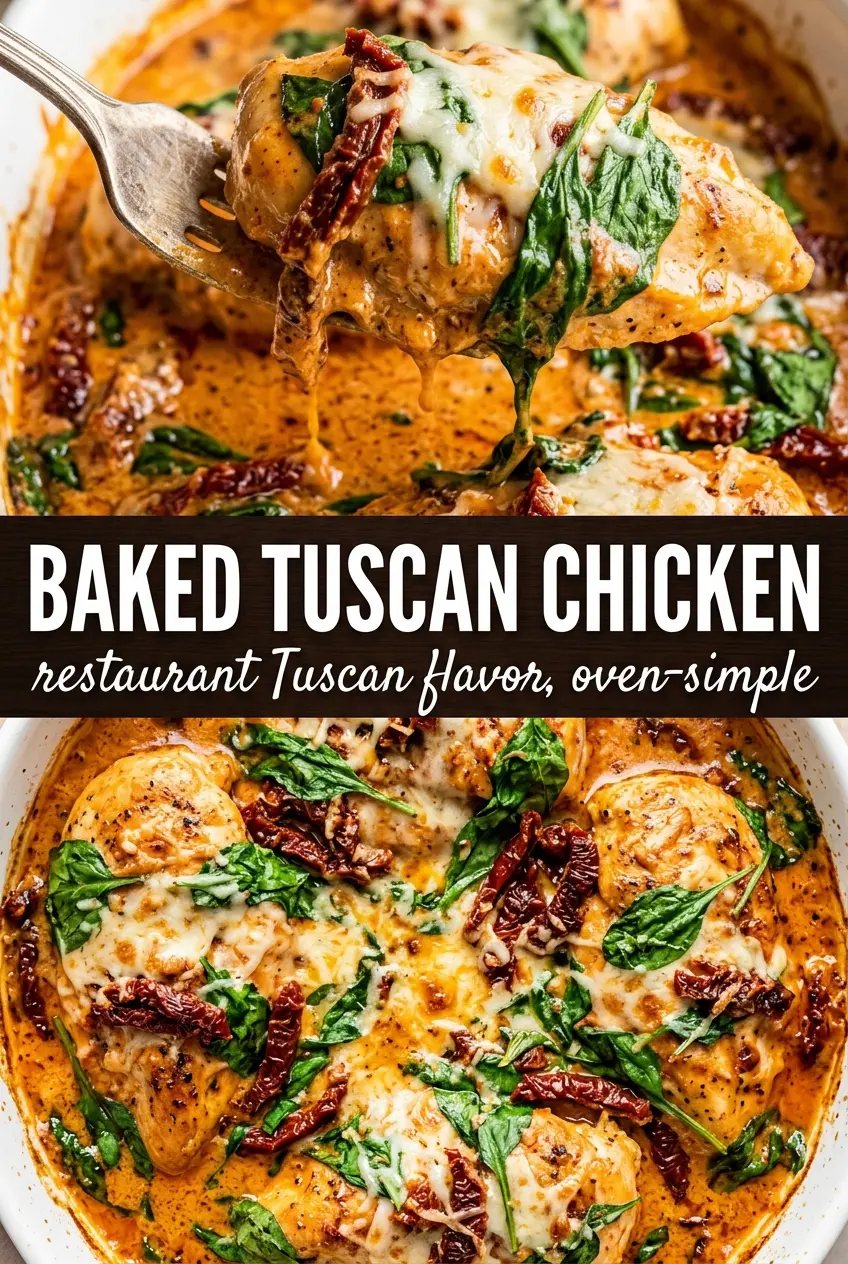
Golden chicken thighs tucked into a sun-dried tomato cream sauce are the kind of dinner that looks like you spent far more time on it than you did. The skin stays bronzed and crisp while the sauce turns silky around the edges of the pan, with spinach softening just enough to melt into the Parmesan. It’s rich without feeling heavy, and every bite gets a little hit of garlic, basil, and that tangy tomato sweetness that keeps you going back for another forkful.
What makes this version work is the sequence. The chicken gets a hard sear first, which builds flavor and keeps the skin from turning rubbery in the oven. Then the sauce is started in the same skillet, so the browned bits from the chicken dissolve into the cream instead of being left behind. Sun-dried tomatoes bring concentrated depth, while a short simmer before baking helps the Parmesan melt smoothly instead of clumping.
Below, I’ve included the spots that matter most: how to keep the sauce from splitting, which ingredients are worth spending on, and a few smart variations if you want to make it your own without losing the texture that makes this dish work.
The sauce stayed silky and the chicken skin stayed crisp even after baking. I loved that the sun-dried tomatoes didn’t get lost — they gave the whole dish a deeper, almost sweet-savory taste.
Like the look of this baked Tuscan chicken? Save it to Pinterest for the nights when you want crisp chicken thighs and a creamy sun-dried tomato sauce with almost no cleanup.
The Sear Is Doing More Work Than the Oven
With a dish like this, the oven finishes the chicken, but the skillet sear gives you the flavor and texture that make it worth making. If the thighs go into the oven pale, the skin tends to steam in the sauce and lose that crisp edge. A hard sear on the skin-side first renders fat, builds color, and gives the finished dish its best contrast: crisp top, tender meat, and a sauce that tastes like it’s been cooking all day even though it hasn’t.
The other common mistake is rushing the sauce before the skillet has enough heat and browned bits in it. Those little stuck-on spots from the chicken are what deepen the cream sauce and keep it from tasting flat. Once the broth hits the pan, it should sizzle and loosen the fond quickly; if it just sits there, the pan wasn’t hot enough and you’ll miss a lot of flavor.
What Each Ingredient Is Actually Doing in This Dish

- Bone-in, skin-on chicken thighs — These stay juicy under high heat and give you that crisp skin that holds up in the sauce. Boneless thighs will work, but they cook faster and won’t give you the same contrast. If you swap, shorten the bake time and check early.
- Sun-dried tomatoes in oil — The oil-packed kind bring a softer texture and deeper flavor than dry-packed tomatoes. Drain them before slicing, but don’t rinse them; a little of that seasoned oil carries more flavor into the pan. If all you have are dry-packed tomatoes, soak them briefly in hot water, then use a splash of olive oil in the skillet.
- Heavy cream and Parmesan — This is the backbone of the sauce. Heavy cream holds up better to simmering than half-and-half, and freshly grated Parmesan melts smoother than the pre-shredded kind, which can turn grainy. Add the cheese over low heat so it blends instead of clumping.
- Fresh spinach — It looks like a lot at first, then collapses fast and gives the sauce color and balance. Add it right before baking so it wilts without going swampy. Frozen spinach isn’t the best swap here because it releases too much water and thins the sauce.
- Garlic, Italian seasoning, and red pepper flakes — Garlic gives the sauce its base, Italian seasoning ties the tomatoes and cream together, and red pepper flakes keep the dish from tasting heavy. The spice level stays gentle at this amount, but you can pull it back if you want a milder pan sauce.
Building the Cream Sauce Without Breaking It
Getting the Chicken Out at the Right Moment
After the thighs are seared on both sides, pull them out before the skin starts to darken too much. They’ll finish in the oven, and taking them out early gives you room to build the sauce without overcooking the outside. If the pan looks dry, don’t add more than the olive oil already called for unless the chicken rendered very little fat.
Waking Up the Pan
Add the garlic just long enough for it to smell fragrant, not brown. Thirty seconds is usually enough. Once the sun-dried tomatoes go in, stir them through the garlic and let them heat in the fat for a minute so their flavor loosens before the broth deglazes the pan.
Keeping the Dairy Smooth
Pour in the cream and lower the heat before the Parmesan goes in. High heat is what turns a cream sauce grainy or oily, especially once cheese is involved. A brief simmer is enough here; you want the sauce slightly thickened, not boiling hard. When the spinach goes in, stir just until it wilts, then nestle the chicken back skin-side up so the top stays above the sauce and keeps its texture.
Finishing in the Oven
Uncovered baking lets the sauce reduce a little more and keeps the skin from softening too much. Start checking at 18 minutes, but trust temperature over the clock. The thighs are done when the thickest part reaches 165°F and the juices run clear. A few minutes of rest before serving helps the sauce settle and keeps it from flooding the plate.
How to Adapt This for Different Tables and Different Pan Sizes
Make It Dairy-Free Without Losing the Pan Sauce
Use full-fat canned coconut milk in place of the cream and a dairy-free Parmesan-style cheese if you have one that melts well. The sauce will taste a little less sharp and a little more rounded, but it still coats the chicken nicely. Keep the heat low when adding the substitute, because coconut milk can separate if it boils hard.
Use Boneless Thighs for a Faster Dinner
Boneless thighs work well if you want a shorter bake time, but they won’t give you the same dramatic crisp skin. Sear them the same way, then bake just until cooked through, usually several minutes less than bone-in pieces. The sauce stays the same, so the dish still feels rich and complete.
Swap in Chicken Breasts When That’s What You Have
Chicken breasts can be used, but they dry out faster and don’t benefit from the same long sear. Pound them to an even thickness, sear briefly, and start checking early in the oven. The creamy sauce helps, but breasts still need less time than thighs to stay tender.
Storage and Reheating
- Refrigerator: Store leftovers in an airtight container for up to 3 days. The sauce thickens as it chills, and the skin softens, which is normal.
- Freezer: This freezes, but the cream sauce can separate a little when thawed. For best texture, freeze the chicken and sauce together only if you don’t mind a slightly looser finish after reheating.
- Reheating: Warm gently in a covered skillet over low heat with a splash of broth or cream. Microwaving on high tends to overcook the chicken and make the sauce split, so low and slow is the better move.