Baked Tuscan chicken casserole lands on the table with crisp, bronzed chicken skin and a cream sauce that bakes down into something silky and spoonable instead of thin and watery. The sun-dried tomatoes give it a sweet-tart punch, the spinach softens into the sauce without turning muddy, and the Parmesan ties everything together with a salty edge that keeps each bite from tasting heavy.
The part that makes this version work is the sear. Browning the chicken skin first gives you flavor in the pan and helps the chicken hold up during the bake, while the sauce starts in the same skillet so every bit of fond gets pulled into the cream. Heavy cream and Parmesan need gentle heat, not a hard boil, or the sauce can turn grainy. Keeping the chicken skin above the liquid also helps it stay crisp enough to eat, which is half the point here.
Below you’ll find the specific step that keeps the sauce smooth, the ingredient swaps that still preserve the casserole’s character, and the reheating trick that keeps leftovers from turning dull.
The sauce thickened up beautifully in the oven and the chicken skin stayed crisp even with all that cream underneath. I used the exact bake time and it came out juicy, not dry, which never happens with chicken thighs in my house.
Save this Tuscan chicken casserole for the nights when you want crispy-skinned chicken in a silky sun-dried tomato cream sauce.
The Sear Is What Keeps This Casserole from Turning Soft
Chicken thighs can handle the oven, but they still need a strong start in the skillet. If you skip the sear, the skin stays pale and the pan never develops the browned bits that give the sauce its depth. The goal isn’t to cook the chicken through at this stage. It’s to build color, render some fat, and create a base for the sauce.
The other trap is crowding the pan. If the thighs sit too close together, they steam instead of brown and you lose that crisp edge that makes this dish stand out. Let the chicken sit skin-side down until it releases naturally and the surface looks deep golden, then flip it just long enough to color the other side before it goes to the oven.
What Each Ingredient Is Actually Doing in This Dish
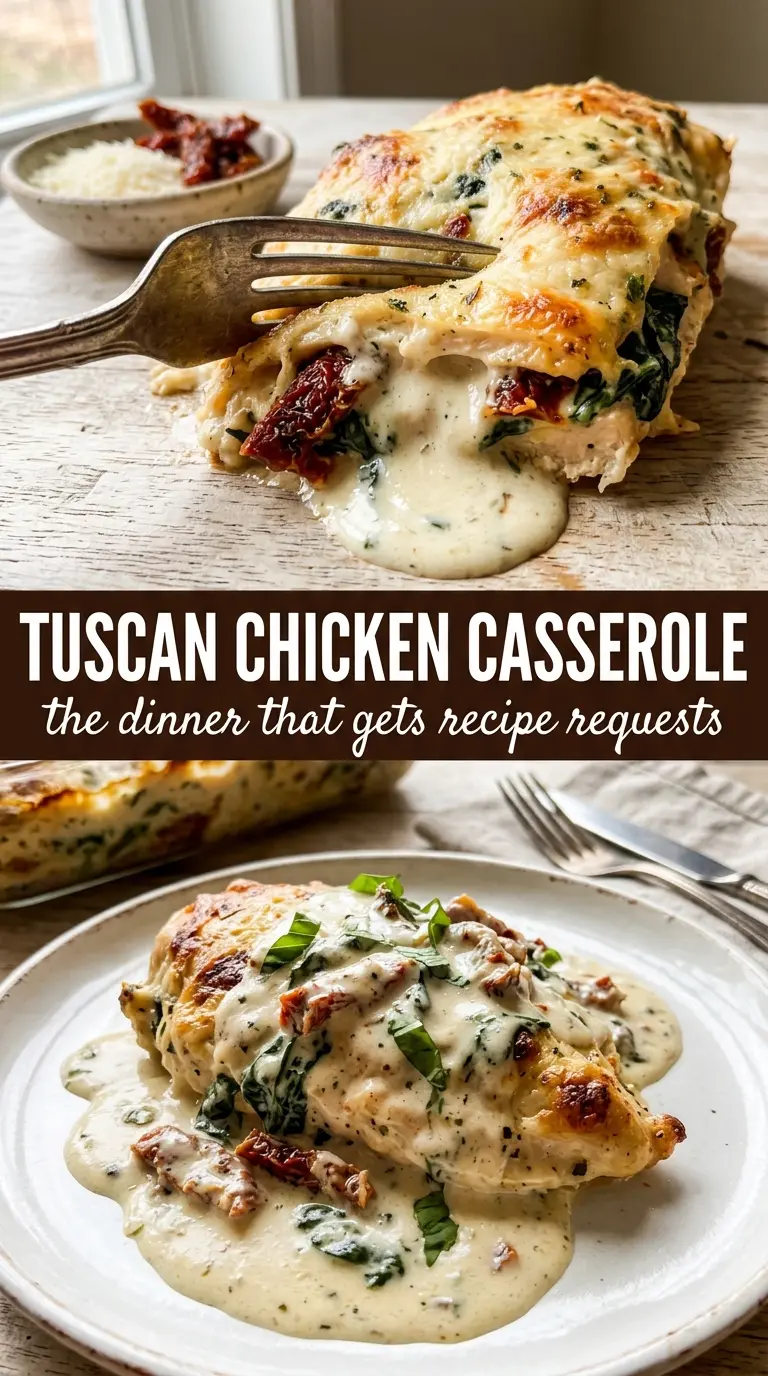
- Bone-in, skin-on chicken thighs — These hold up better than chicken breasts and give you juicy meat under a crisp top. The bone helps the thighs stay tender during the bake, and the skin renders into the sauce a little, which adds richness you can’t get from boneless pieces.
- Sun-dried tomatoes in oil — These bring concentrated tomato flavor and a little sweetness without watering the sauce down. Drain them before slicing, but don’t rinse away all the oil on every piece; a little of that seasoned oil helps the garlic and tomatoes bloom in the pan.
- Heavy cream — This is what gives the sauce its body. Half-and-half is more likely to split or stay thin here, especially once the Parmesan and oven heat are in play.
- Parmesan — Use finely grated Parmesan so it melts smoothly into the sauce. Pre-shredded cheese can leave you with a gritty finish because of the anti-caking agents.
- Baby spinach — It wilts fast and folds into the sauce without turning stringy. If you use mature spinach, trim the stems and expect a little more chew.
Building the Sauce in the Same Pan the Chicken Used
Seasoning and Searing the Thighs
Pat the chicken thighs dry before seasoning them so the skin can brown instead of sputter. Salt, pepper, garlic powder, Italian seasoning, and smoked paprika should coat both sides evenly. Place the thighs skin-side down in hot olive oil and leave them alone until the skin is a deep golden brown and releases from the pan without tugging. If the skin sticks, it isn’t ready yet.
Making the Pan Sauce
After the chicken comes out, lower the heat and cook the garlic and sun-dried tomatoes just until fragrant. The garlic should smell sweet, not sharp or burnt. Pour in the broth and scrape up every browned bit from the skillet, because that’s where the real flavor lives. Stir in the cream, Parmesan, Italian seasoning, and red pepper flakes, then keep the heat gentle so the sauce stays smooth instead of breaking.
Baking Until the Sauce Settles
Return the chicken skin-side up so the top stays above the sauce. Bake uncovered until the thighs reach 165°F and the sauce has thickened around the edges and turned glossy. If the sauce still looks loose when the chicken is done, give it a few minutes on the stovetop after baking. Spinach goes in at the end and only needs a minute or two to wilt into the sauce.
Make It Dairy-Free with Coconut Cream
Use full-fat coconut cream in place of heavy cream and swap the Parmesan for a dairy-free hard cheese or leave it out and season a little more aggressively with salt. The sauce will taste slightly less savory and a little more coconut-forward, but the texture stays rich and spoonable.
Use Chicken Breasts Without Drying Them Out
You can use bone-in chicken breasts, but they need less oven time and a little more attention. Sear them well, then start checking early so the meat stays juicy; breasts dry out faster than thighs and don’t give you quite the same rich texture.
Turn It Into a Gluten-Free One-Pan Dinner
This recipe is naturally gluten-free as written, which is part of why it works so well for a crowd. Just check that your broth and sun-dried tomatoes are labeled gluten-free if you’re cooking for someone with celiac disease.
Add Pasta or Rice to Stretch the Pan
Serve the casserole over cooked pasta, rice, or mashed potatoes if you want a bigger meal. The sauce is rich enough to coat starches well, but if you’re doing that, keep the sauce a touch looser before baking so it doesn’t feel too thick once it hits the plate.
Storage and Reheating
- Refrigerator: Store leftovers in an airtight container for up to 4 days. The sauce will thicken as it chills, and the skin will soften.
- Freezer: This freezes, but the cream sauce can separate a bit after thawing. Freeze the casserole without the basil, then thaw overnight in the fridge for the best chance of keeping the sauce together.
- Reheating: Warm it covered in a 325°F oven until hot, or reheat gently on the stove with a splash of broth. High heat is the mistake that turns the sauce greasy and the chicken dry.
Questions I Get Asked About This Recipe
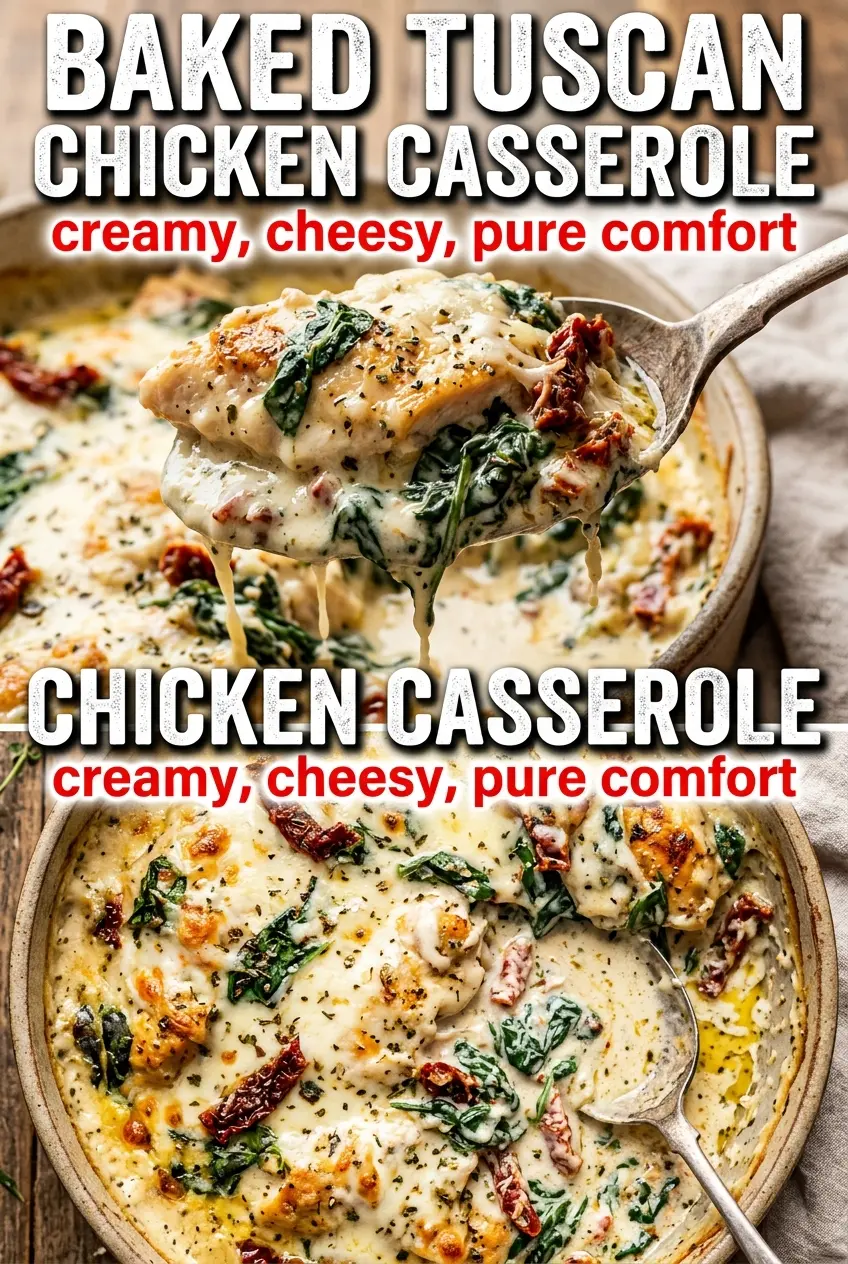
Baked Tuscan Chicken Casserole
Ingredients
Equipment
Method
- Preheat the oven to 400°F. Season the chicken thighs with salt, pepper, garlic powder, Italian seasoning, and smoked paprika until evenly coated and slightly speckled.
- Heat the olive oil in a large oven-safe skillet or braiser over medium-high heat. Sear the chicken skin-side down for 6-7 minutes until the skin is deeply golden and renders visible fat.
- Flip the chicken and sear for 3 more minutes. Cook until the second side looks browned at the edges.
- Remove the chicken from the pan and set aside. Leave the browned bits in the skillet for flavor.
- Add the garlic and sun-dried tomatoes to the same pan and cook for 1 minute. Stir until fragrant and lightly sizzling.
- Pour in the chicken broth and deglaze, scraping up browned bits from the bottom. Stir until the pan juices look smooth and steaming.
- Stir in the heavy cream, Parmesan, Italian seasoning, and red pepper flakes. Simmer briefly until the sauce turns creamy and begins to thicken into a glossy, lightly saucy consistency.
- Return the chicken to the pan skin-side up, nestling pieces into the sauce. Ensure the chicken sits mostly above the sauce so the tops bake golden.
- Bake uncovered at 400°F for 20-22 minutes until the chicken reaches 165°F. Look for bubbling around the edges and browned, golden skin.
- Stir the baby spinach into the sauce until wilted. Wait until the spinach turns dark green and fully collapses into the creamy sauce.
- Garnish with fresh basil and serve. Finish with a few leaves scattered over the casserole for a fresh green pop.