Golden chicken thighs tucked into a creamy sun-dried tomato sauce is the kind of dinner that disappears fast and doesn’t leave much behind except a pan with a few browned edges worth scraping. The chicken stays juicy because it bakes in a sauce that’s already built on a good sear, and the spinach softens just enough to fold into the cream without turning the whole dish muddy. Every bite gets a little bit of salty Parmesan, sweet tomato, and herb-heavy sauce.

The part that makes this casserole work is the order. The chicken gets properly browned first, which gives the sauce a deeper base than you get from baking everything raw in one pan. Then the broth loosens the browned bits, the cream goes in after the pan cools slightly, and the Parmesan melts into a sauce that stays silky instead of grainy. If you’ve ever had a cream sauce split or turn flat in the oven, the fix is usually right there in the stovetop stage.

Below, I’ve included the little timing and substitution details that matter most, plus the one place people usually rush and end up with pale skin or a broken sauce. Once you’ve made it this way, it’s hard to go back to a thinner, less flavorful version.

The chicken skin stayed crisp enough to stand up to the sauce, and the cream thickened right in the oven without getting greasy. I loved how the sun-dried tomatoes and spinach balanced each other.

★★★★★— Lauren M.

Like this creamy Tuscan chicken casserole? Save it to Pinterest for a one-pan dinner with crisp chicken, silky Parmesan sauce, and sun-dried tomatoes.

Save to Pinterest

The Part That Keeps the Sauce Silky After Baking

The biggest mistake in a creamy chicken casserole is letting the sauce get too hot before the dairy goes in. A hard boil can make the cream look greasy and cause the Parmesan to clump instead of melt cleanly. Here, the broth goes in first to loosen the browned bits, then the cream and cheese are stirred in off the hottest part of the burner so the sauce stays smooth.

Bone-in, skin-on thighs matter here because they bring both flavor and insurance. The meat stays tender through the oven time, and the skin helps protect the chicken while still browning well in the skillet. If you swap in boneless thighs, cut the bake time down and watch the sauce closely; they cook faster and can dry out if you treat them like bone-in pieces.

  • Sun-dried tomatoes in oil — The oil-packed kind give you a softer, richer tomato flavor and a little built-in fat for the sauce. Drain them, then slice them so they disperse evenly instead of clumping in one salty bite.
  • Parmesan — Freshly grated Parmesan melts into the sauce much better than the shelf-stable shaker style. Pre-grated cheese often has anti-caking agents that can make the sauce feel grainy.
  • Heavy cream — This is what keeps the casserole stable in the oven. Half-and-half works in a pinch, but it won’t give you the same body, and the sauce will be thinner.
  • Baby spinach — Add it at the end so it wilts without disappearing. Mature spinach has more stem and chew, so it’s not the best swap if you want the soft finish this dish is known for.

What Each Ingredient Is Actually Doing in This Baked Chicken
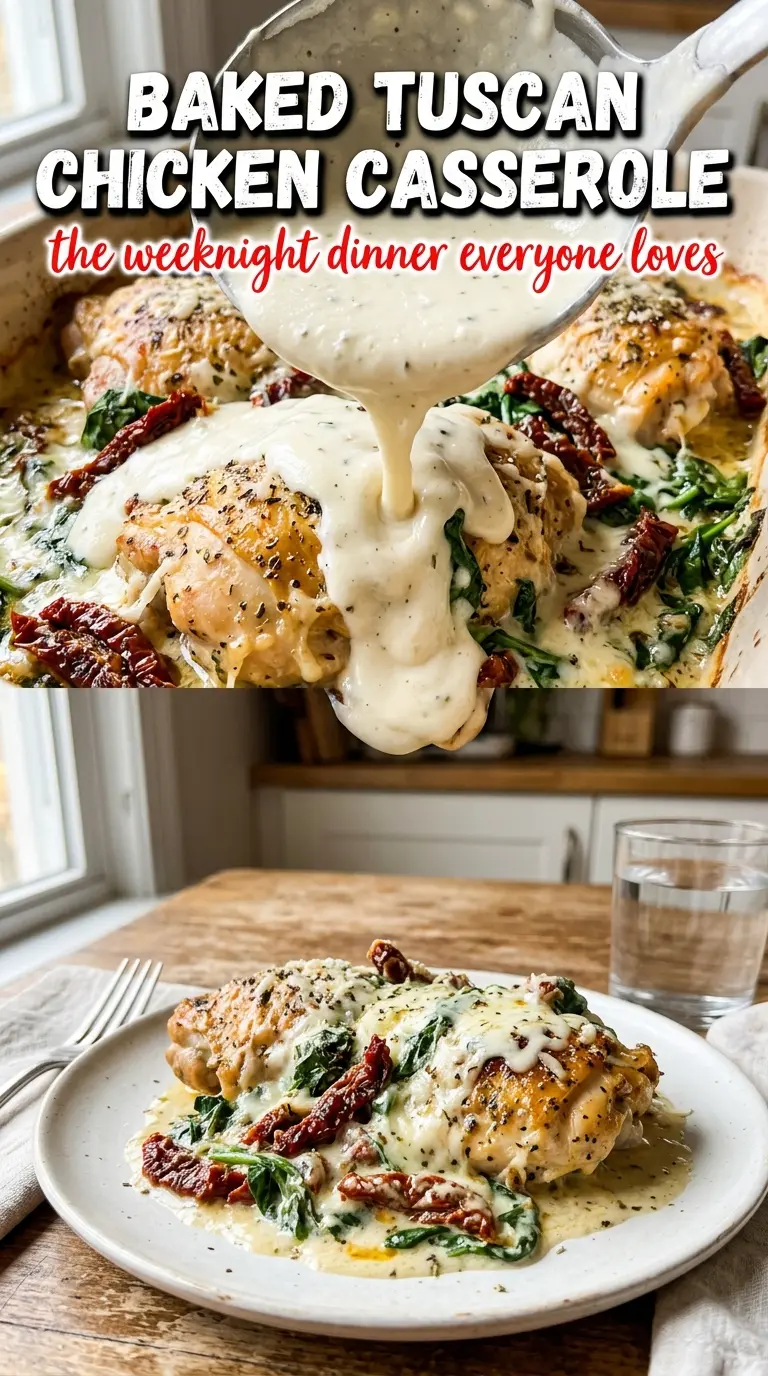
Baked chicken breasts with sauce and herbs
  • Chicken breasts (the lean protein) — Cut evenly so pieces cook at the same rate. Let them sit at room temperature for 15 minutes before baking so they cook evenly.
  • Olive oil or butter (the cooking medium and richness) — Good fat keeps the chicken from drying out in the oven. It also carries herb and spice flavors throughout the meat.
  • Garlic (the aromatic foundation) — Fresh minced or thin slices mellow and become sweet when baked, adding depth without overpowering the chicken.
  • Cream or broth (the sauce base) — This creates the glossy sauce that keeps baked chicken from tasting dry. It also helps flavors develop and carry.
  • Lemon juice or vinegar (the brightness) — Acid prevents the cream sauce from tasting too heavy and keeps the dish from being one-dimensional.
  • Fresh herbs or spices (the personality) — Basil, thyme, oregano, paprika, or Italian seasoning all work. Choose ones that complement your other flavors.
  • Cheese (optional richness) — Parmesan or feta adds creaminess and salt that enhances all other flavors. Don’t overdo it or the dish becomes heavy.
  • Proper oven temperature (the key to juicy chicken) — 375-400°F bakes chicken through without drying the edges. Check with a thermometer for 165°F internal temp.

Building the Casserole Without Losing the Crispy Skin

Searing the Chicken First

Season the thighs well, then lay them skin-side down in hot oil and leave them alone long enough to build a deep golden crust. If the pan is crowded or the heat is too low, the skin steams instead of browns and you lose the best part of the dish. Flip them once the skin releases easily; if it sticks, it needs another minute.

Pulling Flavor From the Pan

After the chicken comes out, the garlic and sun-dried tomatoes go into the same pan for a short cook. You’re looking for the garlic to smell fragrant, not brown, because burnt garlic turns bitter fast. The broth should hit the pan and sizzle as it lifts the browned bits from the bottom.

Finishing in the Oven

Once the cream, Parmesan, and seasonings are in, return the chicken skin-side up so it stays exposed and can hold onto some of that texture. Bake uncovered until the chicken reaches 165°F and the sauce is bubbling around the edges. If the sauce looks a little loose at first, it will tighten as it rests for a few minutes after baking.

Wilting the Spinach at the End

Stir the spinach into the hot sauce after the casserole comes out of the oven. It only needs a minute or two to collapse, and adding it earlier can leave it dull and overcooked. Fresh basil goes on last for a brighter finish that keeps the whole dish from tasting heavy.

How to Adapt This Baked Tuscan Chicken Casserole Without Losing What Makes It Good

Boneless Thighs for Faster Dinner

Use boneless, skinless thighs if you want a shorter cook, but brown them briefly and reduce the oven time so they stay juicy. You’ll lose the crisp skin, but the sauce still gives you plenty of richness and the meat stays tender.

Dairy-Free Version

Swap the cream for full-fat canned coconut milk and use a dairy-free Parmesan alternative or leave the cheese out entirely. The sauce will be a little sweeter and less sharp, but it still turns silky enough to coat the chicken and spinach.

Gluten-Free as Written

This casserole is naturally gluten-free as long as your broth and Parmesan are gluten-free brands. That’s one of the nice things about a sauce built from scratch instead of a packet.

Milder Heat for Kids or Heat-Sensitive Eaters

Cut the red pepper flakes in half or leave them out. The dish will still have plenty of flavor from the garlic, Parmesan, and sun-dried tomatoes, just without the slow burn at the back of the throat.

Storage and Reheating

  • Refrigerator: Store leftovers in an airtight container for up to 4 days. The sauce thickens as it chills, and the chicken skin softens, which is normal.
  • Freezer: It freezes, but the cream sauce may separate a little after thawing. For the best result, freeze the chicken and sauce together in a tightly sealed container for up to 2 months and whisk the sauce gently while reheating.
  • Reheating: Warm it covered in a 325°F oven until hot, or reheat gently on the stove over low heat with a splash of broth. High heat is what breaks the sauce and makes the chicken tough.

Answers to the Questions Worth Asking
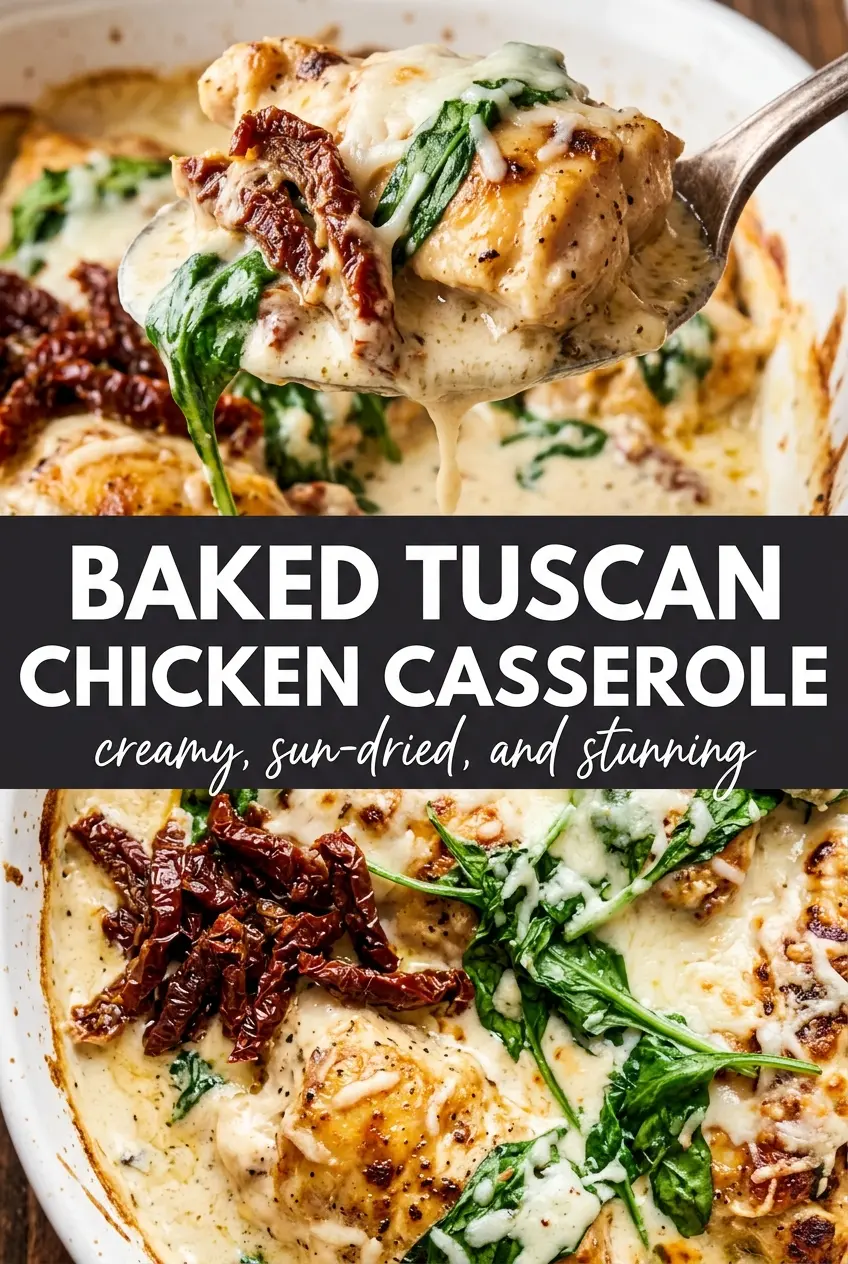
Can I use boneless chicken thighs instead of bone-in?+

Yes, and they’ll cook faster. Brown them the same way, then start checking a little earlier in the oven because boneless thighs can go from juicy to dry faster than bone-in pieces. You’ll still get a rich sauce, just with less built-in protection from the bone.

How do I keep the Parmesan sauce from getting grainy?+

Keep the heat moderate and add the cheese after the broth and cream are already combined. Parmesan can seize if it hits a pan that’s too hot, which is what gives you that sandy texture. Freshly grated cheese melts much more smoothly than pre-shredded cheese.

Can I make this baked Tuscan chicken casserole ahead of time?+

You can sear the chicken and build the sauce a few hours ahead, then combine and bake it when you’re ready. I wouldn’t assemble it too far in advance because the skin softens in the sauce. If you need to prep earlier, keep the chicken and sauce separate until baking time.

How do I know when the chicken is done without overcooking it?+

Use an instant-read thermometer and pull it when the thickest part hits 165°F. The meat will still be juicy, and the carryover heat from the hot sauce will finish the job. If you wait for the chicken to look completely dry, you’ve gone too far.

Can I use frozen spinach instead of fresh?+

Yes, but thaw it first and squeeze out as much water as you can. Frozen spinach holds a lot of moisture, and if you add it straight in, the sauce gets thinner and the flavor gets washed out. Once it’s drained well, stir it in just long enough to heat through.

[RECIPE_CARD_SHORTCODE]

Loading…

By Reading time
Servings 4–6 people

Golden chicken thighs tucked into a creamy sun-dried tomato sauce is the kind of dinner that disappears fast and doesn’t leave much behind except a pan with a few browned edges worth scraping. The chicken stays juicy because it bakes in a sauce that’s already built on a good sear, and the spinach softens just enough to fold into the cream without turning the whole dish muddy. Every bite gets a little bit of salty Parmesan, sweet tomato, and herb-heavy sauce.

The part that makes this casserole work is the order. The chicken gets properly browned first, which gives the sauce a deeper base than you get from baking everything raw in one pan. Then the broth loosens the browned bits, the cream goes in after the pan cools slightly, and the Parmesan melts into a sauce that stays silky instead of grainy. If you’ve ever had a cream sauce split or turn flat in the oven, the fix is usually right there in the stovetop stage.

Below, I’ve included the little timing and substitution details that matter most, plus the one place people usually rush and end up with pale skin or a broken sauce. Once you’ve made it this way, it’s hard to go back to a thinner, less flavorful version.

The chicken skin stayed crisp enough to stand up to the sauce, and the cream thickened right in the oven without getting greasy. I loved how the sun-dried tomatoes and spinach balanced each other.

★★★★★— Lauren M.

Like this creamy Tuscan chicken casserole? Save it to Pinterest for a one-pan dinner with crisp chicken, silky Parmesan sauce, and sun-dried tomatoes.

Save to Pinterest

The Part That Keeps the Sauce Silky After Baking

The biggest mistake in a creamy chicken casserole is letting the sauce get too hot before the dairy goes in. A hard boil can make the cream look greasy and cause the Parmesan to clump instead of melt cleanly. Here, the broth goes in first to loosen the browned bits, then the cream and cheese are stirred in off the hottest part of the burner so the sauce stays smooth.

Bone-in, skin-on thighs matter here because they bring both flavor and insurance. The meat stays tender through the oven time, and the skin helps protect the chicken while still browning well in the skillet. If you swap in boneless thighs, cut the bake time down and watch the sauce closely; they cook faster and can dry out if you treat them like bone-in pieces.

  • Sun-dried tomatoes in oil — The oil-packed kind give you a softer, richer tomato flavor and a little built-in fat for the sauce. Drain them, then slice them so they disperse evenly instead of clumping in one salty bite.
  • Parmesan — Freshly grated Parmesan melts into the sauce much better than the shelf-stable shaker style. Pre-grated cheese often has anti-caking agents that can make the sauce feel grainy.
  • Heavy cream — This is what keeps the casserole stable in the oven. Half-and-half works in a pinch, but it won’t give you the same body, and the sauce will be thinner.
  • Baby spinach — Add it at the end so it wilts without disappearing. Mature spinach has more stem and chew, so it’s not the best swap if you want the soft finish this dish is known for.

What Each Ingredient Is Actually Doing in This Baked Chicken

Baked chicken breasts with sauce and herbs
  • Chicken breasts (the lean protein) — Cut evenly so pieces cook at the same rate. Let them sit at room temperature for 15 minutes before baking so they cook evenly.
  • Olive oil or butter (the cooking medium and richness) — Good fat keeps the chicken from drying out in the oven. It also carries herb and spice flavors throughout the meat.
  • Garlic (the aromatic foundation) — Fresh minced or thin slices mellow and become sweet when baked, adding depth without overpowering the chicken.
  • Cream or broth (the sauce base) — This creates the glossy sauce that keeps baked chicken from tasting dry. It also helps flavors develop and carry.
  • Lemon juice or vinegar (the brightness) — Acid prevents the cream sauce from tasting too heavy and keeps the dish from being one-dimensional.
  • Fresh herbs or spices (the personality) — Basil, thyme, oregano, paprika, or Italian seasoning all work. Choose ones that complement your other flavors.
  • Cheese (optional richness) — Parmesan or feta adds creaminess and salt that enhances all other flavors. Don’t overdo it or the dish becomes heavy.
  • Proper oven temperature (the key to juicy chicken) — 375-400°F bakes chicken through without drying the edges. Check with a thermometer for 165°F internal temp.

Building the Casserole Without Losing the Crispy Skin

Searing the Chicken First

Season the thighs well, then lay them skin-side down in hot oil and leave them alone long enough to build a deep golden crust. If the pan is crowded or the heat is too low, the skin steams instead of browns and you lose the best part of the dish. Flip them once the skin releases easily; if it sticks, it needs another minute.

Pulling Flavor From the Pan

After the chicken comes out, the garlic and sun-dried tomatoes go into the same pan for a short cook. You’re looking for the garlic to smell fragrant, not brown, because burnt garlic turns bitter fast. The broth should hit the pan and sizzle as it lifts the browned bits from the bottom.

Finishing in the Oven

Once the cream, Parmesan, and seasonings are in, return the chicken skin-side up so it stays exposed and can hold onto some of that texture. Bake uncovered until the chicken reaches 165°F and the sauce is bubbling around the edges. If the sauce looks a little loose at first, it will tighten as it rests for a few minutes after baking.

Wilting the Spinach at the End

Stir the spinach into the hot sauce after the casserole comes out of the oven. It only needs a minute or two to collapse, and adding it earlier can leave it dull and overcooked. Fresh basil goes on last for a brighter finish that keeps the whole dish from tasting heavy.

How to Adapt This Baked Tuscan Chicken Casserole Without Losing What Makes It Good

Boneless Thighs for Faster Dinner

Use boneless, skinless thighs if you want a shorter cook, but brown them briefly and reduce the oven time so they stay juicy. You’ll lose the crisp skin, but the sauce still gives you plenty of richness and the meat stays tender.

Dairy-Free Version

Swap the cream for full-fat canned coconut milk and use a dairy-free Parmesan alternative or leave the cheese out entirely. The sauce will be a little sweeter and less sharp, but it still turns silky enough to coat the chicken and spinach.

Gluten-Free as Written

This casserole is naturally gluten-free as long as your broth and Parmesan are gluten-free brands. That’s one of the nice things about a sauce built from scratch instead of a packet.

Milder Heat for Kids or Heat-Sensitive Eaters

Cut the red pepper flakes in half or leave them out. The dish will still have plenty of flavor from the garlic, Parmesan, and sun-dried tomatoes, just without the slow burn at the back of the throat.

Storage and Reheating

  • Refrigerator: Store leftovers in an airtight container for up to 4 days. The sauce thickens as it chills, and the chicken skin softens, which is normal.
  • Freezer: It freezes, but the cream sauce may separate a little after thawing. For the best result, freeze the chicken and sauce together in a tightly sealed container for up to 2 months and whisk the sauce gently while reheating.
  • Reheating: Warm it covered in a 325°F oven until hot, or reheat gently on the stove over low heat with a splash of broth. High heat is what breaks the sauce and makes the chicken tough.

Answers to the Questions Worth Asking

Can I use boneless chicken thighs instead of bone-in?+

Yes, and they’ll cook faster. Brown them the same way, then start checking a little earlier in the oven because boneless thighs can go from juicy to dry faster than bone-in pieces. You’ll still get a rich sauce, just with less built-in protection from the bone.

How do I keep the Parmesan sauce from getting grainy?+

Keep the heat moderate and add the cheese after the broth and cream are already combined. Parmesan can seize if it hits a pan that’s too hot, which is what gives you that sandy texture. Freshly grated cheese melts much more smoothly than pre-shredded cheese.

Can I make this baked Tuscan chicken casserole ahead of time?+

You can sear the chicken and build the sauce a few hours ahead, then combine and bake it when you’re ready. I wouldn’t assemble it too far in advance because the skin softens in the sauce. If you need to prep earlier, keep the chicken and sauce separate until baking time.

How do I know when the chicken is done without overcooking it?+

Use an instant-read thermometer and pull it when the thickest part hits 165°F. The meat will still be juicy, and the carryover heat from the hot sauce will finish the job. If you wait for the chicken to look completely dry, you’ve gone too far.

Can I use frozen spinach instead of fresh?+

Yes, but thaw it first and squeeze out as much water as you can. Frozen spinach holds a lot of moisture, and if you add it straight in, the sauce gets thinner and the flavor gets washed out. Once it’s drained well, stir it in just long enough to heat through.

Baked Tuscan Chicken Casserole

This baked Tuscan chicken casserole turns golden chicken thighs into a bubbling one-dish dinner with a silky sun-dried tomato and spinach Parmesan cream sauce. You’ll bake uncovered until the chicken hits 165°F, then wilt spinach into the creamy sauce for visible tomato and herb pieces.
Prep Time 15 minutes
Cook Time 35 minutes
Total Time 50 minutes
Servings: 6 servings
Course: Main Dish
Cuisine: Italian-American
Calories: 640

Ingredients
  

chicken thighs
  • 6 bone-in skin-on chicken thighs
seasonings
  • 0.25 tsp salt to taste
  • 0.25 tsp pepper to taste
  • 1 tsp garlic powder to taste
  • 1 tsp Italian seasoning to taste
  • 0.5 tsp smoked paprika to taste
sauce base
  • 2 tbsp olive oil
  • 4 garlic cloves, minced
  • 0.5 cup sun-dried tomatoes in oil drained and sliced
  • 1 cup chicken broth
  • 1 cup heavy cream
  • 0.5 cup Parmesan cheese grated
spinach and finishing
  • 2 cup baby spinach
  • 1 tsp Italian seasoning
  • 0.5 tsp red pepper flakes
  • 2 tbsp fresh basil for garnish

Equipment

  • 1 cast iron skillet

Method
 

Prep and preheat
  1. Preheat oven to 400°F. Season the chicken thighs with salt, pepper, garlic powder, Italian seasoning, and smoked paprika.
Sear and build the sauce
  1. Heat olive oil in a large oven-safe skillet or braiser over medium-high heat. Sear the chicken skin-side down for 6-7 minutes until deeply golden.
  2. Flip the chicken and sear for 3 more minutes. Remove the chicken to a plate and leave the fond in the pan.
  3. Cook the garlic and sun-dried tomatoes in the same pan for 1 minute. Pour in the chicken broth and deglaze, stirring to loosen browned bits.
  4. Stir in the heavy cream, Parmesan, Italian seasoning, and red pepper flakes. Keep stirring until the sauce looks cohesive and starts to thicken.
Bake and finish
  1. Return the chicken to the pan skin-side up. Transfer the skillet to the oven uncovered and bake for 20-22 minutes until the chicken reaches 165°F.
  2. Stir the baby spinach into the sauce until wilted. Let it settle so you see green leaves integrated into the creamy sauce.
  3. Garnish with fresh basil and serve. Spoon the sauce over the chicken so the tomato and herbs show around the thighs.

Notes

Pro tip: drain and slice the sun-dried tomatoes well so they don’t water down the cream sauce. Store leftovers in an airtight container in the refrigerator up to 3 days; reheat gently in a skillet or microwave until warmed through. Freezing is not recommended because the cream and Parmesan sauce can separate when thawed. For a lighter version, use half-and-half instead of heavy cream, noting the sauce may be slightly less thick.

Keep this recipe handy

Pin it, print a tidy copy, leave a quick comment, or copy the link to share.

Save to Pinterest

Leave a Comment

Recipe Rating