Cold noodles, crunchy cabbage, and a sesame-ginger dressing give this Asian pasta salad the kind of balance that makes people go back for a second scoop before they’ve finished the first. The pasta stays tender but firm, the vegetables keep their snap, and the dressing clings to every strand instead of pooling at the bottom of the bowl. It eats like a full side dish, but it still feels light enough to sit next to grilled chicken, salmon, or anything coming off the barbecue.
The trick here is keeping the pasta cool and slightly under the typical soft-salad finish so it doesn’t turn mushy after the dressing goes on. Rinsing it under cold water stops the cooking right away and also keeps the noodles from welding together in a dense clump. The dressing gets its backbone from soy sauce and sesame oil, then honey and peanut butter round out the sharp edges so the whole bowl tastes deliberate, not just tossed together.
Below, I’ve laid out the one place this salad can go off track, plus the ingredient swaps that still keep the texture and flavor on point. If you’ve ever had an Asian noodle salad that turned soggy by the time it hit the table, this version is built to avoid that.
I let it chill for 30 minutes like the recipe said and the dressing soaked into the noodles without getting watery. The cabbage stayed crunchy, and the peanut topping made it taste like something from a good takeout spot.
Save this sesame-ginger Asian pasta salad for the days when you want a crunchy make-ahead side with bold dressing and zero mayo.
The Part That Keeps the Noodles from Going Soft
The biggest mistake with a pasta salad like this is treating it like a bowl of warm pasta that happens to be cold. It isn’t. The noodles need to be cooked to al dente, rinsed until fully cool, and tossed with the dressing only after the vegetables are ready. That sequence keeps the cabbage crisp and prevents the dressing from disappearing into hot starch.
Chilling matters here, too. During that 30-minute rest, the pasta absorbs just enough of the sesame-ginger dressing to taste seasoned all the way through, while the cabbage and carrots stay snappy. If you skip the rest, the flavor tastes a little sharp and disconnected. If you overdo the rest without enough dressing, the noodles can drink it dry, so the bowl should look lightly coated before it goes into the fridge.
What Each Ingredient Is Actually Doing in This Salad
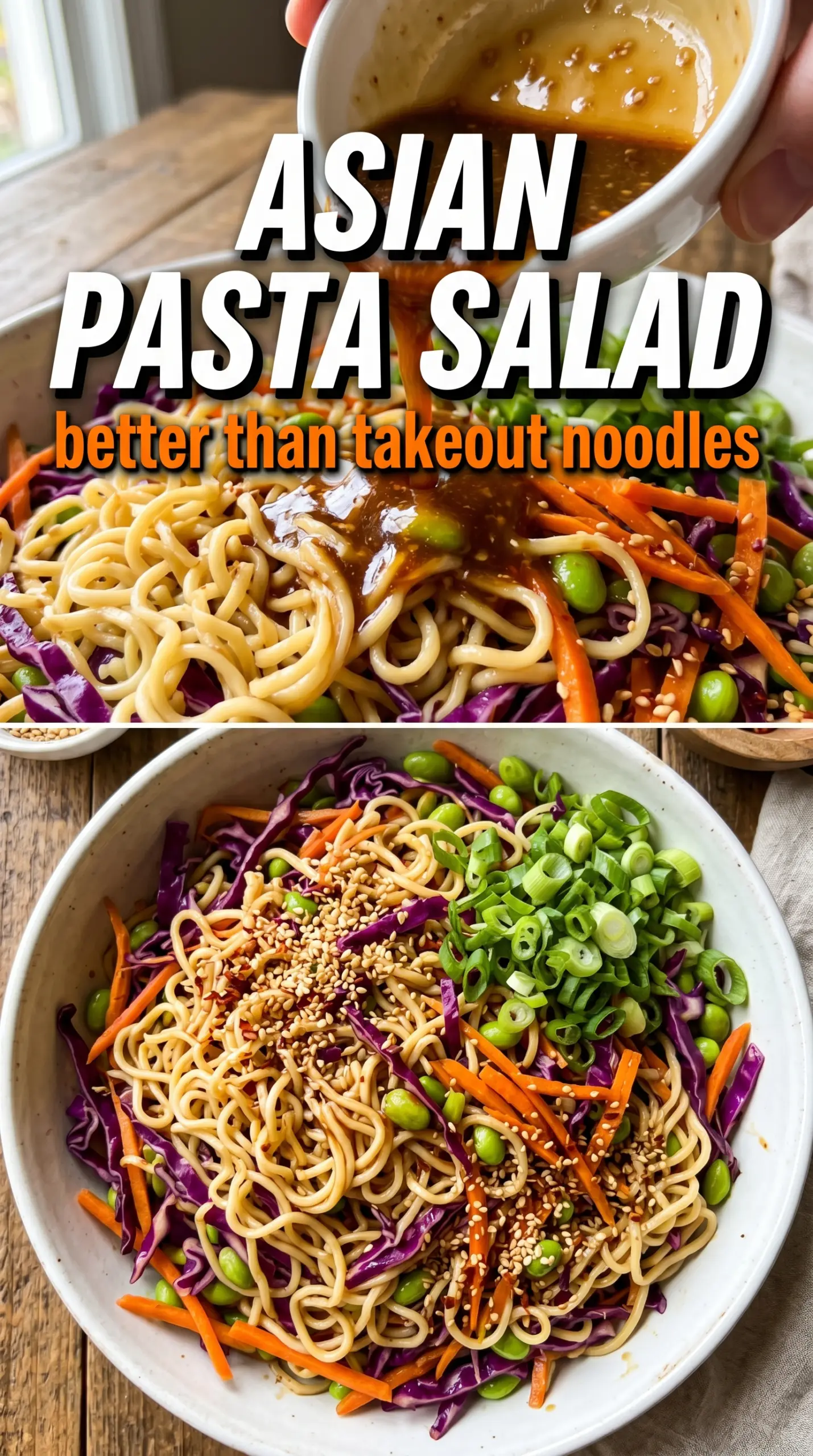
- Linguine or spaghetti — Broken pasta works better than long strands here because it mixes cleanly with the vegetables and fits on a fork without dragging half the bowl up with it. If you only have regular spaghetti, use it. Ramen-style noodles or soba can work too, but they change the texture and the salad leans more noodle-forward than pasta-forward.
- Red cabbage and carrots — These are the crunch and color. Pre-shredded cabbage is fine, but shred the carrots fresh if you can, since bagged matchsticks can be a little dry and blunt. The goal is crisp, not wilted slaw.
- Edamame — This adds the hearty bite that keeps the salad from eating like a side dish with no substance. Thawed frozen edamame is perfect here and usually better than canned anything because it stays firm and clean-tasting.
- Sesame oil — This is the ingredient you don’t want to cheap out on. A small amount brings the nutty, toasted note that makes the dressing taste like it belongs in the bowl. Toasted sesame oil gives the right flavor; plain sesame oil won’t do the same job.
- Peanut butter, honey, and sriracha — Peanut butter gives body, honey smooths the salt and vinegar, and sriracha gives the dressing a little lift without making it hot. If you need a peanut-free swap, use sunflower butter, but expect a slightly different finish and a less pronounced nutty edge.
Building the Dressing and Tossing It at the Right Time
Whisk the dressing until it looks glossy
Start with the soy sauce, sesame oil, rice vinegar, honey, peanut butter, ginger, garlic, and sriracha in a bowl large enough to whisk without splashing. The dressing should come together smooth and glossy, not streaky or separated. If the peanut butter resists, keep whisking for another 20 to 30 seconds; it softens and blends as the liquids pull it in. A grainy dressing usually means the peanut butter stayed in cold clumps, so let it sit for a minute and whisk again before calling it done.
Combine the pasta with the vegetables while everything is cold
Once the pasta has cooled, add it to the cabbage, carrots, edamame, and green onions. Tossing cold ingredients keeps the vegetables crisp and helps the dressing coat evenly instead of getting absorbed on contact with hot noodles. Cilantro goes in after the dressing so it doesn’t bruise and turn dull. If the pasta is still warm, it will soften the cabbage and make the whole bowl limp by serving time.
Let the salad rest before the final topping
After the dressing is on, refrigerate the salad for about 30 minutes. That short chill gives the noodles time to take on the sesame-ginger flavor while the vegetables keep their bite. Right before serving, add the chopped peanuts and sesame seeds so they stay crunchy. If they go in too early, they soften and lose the contrast that makes the salad worth eating.
How to Adapt This Salad Without Losing the Crunch
Make It Gluten-Free
Swap the regular pasta for a gluten-free spaghetti that holds its shape after rinsing, then use tamari instead of soy sauce. The flavor stays close, but gluten-free pasta can get soft faster, so stop at true al dente and chill it promptly.
Make It Peanut-Free
Use sunflower seed butter in the dressing and skip the peanut topping. You’ll still get that creamy body in the sauce, but the finish will taste a little less rich and a little more earthy, which works well if you’re serving people with peanut allergies.
Make It a Fuller Main Dish
Add shredded rotisserie chicken, chilled tofu, or seared shrimp once the salad has cooled. The dressing already carries enough salt and acid to season a protein, so the main thing is keeping everything cold or just warm enough not to wilt the vegetables.
Storage and Reheating
- Refrigerator: Store covered for up to 3 days. The cabbage softens a little, but the flavor deepens and the noodles hold up well.
- Freezer: This one doesn’t freeze well. The vegetables lose their crunch and the dressing separates after thawing.
- Reheating: Don’t reheat it. Serve it cold or let it sit at room temperature for 10 to 15 minutes before serving so the dressing loosens and the flavors open up.
Answers to the Questions Worth Asking
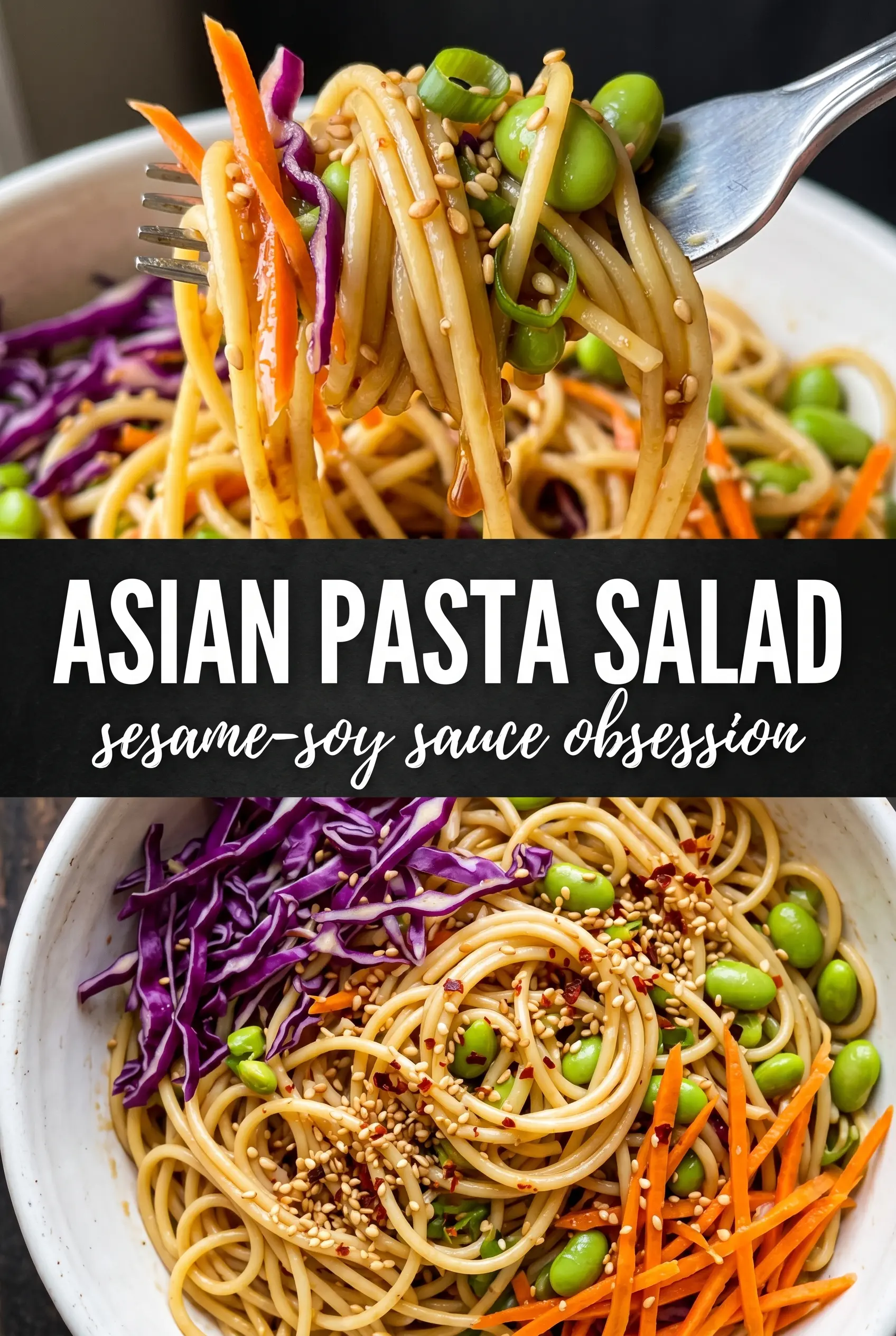
Asian Pasta Salad
Ingredients
Equipment
Method
- Bring a Dutch oven of salted water to a boil, then cook the linguine or spaghetti until al dente (about 9–11 minutes). Drain and rinse the pasta under cold water to stop cooking, then spread on a sheet pan to cool.
- Whisk the soy sauce, sesame oil, rice vinegar, honey, peanut butter, grated ginger, minced garlic, and sriracha until smooth and fully blended.
- In a large bowl, combine the cooled pasta with the shredded red cabbage, shredded carrots, shelled edamame, and sliced green onions.
- Pour the sesame-ginger dressing over the pasta mixture and toss until everything is evenly coated.
- Fold in the cilantro, then refrigerate for 30 minutes so the flavors meld and the noodles chill.
- Before serving, top the salad with the roasted peanuts.