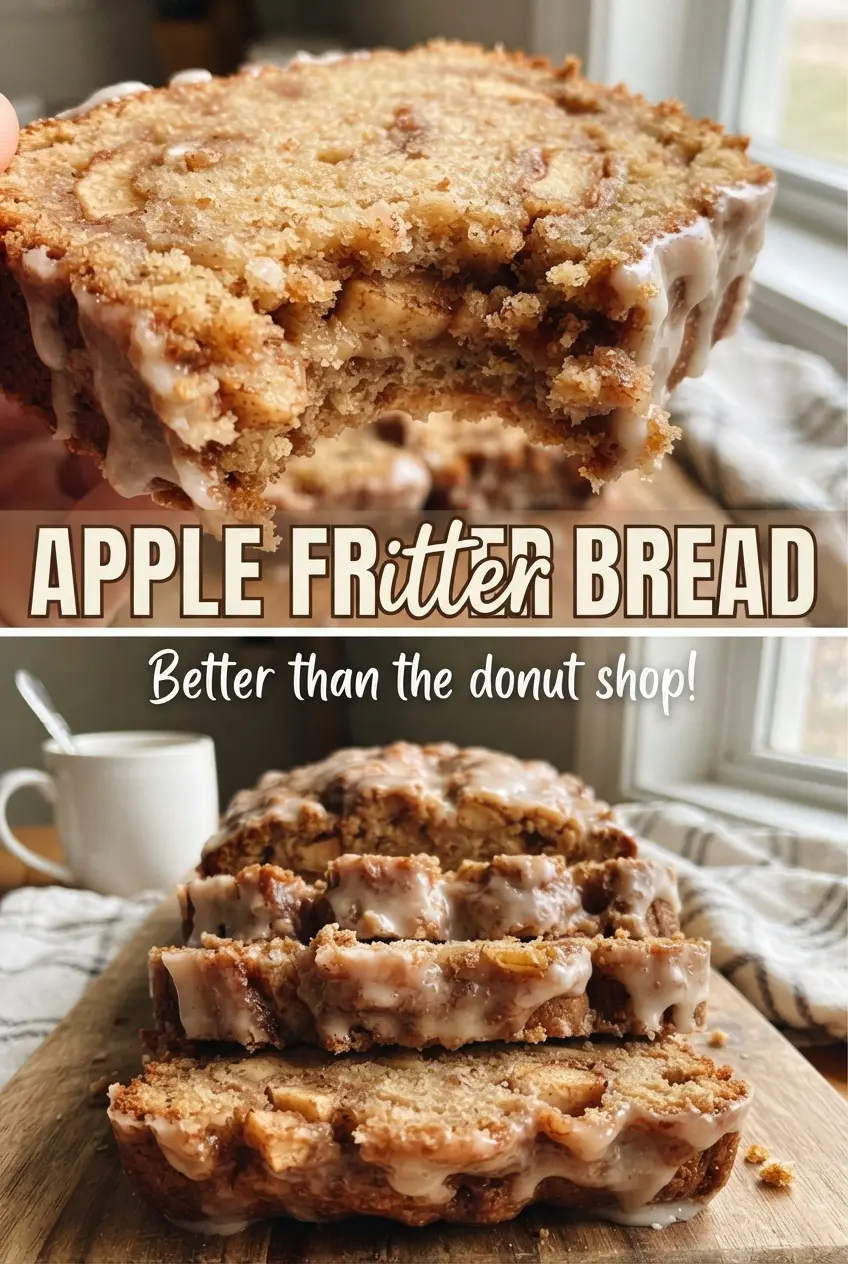
Apple fritter bread bakes up with a soft, buttery crumb, ribbons of cinnamon sugar, and little pockets of tender apple that taste like the best part of an apple fritter without the mess of frying. The loaf slices cleanly once it cools, but the top stays sticky in the best way under a thick vanilla glaze. Every bite has that bakery-style mix of sweet bread, warm spice, and juicy fruit.
What makes this version work is the layering. Tossing part of the brown sugar and cinnamon with the apples keeps them from sinking and gives the fruit its own spiced coating. Then the batter gets built in stages instead of all at once, which helps create those distinct swirls instead of one blended, muddy loaf. The result is a bread that looks impressive when sliced and still feels simple enough to make on a regular afternoon.
Below, I’m walking through the little details that keep the loaf moist without turning heavy, plus the one step that makes the cinnamon ribbon show up instead of disappearing into the batter.
The cinnamon sugar stayed in layers instead of melting into the batter, and the glaze set up with that pretty crackly finish on top. I served it warm and the loaf was gone by the next morning.
Love the swirled cinnamon apple layers and thick vanilla glaze? Save this apple fritter bread for the next time you want a bakery-style loaf without frying.
The Layering Trick That Keeps the Cinnamon Swirl Visible
Most apple bread ends up with the cinnamon sugar disappearing into the batter because it gets mixed in too early or too aggressively. This loaf avoids that by treating the apples and cinnamon sugar as separate layers, then giving the batter only a gentle swirl at the end. That keeps the filling streaky and distinct, which is what makes every slice look like a proper fritter loaf instead of plain apple cake.
The other detail that matters is the batter texture. It should be thick enough to hold the fruit in place, but not stiff enough to turn dry in the oven. If you overmix once the flour goes in, the crumb turns tight and the apples can sink unevenly. Stop mixing as soon as the flour disappears and the batter looks smooth.
- Apples — Peel and chop them into small pieces so they soften fully in the bake. Larger chunks stay crisp in the middle and can make slicing messy.
- Brown sugar — This gives the swirl its caramel note and helps the apples taste more like fritter filling. Light or dark brown sugar both work; dark just gives a deeper molasses flavor.
- Cinnamon — The bread only uses a little, but it needs to be evenly mixed into the sugar before it goes near the batter. If the spice clumps, those pockets can taste harsh.
- Butter — Softened butter is key for a light, fluffy base. Cold butter won’t cream properly, and melted butter changes the texture of the loaf.
Building the Loaf So It Bakes Moist Instead of Dense
Creaming the Base Properly
Beat the butter and granulated sugar until the mixture turns pale and fluffy, not just combined. That step traps air and gives the loaf its lift, which matters because the apples add weight. If the mixture looks greasy or stays dark yellow, keep beating for another minute or two. Scrape the bowl well so the batter mixes evenly once the eggs go in.
Layering the Apples and Cinnamon Sugar
Spread half the batter in the loaf pan, then add half the apples and half the remaining cinnamon sugar. Repeat with the rest. Don’t dump all the apples in one layer or they’ll clump and create a wet pocket in the center. A gentle knife swirl at the end is enough; if you over-swirl, the loaf loses the ribboned look and bakes up streaky instead of layered.
Baking Until the Center Sets
Bake until the top is deeply golden and a toothpick comes out clean or with just a few moist crumbs. If the top browns too quickly before the center is done, lay a piece of foil loosely over the loaf for the last 10 to 15 minutes. Let it cool in the pan for 15 minutes before glazing so the bread holds together, but don’t wait until it’s fully cold or the glaze won’t melt into that pretty finish.
Glazing While It’s Still Slightly Warm
Whisk the powdered sugar and milk until smooth and thick enough to drizzle in ribbons. Too much milk makes it run off the loaf instead of sitting on top, so add it a little at a time. The bread can still be a little warm when you glaze it; that helps the glaze settle into the surface without disappearing completely.
How to Adapt This Apple Fritter Bread for Different Kitchens
Make it dairy-free
Use a plant-based butter and swap the milk for an unsweetened non-dairy milk. The loaf still bakes up tender, though the crumb is a touch less rich than the original because butter brings a lot of the flavor here.
Use a different apple variety
Granny Smith gives you a tarter bite and holds its shape well, while Honeycrisp or Fuji bake softer and taste sweeter. I like a mix of tart and sweet apples if I have them, because the loaf tastes fuller and the filling doesn’t lean one-note.
Add chopped nuts
A handful of chopped pecans or walnuts adds crunch and makes the loaf feel more like a bakery quick bread. Stir them into the apple layers, not the batter, so they stay distributed and don’t weigh down the crumb.
Storage and Reheating
- Refrigerator: Store covered for up to 4 days. The glaze will soften a bit and the crumb gets even more tender by day two.
- Freezer: Freeze the loaf or individual slices tightly wrapped for up to 2 months. Freeze before glazing if you want the cleanest texture and add the glaze after thawing.
- Reheating: Warm slices in the microwave for 10 to 15 seconds or in a low oven until just heated through. Don’t blast it too long or the bread dries out and the glaze turns sticky instead of glossy.
Questions I Get Asked About This Recipe
Apple Fritter Bread
Ingredients
Equipment
Method
- Preheat the oven to 350F, then grease and line a 9x5-inch loaf pan with parchment.
- Mix the packed brown sugar with ground cinnamon, then toss the chopped apples with 2 tablespoons of the mixture to coat.
- Beat the softened butter with the granulated sugar until fluffy, then beat in the eggs and vanilla extract.
- Whisk the all-purpose flour, baking powder, and salt together, then add to the batter alternately with the milk until just combined.
- Spread half of the batter into the loaf pan, then top with half the apples and half of the remaining cinnamon sugar.
- Repeat the layers with the remaining batter, apples, and cinnamon sugar.
- Swirl gently with a knife to create cinnamon-brown sugar marbling through the loaf.
- Bake at 350F for 50-55 minutes, until a toothpick inserted in the center comes out clean.
- Cool the loaf for 15 minutes before glazing.
- Whisk the powdered sugar with 2-3 tablespoons of milk until smooth, then drizzle over the warm loaf.