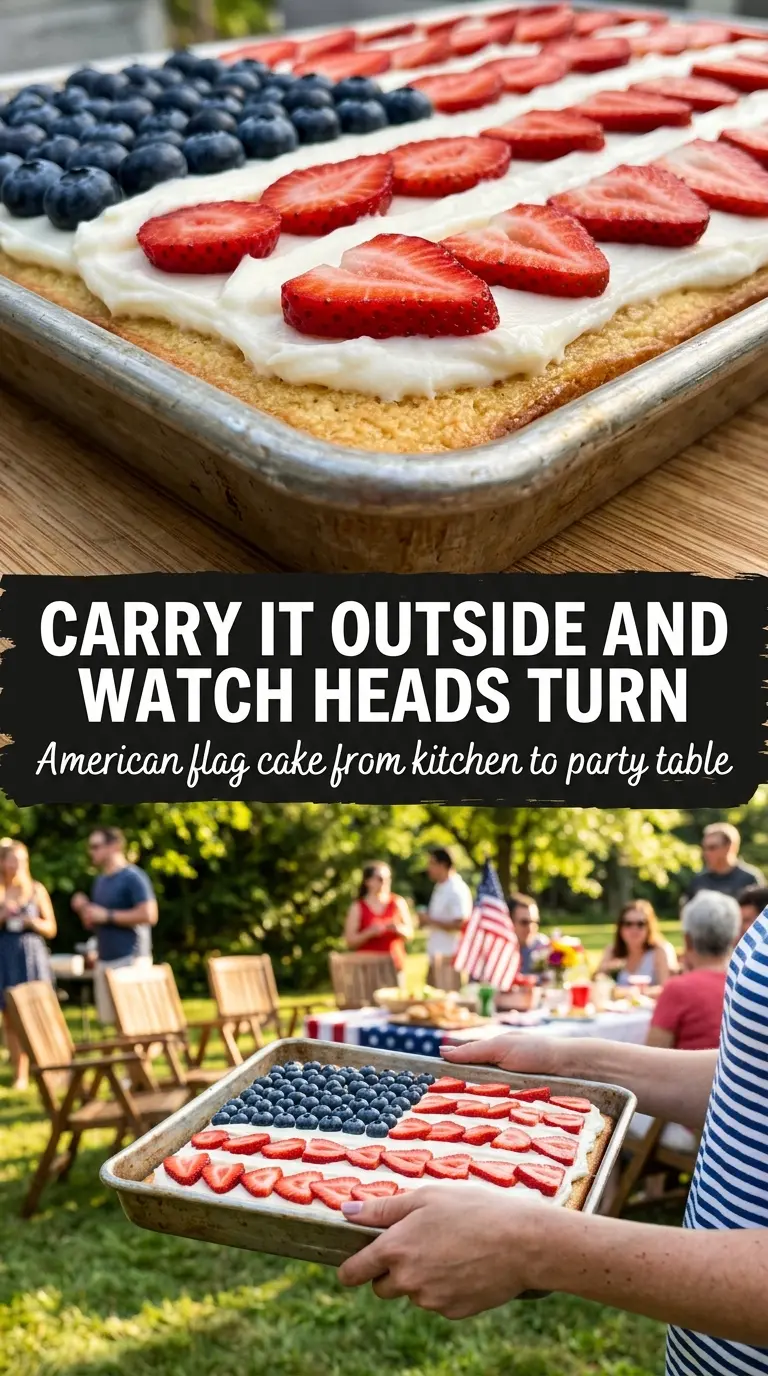
American flag cake gets its appeal from contrast: a soft white sheet cake under a thick layer of buttercream, then that bold top pattern of blueberries and strawberries that looks crisp the second it hits the table. When the stripes are lined up well and the frosting is smooth underneath, it reads like a celebration before anyone takes a bite. The best versions don’t try to be fancy. They lean into clean color, a sturdy cake base, and fruit that holds its shape long enough to slice neatly.
The trick is starting with a cake that’s completely cool before the frosting goes on. Warm cake will loosen the buttercream and make the fruit slide, which is how the flag shape gets muddy fast. A boxed white cake mix keeps this practical for a crowd, but the homemade buttercream and the way the fruit is arranged make it feel special. I like the blueberries packed tightly in the corner so the canton looks intentional, not scattered, and the strawberry rows sliced lengthwise so the red stripes read clearly from the top.
Below, you’ll find the easiest way to build the flag pattern without fussing over perfection, plus a few useful swaps if you want to change the white stripes or make this ahead for a party.
The buttercream spread smoothly and held the strawberries in place, and the blueberry corner stayed neat even after chilling. I used banana slices for the white stripes and it sliced cleaner than I expected.
Save this American flag cake for the next picnic, potluck, or July 4th spread when you want a clean fruit-topped dessert that slices beautifully.
Why the Cake Needs to Be Fully Cool Before You Start Decorating
The decoration only looks clean if the cake underneath is completely set. Even a little warmth softens the buttercream, and once that happens the blueberries can drift and the strawberry rows start slipping out of line. Let the cake cool all the way through, then give it a few extra minutes if the pan still feels warm at the bottom.
This is one of those desserts where the structure matters more than extra technique. A sturdy white sheet cake gives you a flat surface, and the buttercream acts like glue without being so stiff that it tears when you spread it. If the frosting feels too loose, beat in a little more powdered sugar. If it’s too thick to smooth, add cream a teaspoon at a time until it spreads without dragging crumbs.
What the Fruit Is Doing in the Design
- White cake mix — This gives you a pale, neutral base so the red, white, and blue pattern stands out. Two boxes are the easiest route for a full sheet cake and a crowd-sized dessert. If you want to bake from a different white cake recipe, use one that bakes up sturdy enough to slice cleanly and doesn’t lean too buttery or yellow.
- Butter — Softened butter makes the frosting creamy and stable enough to hold the fruit. Cold butter leaves streaks; melted butter makes the whole top greasy and too soft. Beat it until it looks fluffy before adding the sugar, or the frosting will feel dense instead of spreadable.
- Powdered sugar — This is what gives the buttercream body. Add it gradually or you’ll end up with a cloud of sugar on the counter and a gritty frosting that hasn’t had time to come together. If your frosting tastes too sweet, a little extra cream and vanilla will round it out, but don’t cut the sugar too far or the fruit won’t stay put.
- Blueberries — Fresh blueberries work best because they stay firm and keep the canton looking sharp. Frozen berries will bleed and make the corner look muddy. Choose berries that are dry and similar in size so the rectangle fills in evenly.
- Strawberries — Slice them lengthwise so they lay flat and make clear red stripes. Thick chunks tilt and roll; thin slices sit better and cut more neatly later. If the berries are especially juicy, pat them dry before arranging them so the frosting doesn’t slide.
- Banana slices or extra white frosting — Banana gives you a natural white stripe, but it browns after a while, so it’s best for serving the same day. Extra frosting is the safer choice if you’re making the cake ahead. If you pipe the frosting in straight rows, keep them narrow and even so the fruit stripes still read cleanly.
Building the Flag So the Pattern Stays Sharp
Frosting the Cake in One Even Layer
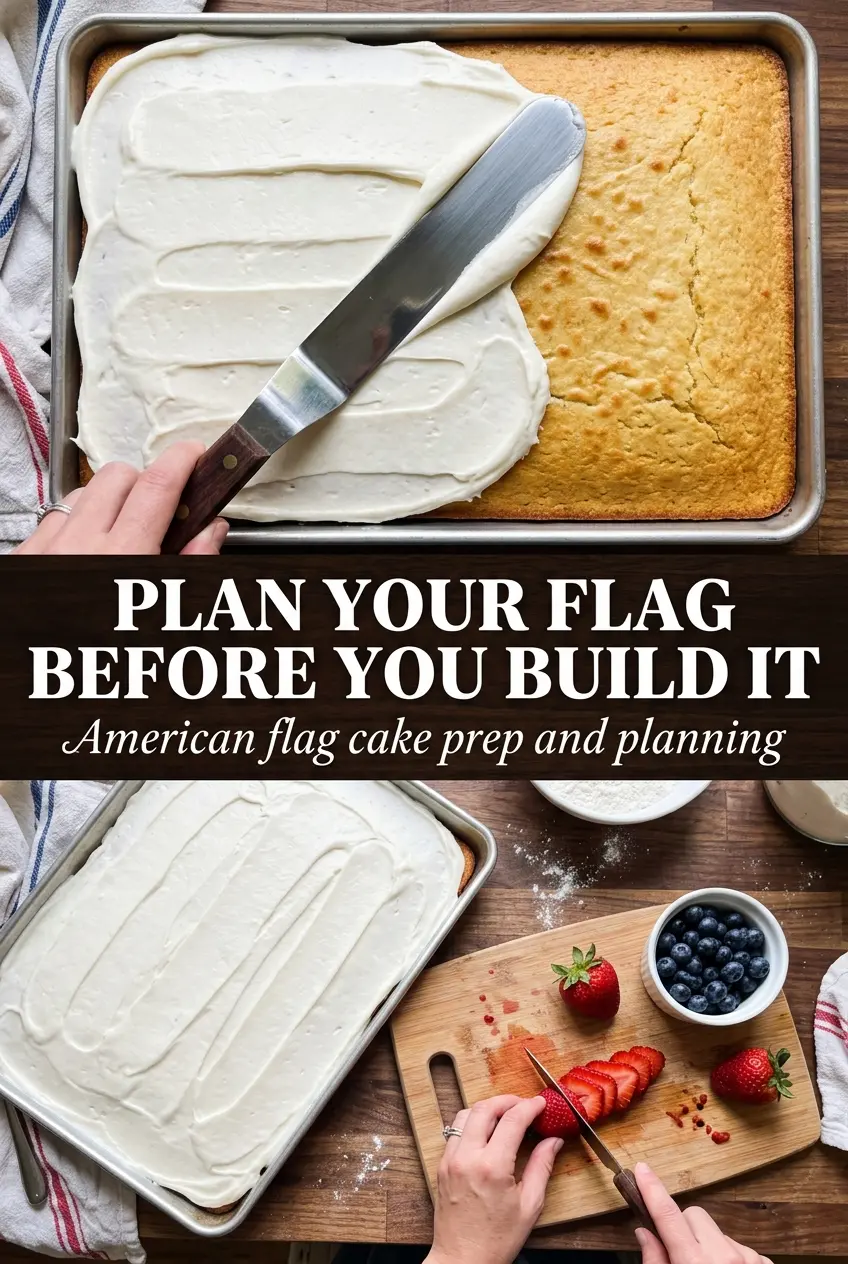
Spread the buttercream over the cooled cake in a thick, even layer, pushing it all the way to the edges. A smooth surface gives you a cleaner flag and keeps the fruit from sinking into rough patches. If crumbs start showing, stop and chill the cake for a few minutes, then finish smoothing the top. Dragging the spatula back and forth too much will pick up crumbs and make the finish look messy.
Mapping the Blueberry Corner First
Start with the upper left rectangle before you place anything else. That corner sets the scale for the rest of the cake, and it’s easier to line up the stripes when you know how much space the canton takes up. Pack the blueberries close together so the blue area reads as a solid block. If you leave gaps, the frosting underneath shows through and the corner looks unfinished.
Laying the Red Stripes in Straight Rows
Arrange the sliced strawberries in rows across the full length of the cake, keeping each line flat and close enough together to look intentional. Work from one edge to the other rather than scattering berries randomly, or the flag loses its shape fast. If the slices slide around, the frosting is too soft and the cake needs a short chill. The fruit should sit on top, not sink in.
Filling the White Stripes Without Smearing the Design
Use piped frosting for the white stripes if you want the cleanest look. Banana slices work too, but they darken and soften, so they’re best for serving later the same day. Keep the white spaces narrow and even, since oversized gaps can make the flag look patchy instead of bold. Chill the finished cake before slicing so each square holds its own shape.
How to Adapt the Cake for Different Crowds and Timelines
Make-Ahead Party Cake
Bake the cake layers a day ahead and frost them once they’re fully cool. Add the fruit the day you plan to serve it so the strawberries stay bright and the blueberries don’t bleed into the frosting. This gives you the cleanest finish with the least last-minute stress.
Dairy-Free Frosting Swap
Use a dairy-free butter substitute and a plain unsweetened non-dairy cream. The frosting will still spread and hold the fruit, but it won’t taste quite as rich as real buttercream. Beat it a little longer than usual so it turns fluffy instead of grainy.
Banana-Free White Stripes
Pipe extra white frosting between the strawberry rows if you don’t want to use banana slices. This keeps the stripes bright all day and avoids any browning. It also makes the cake easier to transport because the frosting won’t soften like fruit does.
Sheet Pan vs. Two Pans
A 12×18 sheet pan gives you the cleanest flag shape, but two 9×13 pans joined together work if that’s what you have. Just line the cakes up tightly before frosting so the seam doesn’t show through the design. If one cake bakes higher than the other, trim the domed side first.
Storage and Reheating
- Refrigerator: Store covered for up to 3 days. The fruit stays best on day one and two, and the banana stripes will darken if you use them.
- Freezer: I don’t recommend freezing the decorated cake because the fruit softens and the frosting texture changes once thawed. You can freeze the baked, unfrosted cake layers for up to 2 months.
- Reheating: This cake isn’t meant to be reheated. Serve it chilled or at cool room temperature so the frosting stays set and the flag design slices cleanly.
The Questions Worth Asking Before You Make This Cake
American Flag Cake
Ingredients
Equipment
Method
- Preheat the oven and bake both white cake mixes in a large 12x18 sheet pan or two 9x13 pans joined together according to package directions, using a single level bake for even top surfaces. Bake for the package time until a toothpick inserted in the center comes out clean, then cool completely.
- Beat softened unsalted butter until fluffy, about 1–2 minutes, then gradually add powdered sugar while mixing on low. Add vanilla extract and heavy cream (use 4–6 tbsp total) and beat until smooth and spreadable, scraping the bowl as needed.
- Spread a thick, even layer of white buttercream over the entire top of the cooled sheet cake, smoothing the surface so the fruit stripes sit flat. Chill the cake briefly if the frosting is too soft to work with.
- In the upper left corner, arrange fresh blueberries into a dense rectangle for the blueberry canton, pressing gently so the pieces touch. Aim for precise edges for a clean, vivid look.
- Create the red stripes by arranging rows of sliced strawberries flat across the length of the cake, keeping each row uniform in height and spacing. Continue until you reach the far edge.
- Fill the white stripes by piping extra frosting in rows between the strawberry rows, or place thin banana slices for the white bands. Pipe in straight lines for a crisp pattern, or align the banana slices edge-to-edge.
- Refrigerate the decorated cake until ready to serve, about 1 hour, to set the buttercream and firm the fruit rows. Slice into squares right before serving for the cleanest cuts.