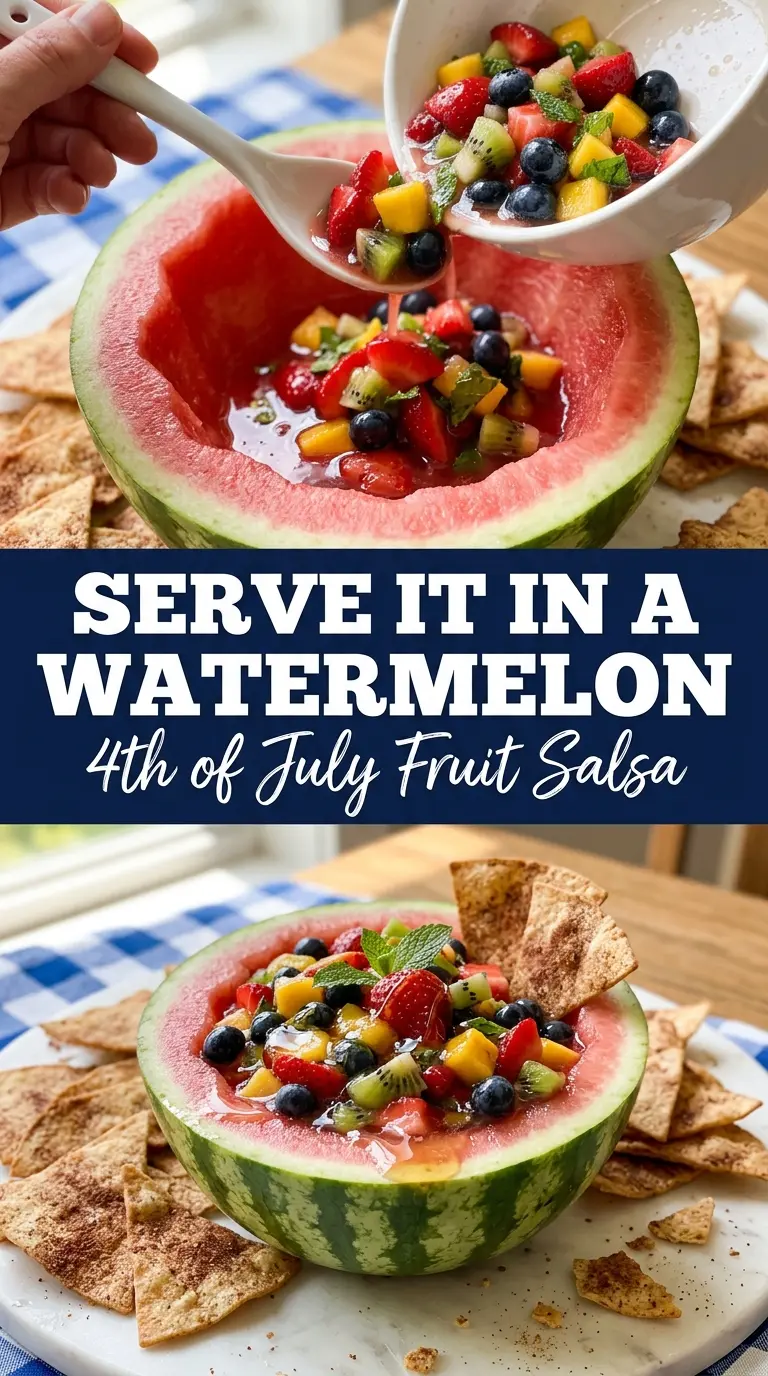
Bright fruit salsa lands with the kind of snap that makes people hover around the bowl. The strawberries soften just enough to release their juices, the blueberries stay whole and juicy, and the white peaches bring a clean sweetness that keeps every bite balanced instead of syrupy. Served with cinnamon sugar chips, it tastes like dessert dressed up as a party appetizer, and it disappears fast.
The trick is cutting the fruit small and keeping the pieces close in size so the salsa eats cleanly on a chip. Honey and lime do more than sweeten and brighten; they pull out a little juice from the fruit during the chill time, which gives you that glossy, spoonable texture without turning everything mushy. A small handful of mint keeps it fresh and keeps the bowl from tasting flat.
Below you’ll find the simple timing that keeps the fruit from breaking down too much, plus a few swaps if peaches aren’t in season. The chilling step matters here, and once you see how much flavor comes out after 30 minutes, you’ll understand why this recipe works best when it’s given a little patience.
I chilled it for the full 30 minutes and the juices turned into the prettiest syrup without making the fruit soggy. The cinnamon chips were the perfect match and I had to hide the bowl from everyone before dinner.
Like this patriotic fruit salsa? Save it to Pinterest for the July party spread, especially when you want a fresh appetizer with cinnamon chips and zero cooking.
The Small Cut That Keeps Fruit Salsa Scoopable
Fruit salsa gets watery when the pieces are too big or too uneven. The smaller dice here matter because they let the honey and lime coat every bite without leaving you with a puddle at the bottom of the bowl. You want the fruit to look jeweled, not crushed.
The other mistake is stirring too hard. Strawberries break down fast, and once they do, the salsa turns from fresh and glossy to jammy. Fold it gently, then let the bowl sit in the fridge long enough for the juices to settle into a light syrup.
- Strawberries — Use fresh, ripe berries with good color all the way through. They bring the main sweetness and the most juice, but overripe berries turn mushy fast, so dice them just before mixing.
- White peaches or nectarines — These keep the salsa bright and crisp-tasting, with a clean sweetness that doesn’t muddy the color. Nectarines are the easiest swap if peaches are firm; peel isn’t necessary, but it should be thin and tender if you leave it on.
- Blueberries — They add bursts of texture and help the salsa hold its shape. Frozen berries won’t work here because they collapse and streak the whole bowl.
- Honey, lime, and mint — Honey gives the fruit a glossy finish, lime wakes everything up, and mint keeps the sweetness from feeling heavy. If you only have bottled lime juice, use less; it’s sharper and can take over.
What Each Ingredient Is Actually Doing in This Recipe
- Primary ingredient (the star) — Quality matters most. Choose the best you can find.
- Cooking medium (oil, butter, or broth) — This carries flavors and prevents dryness.
- Seasonings (salt, pepper, spices, herbs) — Layer flavors so nothing overpowers. Build depth gradually.
- Aromatics (garlic, onion, herbs) — Cook with fat to bloom flavors. Become the foundation.
- Supporting ingredients — Complement the main ingredient without overpowering it.
- Sauce or liquid (if applicable) — Brings flavors together. Balance richness with acid.
- Acid (lemon, vinegar, wine, or other) — Brightens and prevents flat-tasting results.
- Final finish (garnish, glaze, or sauce) — Prevents one-dimensional taste and adds visual appeal.
Building the Bowl So the Fruit Stays Bright
Cutting the Fruit Evenly
Dice the strawberries and peaches into small, tidy pieces about the same size as the blueberries. That gives you a salsa that scoops cleanly and doesn’t fall apart the second it hits a chip. If the pieces are too large, the bowl eats like fruit salad instead of dip.
Coating Without Crushing
Add the honey, lime juice, lime zest, and mint, then stir with a light hand. You’re aiming to gloss the fruit, not bruise it. If you see juice pooling immediately, the fruit was likely overripe, so cut the chill time a little shorter and serve it sooner.
Chilling for the Right Texture
The 30-minute rest is where the flavor comes together. The fruit releases just enough juice to make a light syrup, and the lime keeps it from tasting flat. Longer than that and the strawberries start losing shape, so serve it soon after chilling for the best texture.
How to Adapt This for Different Crowds
Gluten-Free and Naturally Vegetarian
The salsa itself is already gluten-free and vegetarian, so the only thing to watch is the dipper. Use certified gluten-free cinnamon chips, or serve it with fresh fruit, vanilla yogurt, or gluten-free graham-style crackers. The texture of the salsa doesn’t need to change at all.
When Peaches Aren’t Ready
Nectarines swap in with no extra work and keep the same color and sweetness. If neither peaches nor nectarines look good, use diced pineapple for a sharper, juicier version, but reduce the honey a touch because pineapple brings its own brightness.
For a Less Sweet Snack
Cut the honey to 1 tablespoon and add a little extra lime zest. That keeps the salsa lively and more fruit-forward, which works well if you’re serving it after a big meal or pairing it with already-sweet chips.
Storage and Reheating
- Refrigerator: Keep covered for up to 2 days. After that, the strawberries soften too much and the bowl gets watery.
- Freezer: Don’t freeze it. The fruit loses its texture and turns mushy once thawed.
- Reheating: No reheating needed. If it’s been chilled for a while, stir before serving and drain off any extra juice only if the bowl looks too loose.
Answers to the Questions Worth Asking
4th of July Fruit Salsa
Ingredients
Equipment
Method
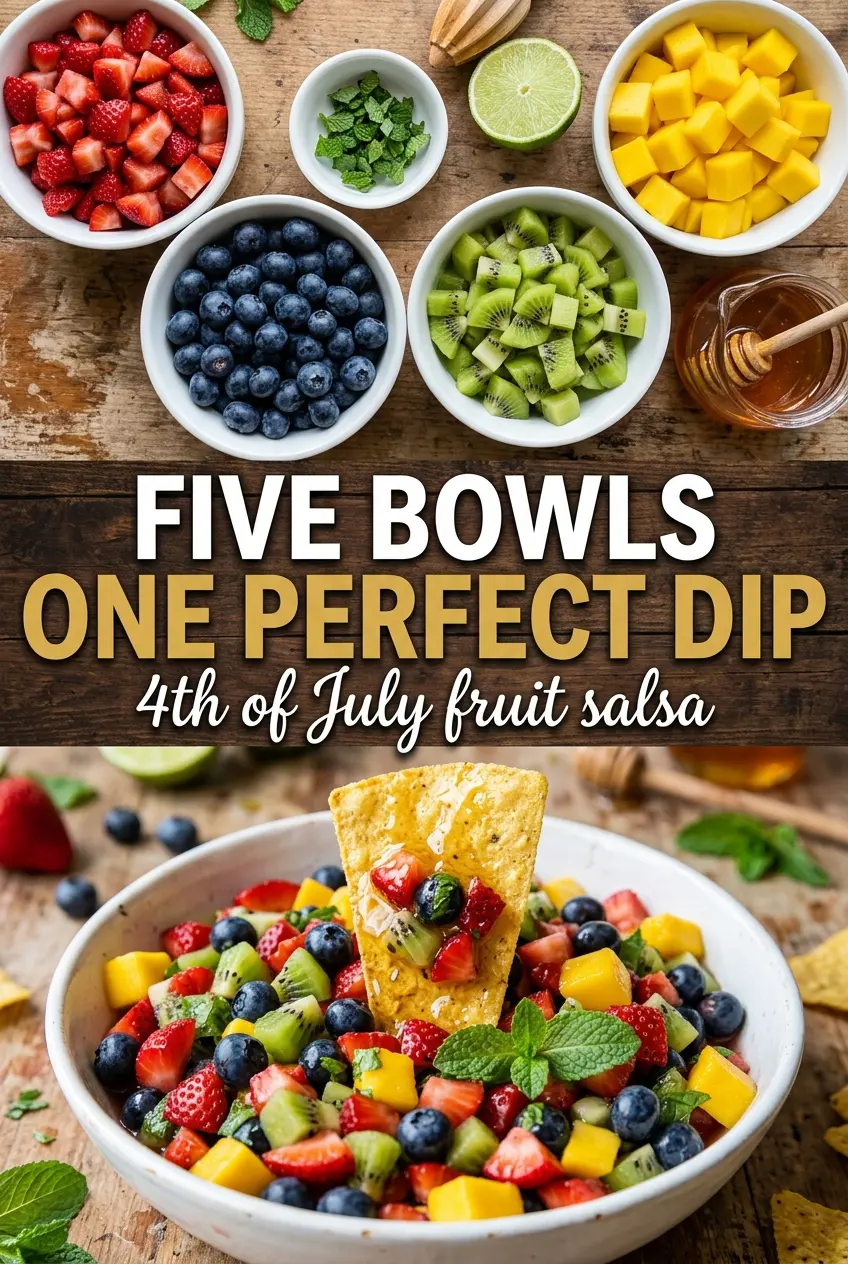
- Dice the strawberries and peaches into small, uniform pieces and place them in a medium bowl with the blueberries. Visual cue: everything should be cut small and even so the salsa looks like fruit jewels.
- Add the honey, lime juice, lime zest, and fresh mint, then stir gently to combine without mashing the fruit. Visual cue: the fruit should stay chunky while taking on a glossy sheen from the syrup.
- Cover the bowl and refrigerate for 30 minutes to allow the flavors to meld and juices to release. Visual cue: you should see a light, syrupy liquid collecting and lightly coating the fruit.
- Stir once more before serving, then transfer to a serving bowl and serve with cinnamon sugar chips. Visual cue: the red, white, and blue fruit should look fresh and glistening beside the stacked chips.