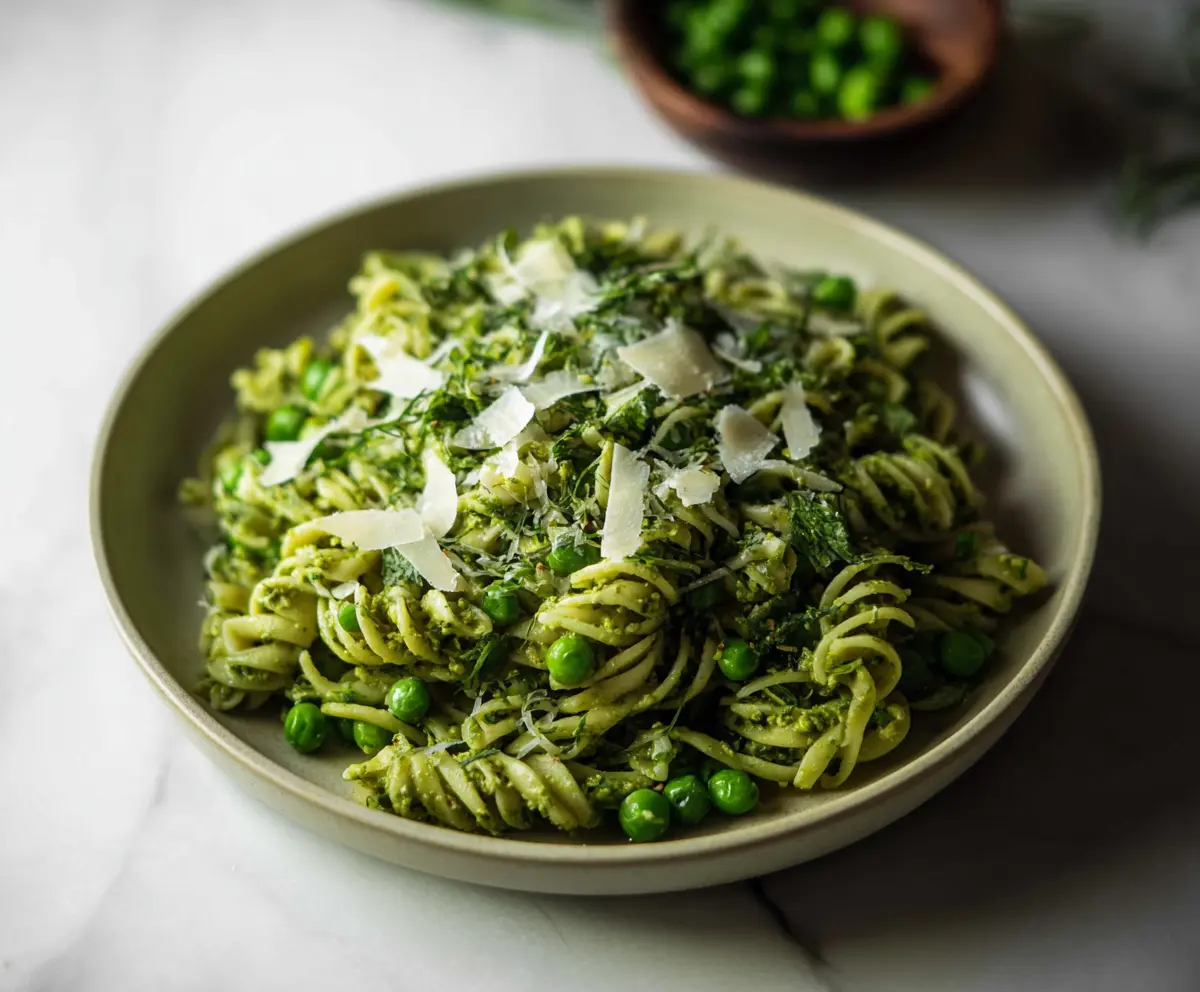
Spring Pea Pesto Pasta is a fresh and bright dish that mixes sweet spring peas with a vibrant homemade pesto. The sauce is creamy and packed with the flavors of fresh basil, garlic, parmesan, and a little bit of lemon to keep things lively. Tossed with tender pasta, it’s a simple meal that feels light but still filling.
I love making this pasta when peas are in season because their natural sweetness makes the pesto so unique and tasty. Plus, you can whip up the pesto in just a few minutes, which is great for busy weeknights. I often add a sprinkle of extra parmesan and a drizzle of olive oil on top — it makes the whole dish feel a little extra special without any extra effort.
This pasta is perfect on its own or served alongside a fresh green salad. It’s one of those meals that feels like a warm welcome to spring every time I make it. I like to think of it as a little bowl of sunshine on my plate, and honestly, it never fails to brighten my day.
Key Ingredients & Substitutions
Peas: Fresh or frozen peas work well here. Fresh peas have a slightly brighter taste, but frozen peas are convenient and sweet enough. I like to reserve some peas for garnish to add a nice burst of color and texture.
Basil: Fresh basil is key for that classic pesto flavor. If you can’t find basil, try fresh spinach or arugula, but the taste will be slightly different—still tasty and green!
Pine Nuts: Pine nuts give richness and a mild nutty flavor. Walnuts or almonds can make a good substitute if pine nuts are pricey or unavailable. Toast them lightly for extra flavor.
Parmesan Cheese: Parmesan adds salty, nutty depth. Use Pecorino Romano for a sharper bite or nutritional yeast for a dairy-free version that still delivers umami.
Olive Oil: Extra virgin olive oil keeps the pesto smooth and flavorful. Use good quality oil if possible, but lighter olive oil works too.
How Do I Make Smooth, Creamy Pesto Without It Being Too Thick?
Getting the right pesto texture is easier than it looks. Here’s how I do it:
- Start pulsing the solid ingredients first to break them down.
- Slowly drizzle in the olive oil while processing to help the mixture emulsify and become creamy.
- Use reserved pasta water sparingly—a few tablespoons added while blending loosens the pesto without watering it down.
- If it feels grainy, keep processing a bit longer—it will smooth out.
- Adjust salt and lemon juice last to balance flavors before tossing with pasta.
This way, you get a vibrant sauce that coats the pasta perfectly without feeling heavy or clumpy.
Equipment You’ll Need
- Large pot – I use it to boil the pasta and peas, making everything easy to cook at once.
- Food processor – this is key for blending the pesto into a smooth, creamy sauce quickly.
- Measuring cups and spoons – to keep the ingredients just right and easy to follow.
- Strainer or colander – for draining the pasta and peas without losing any water.
- Large mixing bowl – for tossing the pasta with the pesto and peas before serving.
Flavor Variations & Add-Ins
- Swap pine nuts for walnuts or almonds if you want a different nutty flavor or are on a budget.
- Add cooked shrimp, chicken, or crispy bacon for extra protein and richness.
- Mix in chopped sun-dried tomatoes or roasted red peppers for a smoky or tangy twist.
- Use lemon zest instead of lemon juice for a brighter, citrusy kick.
Spring Pea Pesto Pasta
Ingredients You’ll Need:
For The Pasta and Peas:
- 12 oz (340 g) rotini or fusilli pasta
- 2 cups fresh or frozen peas, thawed
For The Pesto:
- 1 cup fresh basil leaves, packed
- 1/2 cup grated Parmesan cheese, plus extra for garnish
- 1/3 cup pine nuts (or walnuts)
- 2 cloves garlic, peeled
- 1/2 cup extra virgin olive oil
- 1 tablespoon fresh lemon juice
- Salt and freshly ground black pepper, to taste
Optional Garnish:
- Fresh mint leaves for garnish
How Much Time Will You Need?
This recipe takes about 15 minutes total: 10-12 minutes to cook the pasta and blanch the peas, plus a few minutes to prepare the pesto and toss everything together.
Step-by-Step Instructions:
1. Cooking the Pasta and Peas:
Fill a large pot with salted water and bring it to a boil. Add the pasta and cook according to the package directions until al dente. During the last 2-3 minutes of cooking, add the peas to the boiling water to blanch them. Drain the pasta and peas together, saving about ½ cup of the cooking water for later.
2. Making the Spring Pea Pesto:
In a food processor, combine most of the peas (reserve a few for garnish), basil leaves, grated Parmesan, pine nuts, garlic, lemon juice, salt, and pepper. Pulse to start blending the ingredients.
While the processor is running, slowly drizzle in the olive oil until the pesto becomes smooth and creamy. If the pesto feels too thick, add a little of the reserved pasta water to loosen it up.
3. Tossing and Serving:
Transfer the cooked pasta and peas into a large bowl. Pour the pesto over the pasta and toss gently to coat everything well. Add more reserved pasta water if needed to make the sauce cling nicely to the pasta.
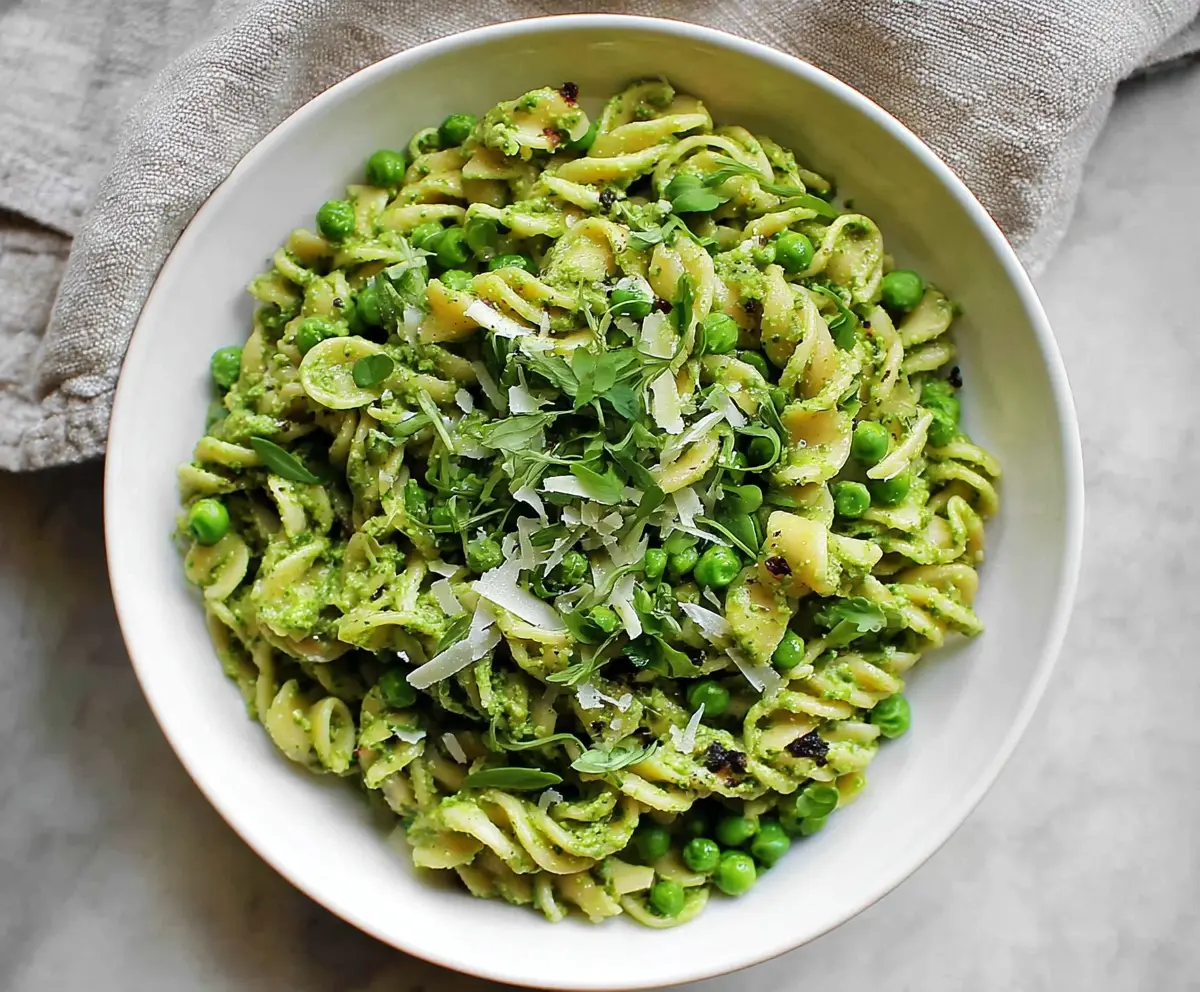
Serve right away, topped with shaved Parmesan and fresh mint or basil leaves if you like. Enjoy your fresh and bright springtime pasta!
Can I Use Frozen Peas in This Recipe?
Yes, frozen peas work great! Just thaw them beforehand or add them to the boiling pasta water during the last few minutes to quickly blanch and warm them through.
How Can I Make This Recipe Vegan?
Simply substitute the Parmesan cheese with nutritional yeast or a vegan Parmesan alternative. Also, double-check your pasta is egg-free to keep it fully vegan-friendly.
Can I Make the Pesto Ahead of Time?
Absolutely! You can prepare the pesto up to 2 days in advance and store it in an airtight container in the fridge. Add a little olive oil on top to prevent browning, and stir well before using.
What’s the Best Way to Store Leftovers?
Store leftover pasta in an airtight container in the fridge for up to 2 days. Reheat gently on the stove or in the microwave, adding a splash of pasta water or olive oil to loosen the sauce if needed.