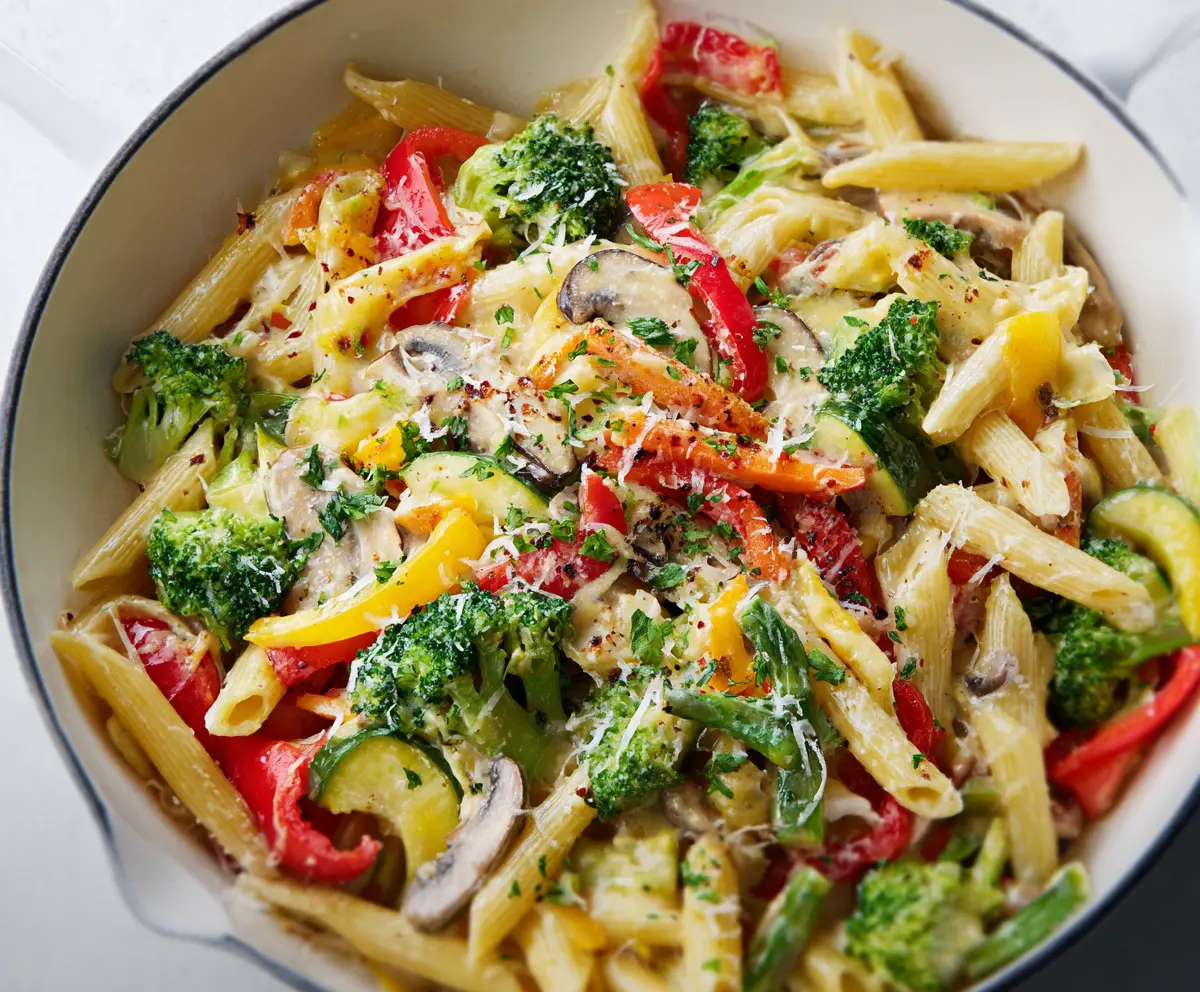
Pasta Primavera is a bright and fresh pasta dish packed with colorful vegetables like bell peppers, zucchini, cherry tomatoes, and peas. The pasta is usually tossed with a light sauce made from olive oil, garlic, and sometimes a splash of lemon juice or Parmesan cheese. It’s a perfect way to enjoy spring and summer veggies in a simple, tasty meal.
I love making Pasta Primavera when I want something that feels light but still filling. It’s such a joy to chop up whatever fresh veggies I have on hand and watch the vibrant colors come together in the pan. Sometimes I add a little fresh basil or parsley on top because it just lifts the whole dish. Cooking it feels like a celebration of fresh flavors.
My favorite way to serve Pasta Primavera is with a side of crusty bread and a green salad. It’s great for a quick weeknight dinner or a casual lunch with friends. Plus, it’s easy to change up depending on what veggies are in season or in your fridge. It always feels like a wholesome, happy dish that brings everyone to the table with a smile.
Key Ingredients & Substitutions
Penne Pasta: Penne holds the sauce well with its tube shape. You can swap for rigatoni, fusilli, or farfalle—just use your favorite type!
Vegetables: Broccoli, bell peppers, zucchini, mushrooms, carrots, and green beans create great texture and color. Feel free to add or switch veggies based on what you have, like asparagus or snap peas.
Garlic: Minced garlic adds a warm, aromatic base. If you prefer a milder flavor, use garlic powder or roasted garlic instead.
Heavy Cream: It makes the sauce rich and smooth. For a lighter option, try half-and-half or whole milk mixed with a bit of flour to thicken.
Parmesan Cheese: This cheese brings a savory, nutty flavor that completes the dish. You can use Pecorino Romano or a vegan cheese substitute if needed.
How Can You Cook Vegetables So They Stay Tender but Crisp?
Getting the perfect texture for veggies is all about timing and heat. Here’s what I do:
- Use medium heat and sauté the veggies in olive oil so they soften but keep their bite.
- Cook harder veggies like carrots and broccoli first, then add softer ones like mushrooms last.
- Keep stirring gently so they cook evenly without turning mushy.
- Don’t overcrowd the pan — this helps them steam instead of sautéing, which you want to avoid.
This way, you get bright, crunchy veggies that add fresh flavor and color to the pasta.
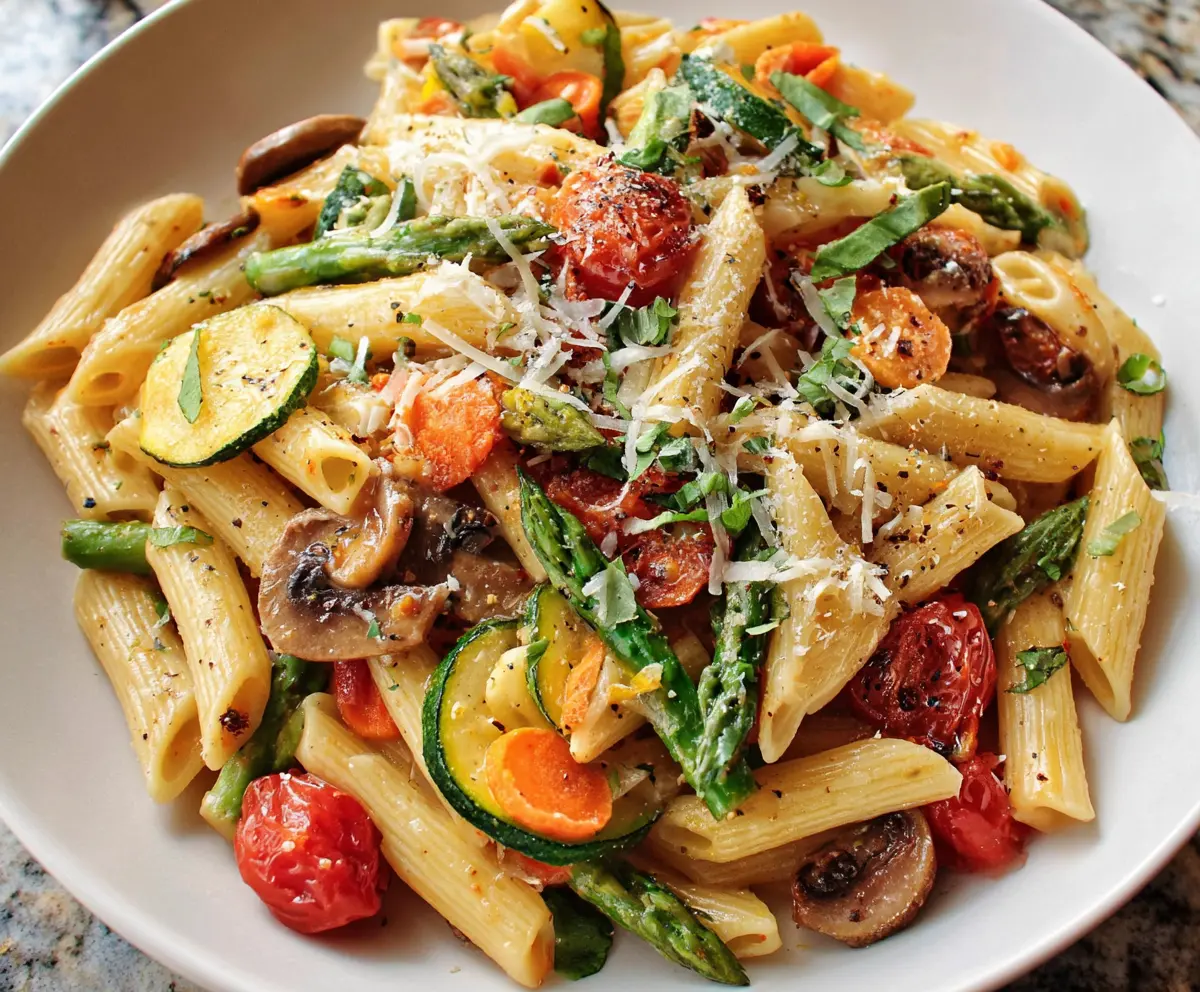
Equipment You’ll Need
- Large pot – I love it because it’s perfect for boiling the pasta evenly and quickly.
- Skillet or sauté pan – a wide pan makes it easy to cook all the vegetables at once and toss everything together.
- Colander – for draining the pasta properly without losing any of that starchy water.
- Wooden spoon or spatula – helps you stir and combine the ingredients gently.
- Measuring spoons and cups – handy for keeping everything just right, especially the garlic and cream.
Flavor Variations & Add-Ins
- Add cooked chicken, shrimp, or sausage to make it more filling. Protein options are quick to toss in at the end.
- Mix in fresh basil, thyme, or oregano for different herb flavors—brightens up the dish.
- Use goat cheese, feta, or mozzarella instead of Parmesan for a different cheesy twist.
- Stir in a splash of balsamic vinegar or lemon juice for a tangy note that balances the richness.
How to Make Pasta Primavera
Ingredients You’ll Need:
- 12 oz penne pasta
- 2 tbsp olive oil
- 1 cup broccoli florets
- 1 cup sliced red bell pepper
- 1 cup sliced yellow bell pepper
- 1 cup sliced zucchini
- 1 cup sliced mushrooms
- 1 cup chopped carrots (cut into thin strips)
- 1 cup green beans, trimmed and cut in half
- 3 cloves garlic, minced
- 1 cup heavy cream
- 1 cup grated Parmesan cheese, plus extra for garnish
- Salt and freshly ground black pepper, to taste
- 1/4 tsp crushed red pepper flakes (optional)
- Fresh parsley, chopped for garnish
How Much Time Will You Need?
This delicious pasta dish takes about 30 minutes from start to finish. You’ll spend around 10 minutes preparing and chopping the veggies, 10 minutes cooking the pasta and vegetables, and a few minutes more to finish the creamy sauce and combine everything. Quick, easy, and worth every minute!
Step-by-Step Instructions:
1. Cook the Pasta:
Fill a large pot with water, add a good pinch of salt, and bring it to a boil. Add the penne pasta and cook according to the package instructions until it’s al dente — tender but still a little firm when you bite it. Drain the pasta and set it aside.
2. Sauté the Vegetables:
While the pasta cooks, heat the olive oil in a big skillet or sauté pan over medium heat. Add the minced garlic and cook for about one minute, until it smells wonderful but hasn’t browned. Add the broccoli, bell peppers, zucchini, mushrooms, carrots, and green beans. Cook these for 5 to 7 minutes, stirring often, until they’re tender but still have a bit of crunch.
3. Make the Creamy Sauce and Toss Everything Together:
Pour in the heavy cream and stir. Let it simmer gently for 2 to 3 minutes to thicken a little. Then, add the grated Parmesan cheese and stir until it melts into a creamy sauce. Season with salt, freshly ground black pepper, and if you like a bit of heat, add the crushed red pepper flakes. Finally, add the cooked pasta to the pan and mix gently so everything is coated in that creamy sauce. Sprinkle chopped parsley and extra Parmesan cheese on top before serving.
Can I Use Frozen Vegetables Instead of Fresh?
Yes, you can! Just thaw frozen veggies completely and pat them dry before sautéing to avoid extra moisture. Cook them a little longer if needed since frozen veggies can be softer.
Can I Substitute the Heavy Cream?
Absolutely! For a lighter version, use half-and-half or whole milk mixed with a tablespoon of flour to help thicken. Coconut milk is a good dairy-free option, but it will add a subtle coconut flavor.
How Should I Store Leftovers?
Store any leftovers in an airtight container in the fridge for up to 3 days. Reheat gently on the stove or in the microwave, adding a splash of cream or water if the sauce feels too thick.
Can I Add Protein to This Dish?
Definitely! Cooked chicken, shrimp, or sausage are great additions. Simply add them at the end when you toss the pasta with the sauce to warm through.