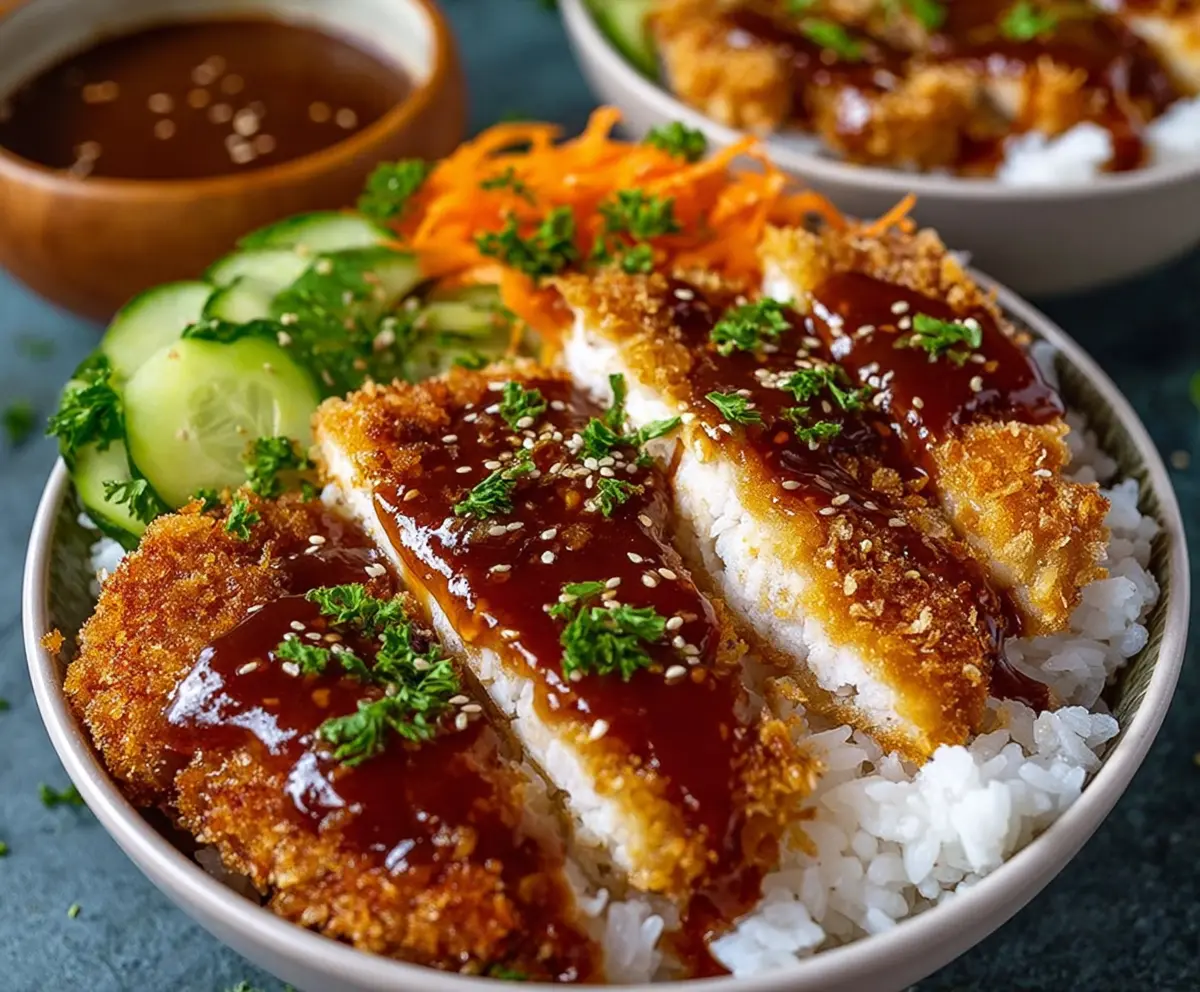
Japanese Katsu Bowls with Tonkatsu Sauce are a fantastic meal that brings together crispy breaded pork or chicken, fluffy rice, and a sweet, tangy sauce that you can’t help but love. The crunchy coating on the meat pairs perfectly with the rich, flavorful tonkatsu sauce, making each bite super satisfying.
I love making these bowls when I want something that feels a bit special but is still simple to put together. There’s something really fun about the crunch and sauce combo that makes everyone at the table smile. Plus, cooking the meat right at home means you get that fresh, crispy texture which is so much better than takeout.
My favorite way to eat these bowls is with a side of steamed greens or maybe some pickled veggies to add a little brightness and balance. If you have extra sauce, don’t be shy about drizzling it on top—more sauce means more flavor, and that’s always a win in my book.
Key Ingredients & Substitutions
Chicken or Pork Cutlets: Both work great here. Chicken breasts are leaner, while pork offers a richer flavor. If you prefer, ground chicken or turkey can be shaped into patties for a twist.
Panko Breadcrumbs: These create the crisp, airy crust typical of katsu. If unavailable, regular breadcrumbs can work but won’t be as crunchy. You can even pulse cornflakes for a crunchy substitute.
Japanese Short Grain Rice: This sticky rice holds well under the crispy katsu and sauce. Sushi rice is a good alternative. Long grain rice can be used but won’t have the same chew and stickiness.
Tonkatsu Sauce: The sauce is sweet, tangy, and a bit savory. If you don’t have mirin, use a mix of sugar and water. Worcestershire sauce brings depth but can be swapped with a similar brown sauce.
How Do You Get the Katsu Extra Crispy and Not Greasy?
Getting the perfect crunchy katsu comes down to a few key steps:
- Pat your meat dry before seasoning and breading to help the coating stick.
- Use panko breadcrumbs for a light, crisp crust.
- Don’t overcrowd the pan—this lowers the oil temperature and causes soggy coating.
- Fry in oil heated to about 340°F (170°C)—too hot burns crumbs, too cool makes it greasy.
- After frying, place the cutlets on paper towels to drain extra oil immediately.
Following these keeps the katsu crunchy without feeling greasy, giving you that classic texture every time.
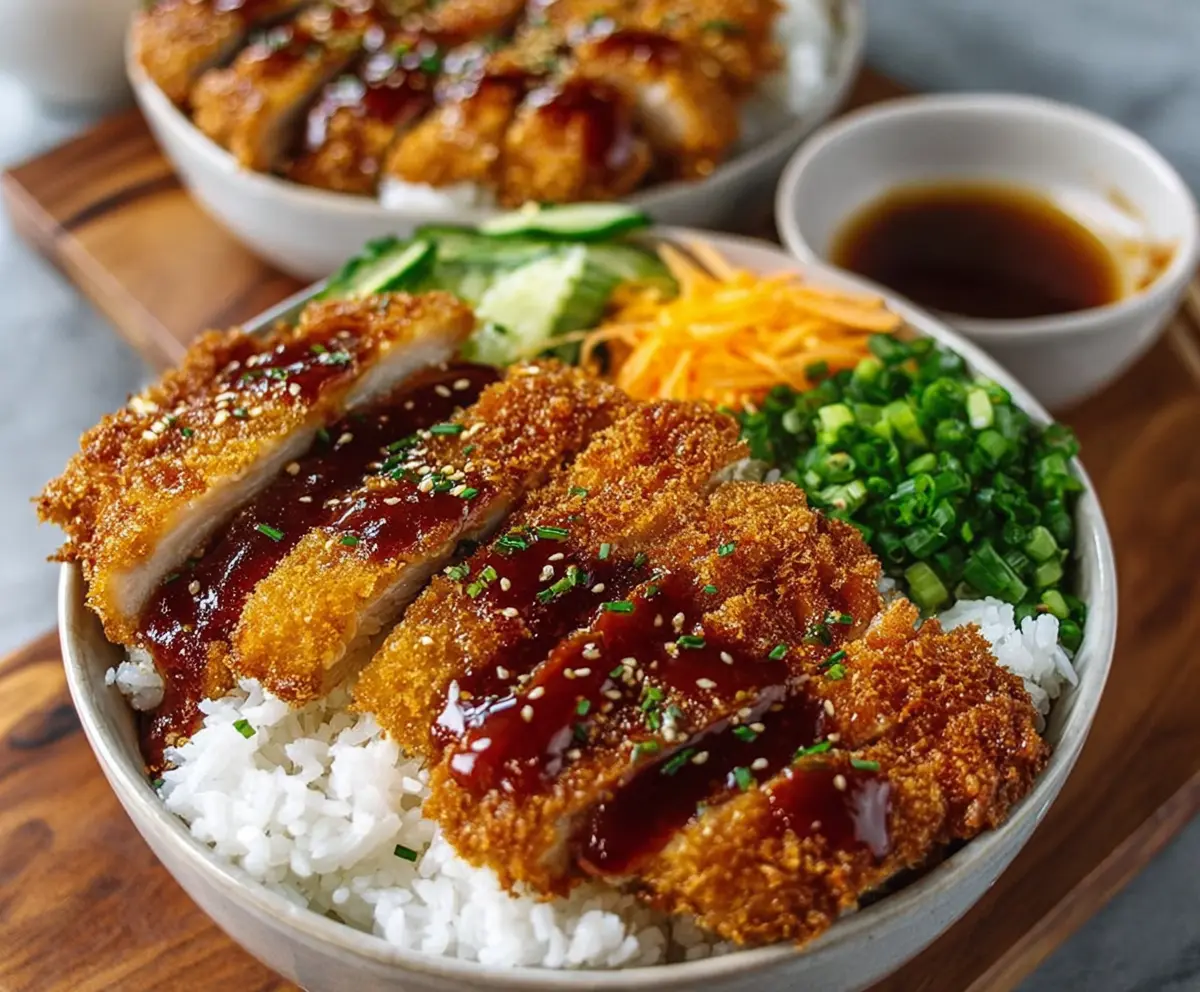
Equipment You’ll Need
- Deep-fry thermometer – I find it helpful to keep the oil at the right temperature for crispy, not greasy, katsu.
- Large skillet or frying pan – Ideal for frying the breaded cutlets evenly and safely.
- Paper towels or a wire rack – To drain excess oil after frying, keeping the katsu crispy.
- Small bowls – For organizing flour, beaten eggs, and panko breadcrumbs during breading.
- Chef’s knife and cutting board – For slicing the cooked cutlets and preparing the vegetables.
Flavor Variations & Add-Ins
- Use chicken thighs instead of breasts for juicier, more tender meat.
- Mix in grated ginger or garlic into the breadcrumbs for extra flavor.
- Top the bowl with a fried egg or a dash of spicy mayo for added richness.
- Serve with pickled vegetables or a side of miso soup to complete a traditional Japanese meal.
Japanese Katsu Bowls with Tonkatsu Sauce
Ingredients You’ll Need:
Main Ingredients:
- 2 boneless, skinless chicken breasts or pork cutlets (about 1/2 inch thick)
- Salt and pepper, to taste
- 1 cup all-purpose flour
- 2 large eggs
- 1 1/2 cups panko breadcrumbs
- Vegetable oil, for frying (about 1-2 cups)
- 2 cups cooked Japanese short grain rice
- 1 small cucumber, thinly sliced
- 1 medium carrot, shredded or julienned
- Fresh parsley or chopped green onion, for garnish
- 1 tablespoon toasted sesame seeds (for garnish)
For Tonkatsu Sauce:
- 1/4 cup ketchup
- 2 tablespoons Worcestershire sauce
- 1 tablespoon soy sauce
- 1 tablespoon mirin (or substitute with sugar + water)
- 1 teaspoon Dijon mustard
- 1 teaspoon sugar
How Much Time Will You Need?
This recipe takes about 20 minutes of prep time and 15 minutes to cook, so around 35 minutes total. Most of the time is spent frying the cutlets and preparing the tonkatsu sauce, which comes together quickly and easily.
Step-by-Step Instructions:
1. Prepare Tonkatsu Sauce:
In a small bowl, whisk together ketchup, Worcestershire sauce, soy sauce, mirin, Dijon mustard, and sugar until smooth. Taste and adjust sweetness or tanginess to your liking. Set the sauce aside.
2. Prepare the Meat:
Pat the chicken breasts or pork cutlets dry with paper towels. Lightly season both sides with salt and pepper to add taste.
3. Bread the Meat:
Set out three shallow dishes: one with flour, one with beaten eggs, and one with panko breadcrumbs. Dredge each piece of meat first in flour, shaking off any excess. Dip it into the beaten eggs, making sure it’s fully coated. Finally, press the meat into the panko breadcrumbs until coated evenly on all sides.
4. Fry the Katsu:
Pour about 1 inch of vegetable oil into a large skillet and heat over medium heat until it reaches 340°F (170°C). Carefully place the breaded cutlets into the hot oil, cooking in batches if needed to avoid overcrowding. Fry for 4-5 minutes each side or until golden brown and cooked through. Remove the cutlets and lay them on a paper towel-lined plate to drain extra oil.
5. Slice and Assemble Bowls:
Slice the cooked cutlets into strips for easy eating. Divide the cooked rice between bowls, then place sliced katsu on top. Add cucumber slices and shredded carrots on the side for freshness and crunch. Generously drizzle the tonkatsu sauce over the katsu. Garnish with chopped parsley or green onions and sprinkle toasted sesame seeds for extra flavor.
6. Serve and Enjoy!
Serve your Japanese Katsu Bowls fresh and hot. These bowls go wonderfully with steamed greens or a light miso soup on the side for a complete meal.
Can I Use Frozen Meat for This Recipe?
Yes, you can use frozen chicken or pork, but be sure to fully thaw it in the refrigerator overnight before breading and frying. This helps ensure even cooking and crispiness.
How Do I Store Leftovers?
Store leftover katsu and rice separately in airtight containers in the fridge for up to 3 days. Reheat the katsu in a hot oven or skillet to help it stay crispy rather than soggy.
Can I Bake Instead of Frying?
Absolutely! For a lighter option, bake the breaded cutlets at 425°F (220°C) on a wire rack over a baking sheet for 15-20 minutes, flipping halfway, until golden and cooked through.
What Can I Substitute for Mirin in Tonkatsu Sauce?
If you don’t have mirin, mix 1 tablespoon of sugar with 1 tablespoon of water and use that as a substitute. It mimics the sweetness and mild acidity mirin provides.